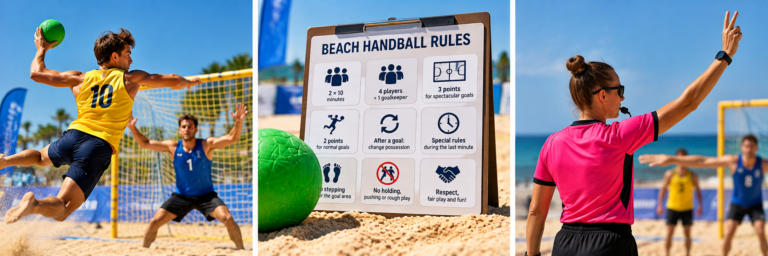
Beach handball is fast, spectacular, and full of acrobatic moves – but if you’re new to the sport, the scoring system can be confusing at first. Why are some goals worth one point and others worth two? How do you know when a goal is doubled? And what’s the deal with sets and shoot‑outs?
In this guide, you’ll learn exactly how scoring works in beach handball, with a special focus on one‑point vs. two‑point goals. We’ll break down the rules, give practical examples, and share tips that players, coaches, and curious fans can use to better understand and enjoy the game.
Overview: How Beach Handball Scoring Works
Before diving into one‑point and two‑point goals, it helps to understand the basic structure of a beach handball match.
Match Format and Sets
- A beach handball game is played in two sets of 10 minutes each (in most competitions).
- Each set is scored separately – think of it like volleyball:
- Win the 1st set = 1 set point.
- Win the 2nd set = 1 set point.
- If each team wins one set, the match is decided by a shoot‑out.
Points vs. Goals
In beach handball, a goal is not always worth the same number of points. This is the big difference from indoor handball.
- Regular goals = 1 point.
- Special goals (e.g., spins, in‑flight shots, goalkeeper goals) = 2 points.
The team with the higher total points in a set wins that set – not necessarily the team with more goals. That’s why understanding one‑point vs. two‑point goals is crucial for strategy.
One‑Point Goals in Beach Handball
A one‑point goal is the “standard” type of goal. It’s awarded when a player scores without performing any of the special actions that would make it a two‑pointer.
When Is a Goal Worth One Point?
In general, a goal counts as one point when:
- The scoring player is a field player (not the goalkeeper playing in attack).
- The shot is a normal jump shot, standing shot, or simple throw.
- There is no valid 360° spin before the shot.
- The player does not receive the ball in the air for a true “in‑flight” goal.
These one‑point goals are the backbone of the game. They are safer, more controlled, and easier to execute under pressure.
Examples of One‑Point Goals
- A wing player catches the ball, takes a regular jump, and shoots straight into the corner.
- A back‑court player throws over the defense without any rotation or special move.
- A pivot receives the ball, turns on the sand, and scores with a simple shot.
Teams often rely on these high‑percentage one‑point goals when they need stability and don’t want to risk turnovers on more complex moves.
Two‑Point Goals in Beach Handball
Two‑point goals are what make beach handball so spectacular and unique. They reward creativity, risk, and athleticism. In many matches, the team that uses two‑point goals better will win the crucial moments.
Key Situations That Award Two Points
According to the beach handball rules (based broadly on IHF rules, though local competitions can slightly vary), a two‑point goal is usually awarded in these situations:
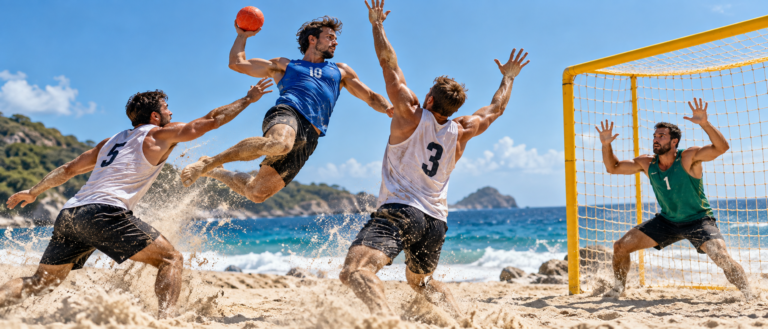
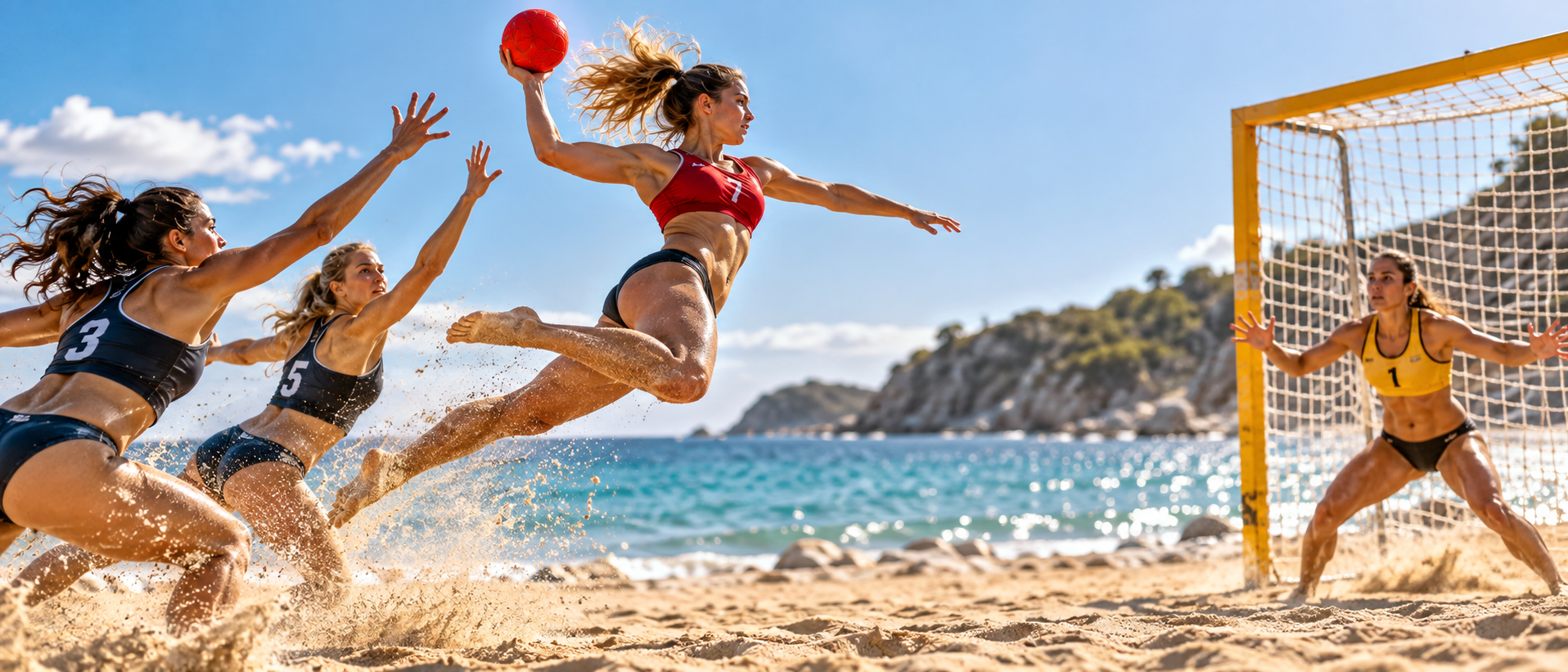
- 360° Spin Shot – The player turns at least one full rotation (360°) in the air before releasing the ball.
- In‑Flight Goal – A player catches the ball while in the air and shoots before landing.
- Goalkeeper Goal – A goalkeeper scores directly from their own half while acting as a goalkeeper.
- Some Special Situations in Local Rules – In certain tournaments, additional special shots or “fair‑play” rules may be awarded with two points, but the three above are the global standard.
1. 360° Spin Shot (The Classic Two‑Pointer)
The spin shot is one of the most iconic actions in beach handball.
- The player jumps, rotates 360° in the air, and then releases the ball towards goal.
- If the referee judges the rotation to be a full spin, the goal is worth two points.
This move is harder to control but very difficult for goalkeepers to read, which is why it’s highly valued offensively.
2. In‑Flight Goal (Alley‑Oop Style)
An in‑flight goal is similar to an alley‑oop in basketball:
- One player throws the ball into the area close to the goal.
- A teammate jumps, catches the ball in the air, and shoots before touching the sand.
- If successful, the goal is awarded two points.
This is one of the most spectacular ways to score and often used in fast breaks or set plays from the wings.
3. Goalkeeper Goals
Beach handball encourages goalkeepers to actively participate in attack. When a goalkeeper scores directly from their own half (while officially acting as a goalkeeper), the goal is usually worth two points.
However, if a “specialist” replaces the goalkeeper and wears a different jersey to act purely as an attacker, their goals are counted as one or two points depending on the type of shot (normal, spin, in‑flight), not automatically two.
One‑Point vs. Two‑Point Goals: Side‑by‑Side Comparison
| Type of Goal | Points | How It’s Scored | Risk Level |
|---|---|---|---|
| Standard shot | 1 point | Normal jump or standing throw | Low |
| 360° spin shot | 2 points | Full rotation in air before shooting | Medium-High |
| In‑flight goal | 2 points | Catch and shoot in mid‑air | High |
| Goalkeeper direct goal | 2 points | Keeper scores from own half | Medium |
This simple comparison shows why two‑point goals are so attractive – they can double the value of a single attack. But they also carry more execution risk, which is why smart teams balance both options.
How the Scoring System Shapes Beach Handball Strategy
Understanding how scoring works in beach handball is more than a rules question – it’s the foundation of good strategy.
Balancing Safety and Reward
Teams constantly choose between:
- Secure one‑point goals with simple, controlled shots.
- Risky two‑point goals that can quickly change the score but may lead to turnovers.
For example:
- If a team is leading comfortably, they may favor safe one‑pointers to protect the lead.
- If a team is trailing late in the set, they might prioritize two‑point attempts to catch up quickly.
Using Specialists and Goalkeepers in Attack
Many teams use a specialist player (often wearing a different jersey) who replaces the goalkeeper when the team is attacking. The specialist is usually highly skilled at:
- Executing spin shots.
- Finishing in‑flight passes.
- Creating space for wings and pivots to score two‑pointers.
This tactical use of roles maximizes the chances of two‑point goals without sacrificing too much defensive stability.
Scoring in Beach Handball Shoot‑Outs
If each team wins one set, the match is decided by a shoot‑out, which also uses the one‑point vs. two‑point system.
How a Shoot‑Out Works
While local details can vary slightly, the standard shoot‑out format is roughly:
- Each team gets a series of attempts (usually five) in a one‑on‑one situation against the goalkeeper.
- The action typically starts with the goalkeeper throwing the ball to their attacker, who runs towards goal.
- The attacker can finish in various ways: regular shot, spin, or in‑flight, depending on the situation.
Points in the Shoot‑Out
- Regular goal = 1 point.
- Spin or in‑flight goal = 2 points.
The team with the most points after all attempts wins the shoot‑out and therefore the match. Because spin and in‑flight goals are still worth two points, teams often design special shoot‑out plays to maximize their scoring potential.
Benefits of the One‑Point / Two‑Point System
The unique scoring system is a big reason why beach handball is growing as a spectator‑friendly sport. Here’s why:
1. More Spectacular, Creative Play
By rewarding spin shots, in‑flight moves, and goalkeeper goals with two points, the rules encourage:
- Acrobatic plays.
- Quick ball movement.
- Unpredictable attacks.
This makes beach handball visually exciting and ideal for highlight reels and live broadcasts.
2. Constant Comeback Potential
Because a single attack can be worth two points, the score can change rapidly:
- A team trailing by 4-6 points can come back with just a few successful two‑pointers.
- Fans stay engaged because no lead feels completely safe.
3. Tactical Depth for Coaches and Players
The one‑point vs. two‑point goal difference adds depth to coaching decisions:
- When to push for spins and in‑flights.
- When to keep the ball and score a safe one‑pointer.
- How to defend differently against potential two‑point threats (e.g., doubling wings or marking specialists closely).
Practical Tips to Score More Two‑Point Goals
If you’re a player or coach, understanding the scoring system is only the first step. The next is to train specifically to use it to your advantage.
1. Train Controlled 360° Spins
- Start with half‑spins to build balance and timing.
- Progress to full 360° rotations without the ball.
- Add the ball and focus on releasing it at the peak of your jump.
- Practice from different angles: wing, back‑court, and pivot positions.
2. Build Reliable In‑Flight Combinations
- Work on timing between passer and finisher.
- Use cones or markers to define the landing and take‑off zones.
- Practice from both wings to keep your attack unpredictable.
3. Include the Goalkeeper in Offensive Training
- Train long passes and quick throws after saves.
- Encourage keepers to recognize situations where they can safely attempt a two‑point goalkeeper goal.
4. Mix One‑Point and Two‑Point Options in Set Plays
In structured attacks, always give your players at least one one‑point and one two‑point option.
- Example: A wing can choose a safe normal shot (1 point) or risk an in‑flight or spin (2 points) depending on how the defense reacts.
Common Misunderstandings About Beach Handball Scoring
Because beach handball is still growing worldwide, some myths and misunderstandings about scoring are common. Let’s clear up a few:
- “Every spectacular goal is automatically worth two points.”
Not always. The move must meet specific criteria (e.g., full 360° spin, in‑flight, or goalkeeper goal). A high jump or powerful shot without spin is still one point. - “The team with the most goals always wins the set.”
Wrong. The winner is the team with the most points, not goals. A team can score fewer goals but still win thanks to more two‑pointers. - “Only attackers can score two‑point goals.”
Incorrect. Goalkeepers can score two‑point goals directly from their half while acting as goalkeepers.
Simple Scoring Scenarios: One‑Point vs. Two‑Point Goals in Action
| Scenario | Team A | Team B | Who Leads? |
|---|---|---|---|
| 3 normal goals vs. 2 spin goals | 3 x 1 = 3 pts | 2 x 2 = 4 pts | Team B |
| 4 normal goals vs. 1 in‑flight + 1 normal | 4 x 1 = 4 pts | 1 x 2 + 1 x 1 = 3 pts | Team A |
| 2 spin goals vs. 3 normal + 1 normal | 2 x 2 = 4 pts | 4 x 1 = 4 pts | Tie |
These simple examples show how two‑point goals can quickly shift the balance, even when one team scores fewer total goals.
Conclusion: Mastering Beach Handball Scoring
Beach handball’s one‑point vs. two‑point scoring system is what sets it apart from many other sports. Once you understand:
- When a goal is worth 1 point (standard shots, no special move).
- When a goal is worth 2 points (360° spins, in‑flight finishes, goalkeeper goals).
- How points, sets, and shoot‑outs work together.
…the whole game becomes clearer, more exciting, and easier to follow.
For players and coaches, mastering the scoring rules opens up rich strategic possibilities – from designing plays around two‑point options to choosing when a safe one‑pointer is the smarter choice. For fans and newcomers, understanding the scoring logic of beach handball makes every spin, jump, and save even more thrilling.
Whether you’re watching your first tournament or planning your next training session, keep this simple idea in mind: it’s not just about scoring more goals, it’s about scoring smarter goals. That’s the real secret behind how scoring works in beach handball.