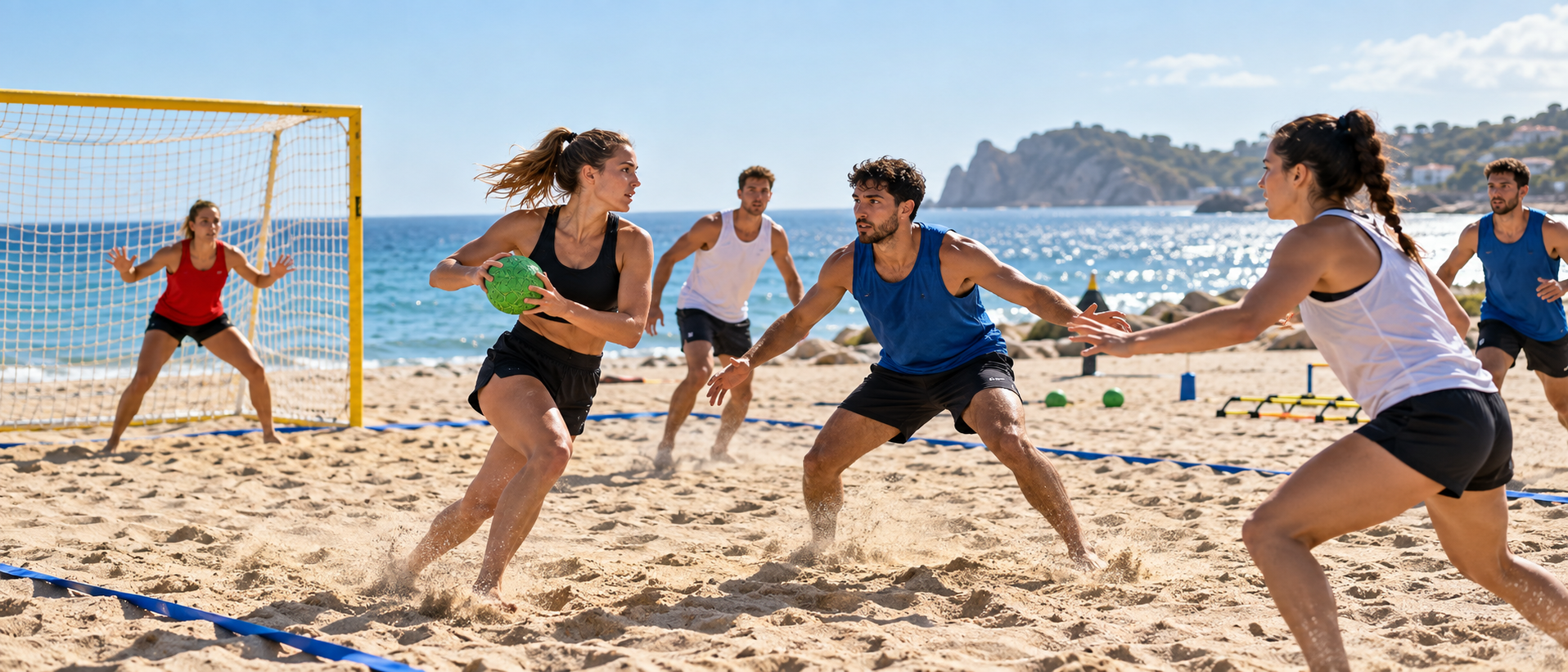
Beach handball is fast, acrobatic, and incredibly fun to watch and play. One of the keys to success on the sand is understanding beach handball positions — especially the crucial roles of the spinner, shooter, and goalkeeper. Whether you’re a coach, a beginner, or a seasoned player, mastering these positions can transform your team’s performance and your understanding of the game.
In this guide, you’ll learn how each position works, what skills are needed, and how to train effectively for these specific roles in beach handball. We’ll also explore tactical tips and practical examples that you can apply immediately on the court.
What Makes Beach Handball Positions Unique?
Unlike indoor handball, beach handball emphasizes spectacular moves, quick transitions, and double-points goals. That’s why the roles of spinner, shooter, and goalkeeper are so specialized.
- Spinner: Known for 360° shots and aerial tricks, often scoring for two points.
- Shooter: The main finisher, responsible for converting fast breaks and set plays.
- Goalkeeper: The defensive anchor who can also attack and score when switching to the special player jersey.
Understanding these positions helps structure your offense and defense, optimize player rotations, and exploit beach handball’s unique scoring system.
Main Beach Handball Positions Overview
While every team has its own style, most beach handball lineups revolve around a few key roles:
| Position | Primary Role | Key Skills |
|---|---|---|
| Spinner | Score 2-point goals with spin shots | Agility, timing, body control |
| Shooter | Finish attacks and fast breaks | Power, accuracy, quick decision-making |
| Goalkeeper | Protect the goal, start counterattacks | Reflexes, anticipation, positioning |
| Specialist/Attacker | Exploit gaps, assist and score | Speed, passing, game vision |
Next, we’ll dive deeper into each of the three central beach handball roles: spinner, shooter, and goalkeeper.
The Spinner in Beach Handball
What Is a Spinner?
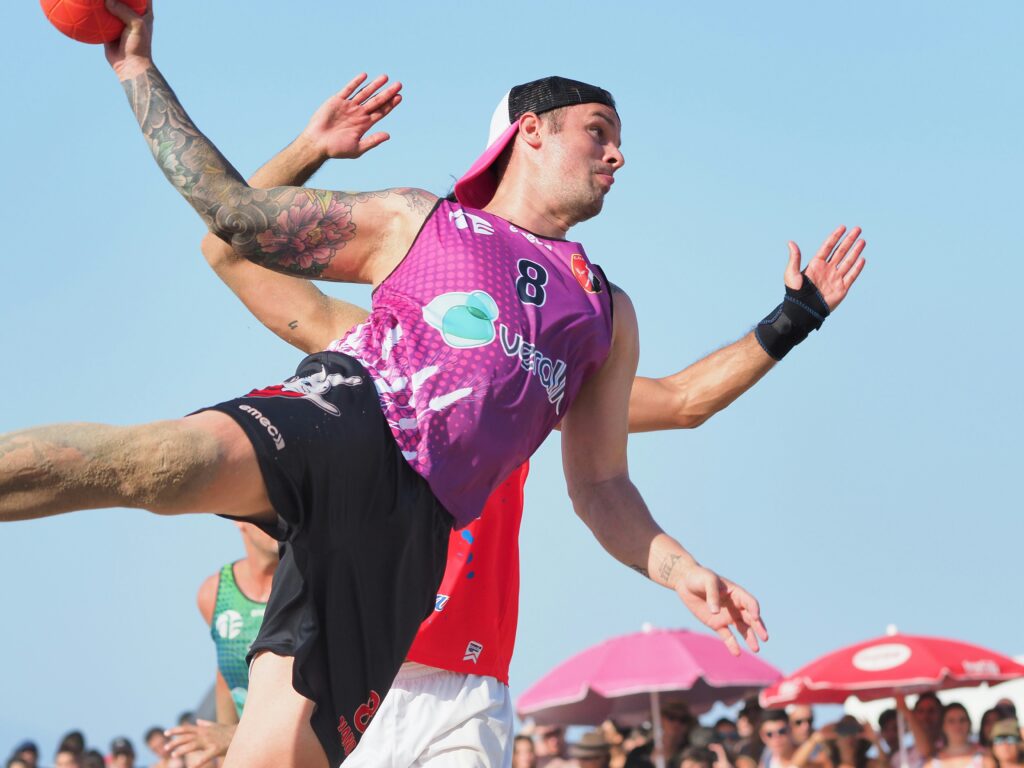
The spinner in beach handball is the player who specializes in 360° spin shots and sometimes 720° spins or aerial moves that earn two points. Spinners often operate from the wing or as a dynamic attacker who jumps, spins, and finishes while in the air.
Because of the scoring system, the spinner role is one of the most valuable offensive positions in beach handball, often deciding close matches.
Key Responsibilities of the Spinner
- Score high-percentage 2-point goals using spin shots.
- Stretch the defense wide, opening gaps for the shooter and specialist.
- Time jumps and runs to exploit passes from the playmaker or goalkeeper.
- Maintain balance and control on sandy, unstable terrain.
Essential Skills for an Effective Spinner
- Explosive jumping ability for vertical and horizontal leaps.
- Excellent body control to complete full spins mid-air.
- Spatial awareness to track the goal and goalkeeper while rotating.
- Soft hands to catch and release the ball quickly.
- Courage and creativity to attempt difficult, acrobatic shots under pressure.
Training Tips for the Spinner Position
- Start with half-spins before progressing to full 360° shots.
- Practice catching and shooting from different pass angles (cross pass, diagonal, lob).
- Use video analysis to refine your rotation timing and ball release.
- Drill landing mechanics to avoid knee and ankle injuries on sand.
The Shooter in Beach Handball
Who Is the Shooter?
The shooter is usually the team’s primary scoring threat from distance or from central attacking positions. While the spinner specializes in 2-point artistic goals, the shooter combines power, precision, and speed to finish attacks efficiently.
Core Responsibilities of the Shooter
- Score consistently from 6-9 meters, especially in structured plays.
- Capitalize on fast breaks created by steals or goalkeeper saves.
- Read the defense and choose between shot, pass, or spin-assist.
- Coordinate with the spinner and specialist for combination plays.
Key Skills for a Beach Handball Shooter
- Shooting power to beat well-positioned goalkeepers.
- Shot variety (bounce shot, lob, quick-release, direct power shot).
- Decision-making under time and defensive pressure.
- Footwork on sand to create separation from defenders.
- Passing quality to feed the spinner for 2-point attempts.
Tactical Tips for Shooters
- Use feints and sudden changes of direction to unbalance defenders.
- Vary shot height and rhythm to keep the goalkeeper guessing.
- Work on quick catch-and-shoot actions from cross passes.
- Coordinate with the goalkeeper on counterattacks for quick finishes.
| Shooter Focus Area | Practical Drill Idea |
|---|---|
| Power & accuracy | 10 shots each corner from 6-8 m |
| Fast breaks | GK outlet pass + 1v0 sprint and finish |
| Decision-making | 2v1 attack vs. defender, choose shot or pass |
The Goalkeeper in Beach Handball
Why the Goalkeeper Is So Important
The beach handball goalkeeper is not only a shot-stopper but also a playmaker and sometimes even a scorer. Because of the game’s pace and rules allowing the goalkeeper to become an attacking player (often in a special jersey), this position has a huge impact on both defense and offense.
Defensive Responsibilities
- Block high-percentage shots from spinners and shooters.
- Anticipate 2-point attempts and adjust position accordingly.
- Organize the defense by communicating with defenders and calling switches.
- Control rebounds to prevent second-chance goals.
Offensive Responsibilities
- Start fast breaks with accurate long passes.
- Join the attack as a specialist and attempt 2-point goals when appropriate.
- Exploit numerical advantages when the opposing team is slow to transition.
Goalkeeper Skills for Beach Handball
- Explosive reflexes for close-range and aerial shots.
- Reading shooters to predict shot direction and type.
- Agility on sand — lateral speed, dives, and quick recoveries.
- Passing range for long, accurate outlet passes to the shooter or spinner.
- Mental resilience after spectacular 2-point goals from opponents.
| Goalkeeper Task | Performance Tip |
|---|---|
| Stopping spin shots | Watch the shooter’s shoulder and hip, not the ball |
| Fast-break passes | Pick a target zone, not just a player |
| Joining attack | Communicate clearly when leaving the goal area |
How Spinner, Shooter, and Goalkeeper Work Together
Good beach handball teams don’t just have strong individuals; they have coordinated roles. The interaction between spinner, shooter, and goalkeeper is critical.
Offensive Synergy
- The goalkeeper launches fast breaks with long passes.
- The shooter makes central runs, forcing defenders to collapse.
- The spinner attacks from the wing or in a wide arc, ready for 2-point shots.
- Through quick ball movement, the team creates either:
- A clear lane for the shooter (1-point shot), or
- A spectacular 2-point spin finish by the spinner.
Defensive Transition
- The spinner and shooter must drop back quickly after losing the ball.
- The goalkeeper organizes who marks which attacker in the first seconds.
- Good communication prevents easy 2-point fast-break goals against you.
Practical Training Tips by Position
For Spinners
- Practice 1v0 spin shots first, then add a passive and later an active defender.
- Use marker cones to define your take-off and landing zones.
- Focus on clean ball reception before the spin — many failed shots start with a bad catch.
For Shooters
- Do repetition shooting drills from multiple positions (left, center, right).
- Train shooting while tired to simulate game pressure.
- Work on no-look passes to the spinner to disguise your intention.
For Goalkeepers
- Alternate between short-range reflex drills and long-range shot stopping.
- Practice throwing accuracy with targets at different distances.
- Rehearse communication phrases with defenders (e.g., “left help”, “switch”, “spinner coming”).
Benefits of Mastering Beach Handball Positions
Investing time in understanding the beach handball roles of spinner, shooter, and goalkeeper brings several benefits:
- More efficient training: Position-specific drills build targeted skills faster.
- Better team chemistry: Each player knows their role in key moments.
- Higher scoring potential: Intelligent use of spin shots and fast breaks boosts your goal tally.
- Smarter tactics: Coaches can adapt lineups and rotations based on player strengths.
- Reduced injuries: Proper technique (especially for spinners and goalkeepers) minimizes risky landings and awkward movements.
Example Scenario: Coordinated Attack on the Sand
To see how these positions work in practice, imagine this simple attacking sequence:
- The goalkeeper makes a save and quickly spots the spinner sprinting up the wing.
- With a long, accurate pass, the goalkeeper finds the spinner in stride.
- The defense rushes wide to stop the 2-point spin shot, leaving space in the middle.
- The spinner fakes the spin, passes inside to the shooter.
- The shooter finishes with a quick shot before the defense can recover.
In another variation, the defense collapses on the shooter, and the ball goes back to the spinner for a high-value 2-point goal. In both cases, coordination between spinner, shooter, and goalkeeper creates a strong scoring opportunity.
Position Selection: Which Role Suits You Best?
If you’re not sure which beach handball position fits you, consider the following:
| If You Are… | Try Playing As… | Because You’ll Use… |
|---|---|---|
| Agile and acrobatic | Spinner | Jumps, spins, creative finishes |
| Strong and precise | Shooter | Power shots and fast breaks |
| Calm and reactive | Goalkeeper | Reflexes and game vision |
Many players can cover multiple positions, especially at amateur level, but specializing in one primary role will help your team build consistent strategies.
SEO Tips for Coaches and Clubs Promoting Beach Handball
If you run a club, academy, or beach handball blog, using the right keywords about positions can attract more players and fans online. Phrases like beach handball positions, spinner role, beach handball shooter tips, or goalkeeper training on sand are helpful for reaching your target audience.
Consider publishing:
- Position-specific training plans for spinners, shooters, and goalkeepers.
- Short videos explaining 2-point shots and defensive strategies.
- Case studies of successful beach handball teams and how they use these roles.
Conclusion: Building a Strong Beach Handball Team Through Clear Roles
To succeed in modern beach handball, you can’t rely on raw talent alone. You need clear, well-defined positions and players who understand their roles inside and out.
The spinner brings creativity and 2-point firepower. The shooter provides consistent finishing and offensive stability. The goalkeeper anchors the defense and sparks fast breaks, often serving as a hidden playmaker.
By investing in position-specific training, encouraging communication, and building strong synergy between spinner, shooter, and goalkeeper, your beach handball team will not only play better — it will be far more exciting to watch and much harder to beat.
Whether you’re developing youth players or refining a competitive squad, start by clarifying these three key roles. From there, every practice, drill, and tactic will become more focused, more effective, and more fun on the sand.