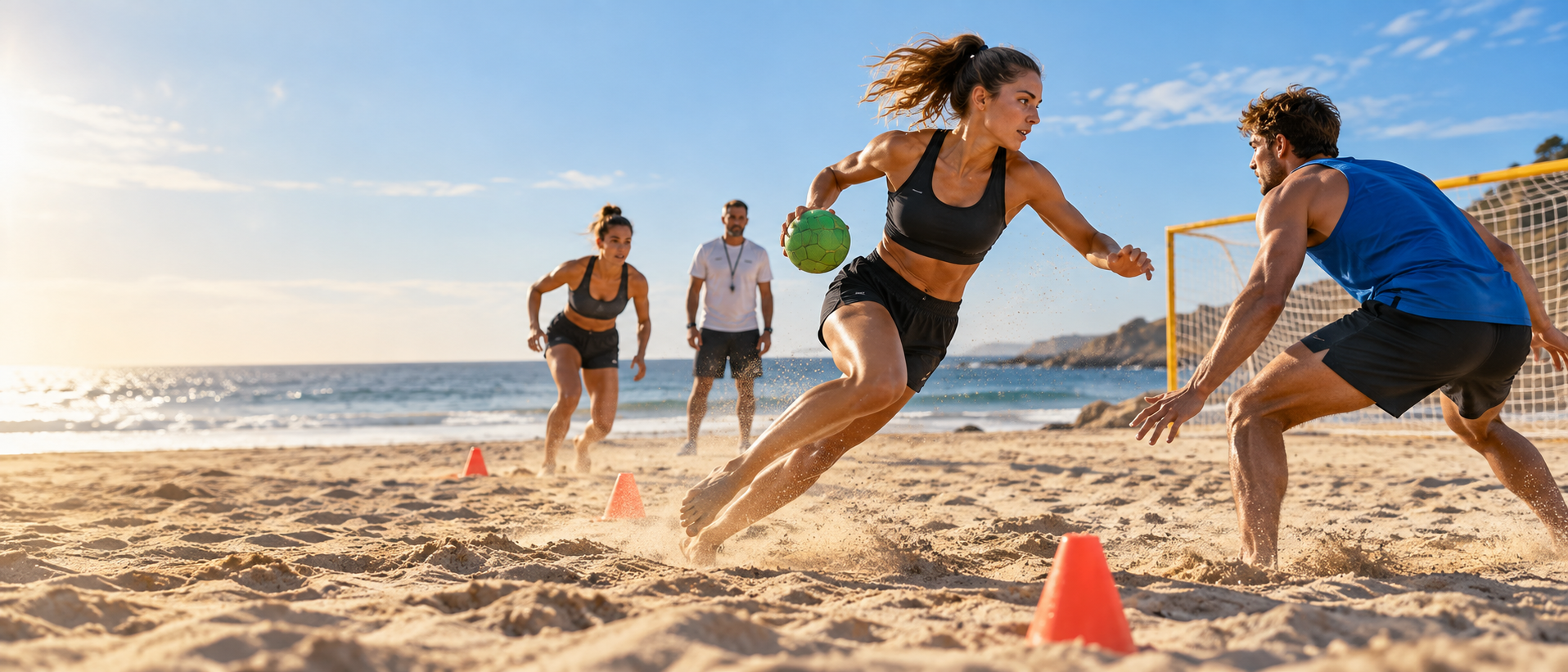
Beach handball is one of the fastest-growing beach sports in the world. Combining athleticism, creativity, and a fun, festival-like atmosphere, it offers a fresh twist on traditional indoor handball. Whether you’re a player, coach, or sports fan, understanding the rules, format, and unique features of beach handball will help you appreciate why this sport is turning heads on sandy courts worldwide.
In this guide, you’ll discover what beach handball is, how it’s played, what makes it different from indoor handball, and why you might want to try it yourself. You’ll also find practical tips for beginners and insights into the game’s scoring system and competition structure.
What Is Beach Handball?
Beach handball is a team sport played on sand, usually on a beach or in a specially built sand court. It is governed internationally by the International Handball Federation (IHF) and has its own official rules, tournaments, and World Championships.
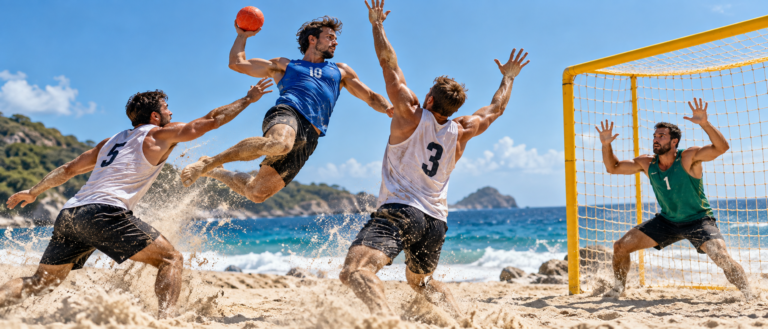
The sport is played by two teams who try to throw a ball into the opponent’s goal. What makes beach handball especially exciting is its style: players dive, spin in the air, and perform trick shots that can score extra points. With music playing in the background and fans close to the action, beach handball feels more like a festival than a typical match.
Basic Facts at a Glance
| Aspect | Beach Handball |
|---|---|
| Playing Surface | Sand court (usually on a beach) |
| Team Size on Court | 4 players (3 court players + 1 goalkeeper) |
| Duration | 2 sets of 10 minutes each |
| Scoring | 1 or 2 points per goal (depending on the shot) |
| Game Result | Best of 2 sets; shoot-out if tied |
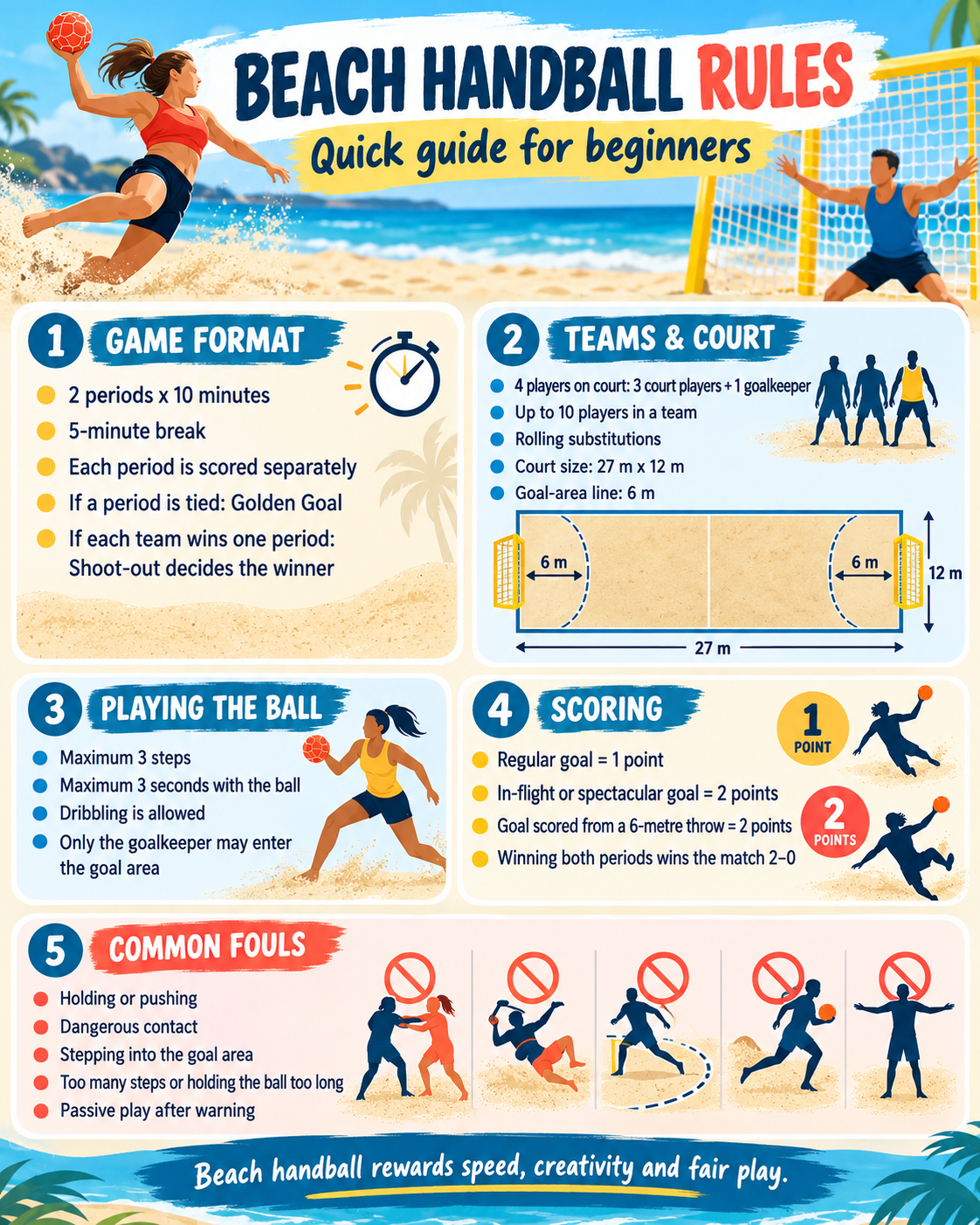
Beach Handball Rules: How the Game Is Played
The rules of beach handball are designed to keep play fast, fluid, and spectacular. Here’s a breakdown of the main regulations so you can follow or play the game with confidence.
1. Team Composition
- Squad size: Up to 8 players per team (4 on court + up to 4 substitutes).
- Players on court: 3 field players and 1 goalkeeper.
- Substitutions: Unlimited and “on the fly” through a designated substitution zone, similar to beach soccer or futsal.
2. Court Dimensions
The standard beach handball court is:
- Length: 27 meters
- Width: 12 meters
- Divided into two end zones (goal areas) and a central playing zone.
The goals are the same size as indoor handball: 2 meters high and 3 meters wide.
3. Match Duration and Sets
- Match format: The match is played as two sets.
- Set length: Each set lasts 10 minutes of running time.
- Set winner: The team that scores more points in a set wins that set.
- Match winner: The team that wins two sets wins the match.
If each team wins one set, the match goes to a shoot-out to determine the winner.
4. The Ball
The beach handball ball is made from a non-slip, rubbery material to provide grip even when wet or sandy. Sizes are typically:
- Men: Ball size 3
- Women & youth: Ball size 2
Unique Scoring System: 1-Point vs. 2-Point Goals
One of the most distinctive aspects of beach handball rules is its two-point scoring system. Not all goals are created equal.
When Is a Goal Worth 1 Point?
A goal is usually worth 1 point when:
- A regular field player scores in a standard shot without special moves.
- The ball is thrown directly into the goal from open play without trick actions.
When Is a Goal Worth 2 Points?
A goal is worth 2 points when it is scored in a spectacular or strategically special way. Common 2-point goals include:
- Spin shot (360°): The player rotates fully in the air before shooting.
- In-flight goal (“alley-oop”): A player catches the ball in the air and shoots before landing.
- Goalkeeper goal: When a goalkeeper scores directly.
- Special designated player: In some tactics, a field player may act with “goalkeeper status” to score 2-point goals.
Why the Scoring System Matters
This scoring model encourages creative, acrobatic, and attacking play. Teams are motivated to attempt high-risk, high-reward actions, which makes beach handball thrilling to watch and play.
Game Format: From Kick-Off to Shoot-Out
Starting Play
Unlike indoor handball, beach handball often starts with a referee’s whistle and a throw-off from the center. Teams alternate possession and try to create quick scoring opportunities.
Attack and Defense
- Teams attack and defend in rapid transitions.
- Physical contact is allowed but is generally less intense than indoor handball due to the playing surface and the sport’s emphasis on fair, fluid play.
- Defenders aim to block shots, intercept passes, and force mistakes without excessive contact.
Shoot-Out Format
If each team wins one set, the match is decided by a shoot-out, one of the most unique and exciting elements of beach handball.
In a typical shoot-out:
- A goalkeeper passes the ball to an attacking player who starts from the halfway line.
- The attacker runs toward the goal in a 1-on-1 situation against the opposing goalkeeper.
- The attacker usually attempts a 2-point move (spin shot or in-flight shot) to maximize the chance of scoring.
- Teams alternate attempts; after five throws each (or fewer at some levels), the team with more points wins.
This format guarantees a dramatic, spectator-friendly finish to close matches.
What Makes Beach Handball Unique?
Beach handball isn’t just indoor handball on sand. It has its own identity and appeal. Several characteristics make it stand out from other team handball variations and beach sports.
1. Spectacular, Acrobatics-Focused Play
The rules reward creativity and spectacle. Players are encouraged to:
- Perform 360° spins in the air.
- Dive into the sand to complete in-flight goals.
- Use quick, deceptive passes to open up acrobatic shots.
The result is a sport that looks incredible both live and in highlight videos, which helps with fan engagement and social-media-friendly content.
2. Fast, Short, and Intense Matches
With two short sets and a possible shoot-out, beach handball matches rarely feel slow. There is constant action, frequent scoring, and lots of momentum swings. This makes it ideal for:
- Beach sport festivals
- Weekend tournaments
- Television and live streaming
3. Festival Vibe and Fan-Friendly Atmosphere
Music, announcers, fans sitting close to the field, and players celebrating creative goals all contribute to a festival-style experience. It’s common to see:
- Cheerful, family-friendly crowds.
- Players interacting with spectators between matches.
- Multi-sport beach events featuring handball, beach volleyball, and more.
4. Accessibility and Low Equipment Costs
To start playing beach handball, you mainly need:
- A sandy area (beach or sand court).
- One or two beach handball balls.
- Portable goals and boundary lines.
This low barrier to entry makes it easier for clubs, schools, and communities to start beach handball programs.
Beach Handball vs. Indoor Handball
Many players and fans come to the beach variation from indoor handball. Understanding the key differences helps highlight what makes beach handball special.
| Feature | Beach Handball | Indoor Handball |
|---|---|---|
| Surface | Sand, outdoors | Hard court, indoors |
| Players on Court | 4 per team | 7 per team |
| Scoring | 1 or 2 points per goal | 1 goal = 1 point |
| Match Format | 2 sets + possible shoot-out | 2 halves (usually 30 minutes each) |
| Style of Play | More acrobatic, creative | More physical, tactical |
| Atmosphere | Festival, music, beach culture | Arena-based, traditional |
Benefits of Playing Beach Handball
Beyond entertainment, playing beach handball offers several physical, mental, and social benefits.
Physical Benefits
- Full-body workout: Running, jumping, and diving in sand engage core, legs, and stabilizing muscles.
- Reduced impact: Soft sand is gentler on joints compared to hard indoor floors.
- Improved balance and agility: Navigating an unstable surface improves coordination and body control.
Mental and Social Benefits
- Teamwork and communication: Fast transitions require constant coordination.
- Creativity and confidence: Players are encouraged to try bold, expressive moves.
- Stress relief: The beach setting, fresh air, and fun environment help reduce stress and improve mood.
Practical Tips for Beginners
If you’re new to the sport, these tips will help you enjoy your first beach handball experience and improve more quickly.
1. Start With the Basics
- Practice simple passing and catching on sand to get used to balance and footwork.
- Learn the basic rules: set system, 1-point vs. 2-point goals, substitution zone.
- Focus first on clean ball handling and simple 1-point shots before trying spins and in-flight goals.
2. Master Your Footwork on Sand
- Train barefoot or in sand socks to feel the surface better.
- Use short, quick steps instead of long strides.
- Practice starting, stopping, and changing direction on sand.
3. Learn Safe Diving and Landing
- Start with low, controlled dives to build confidence.
- Land on larger body areas (hips, side, chest) rather than hands or knees.
- Practice in-flight catches with a soft throw from a partner.
4. Protect Yourself From the Elements
- Use sunscreen and reapply regularly.
- Stay hydrated-bring water and drink small amounts often.
- Consider sunglasses and a hat between games, plus a light towel to remove excess sand.
5. Join a Club or Local Tournament
Search online for beach handball clubs, community leagues, or summer tournaments in your region. Playing with more experienced athletes is the quickest way to learn positioning, tactics, and advanced shooting techniques.
Beach Handball Tournaments and Competitive Scene
Beach handball has evolved from a fun summer pastime into a serious competitive sport with international recognition.
International Competitions
- IHF Beach Handball World Championships: The top-level global event.
- Continental tournaments: Such as European Championships, Pan American events, and others.
- Youth events: Youth championships and multi-sport youth games that showcase emerging talent.
Local and Regional Events
- Many countries run national beach handball tours each summer.
- Clubs and cities host open tournaments that welcome both beginners and elite players.
- Beach festivals often include amateur divisions where newcomers can try the sport in a relaxed setting.
First-Time Player Experience: What to Expect
If you’re wondering what it actually feels like to play, imagine this: you arrive at a sandy court with music playing, teams warming up barefoot, and spectators relaxing around the field. After a short briefing on the basic rules, you step onto the sand.
- Your first few runs feel heavy because the sand absorbs your steps, but soon you adapt and start enjoying the freedom of moving without worrying about hard landings.
- You make a simple pass, receive the ball again, and take your first shot. Even a regular 1-point goal feels rewarding when your teammates cheer you on.
- Later in the game, you try a small jump shot, then maybe a half-spin. You land in the sand, laughing, and realize this sport encourages experimentation rather than perfection.
By the end of your first session, you’re tired in a good way, covered in sand, and already thinking about the next time you can play.
Conclusion: Why You Should Give Beach Handball a Try
Beach handball is more than just another beach game. It’s a dynamic, spectator-friendly sport with a unique scoring system, exciting rules, and a vibrant community. Its mix of athleticism, creativity, and fun atmosphere makes it attractive to players of all ages and skill levels.
By understanding the rules, format, and distinctive features of beach handball, you can fully enjoy watching tournaments, coaching new players, or stepping onto the sand yourself. Whether you’re an indoor handball player looking for an off-season challenge, a beach sports fan looking for something new, or a complete beginner, beach handball offers an unforgettable experience.
Grab a ball, find some sand, and start exploring this fast-growing sport-you might just discover your new favorite way to play on the beach.