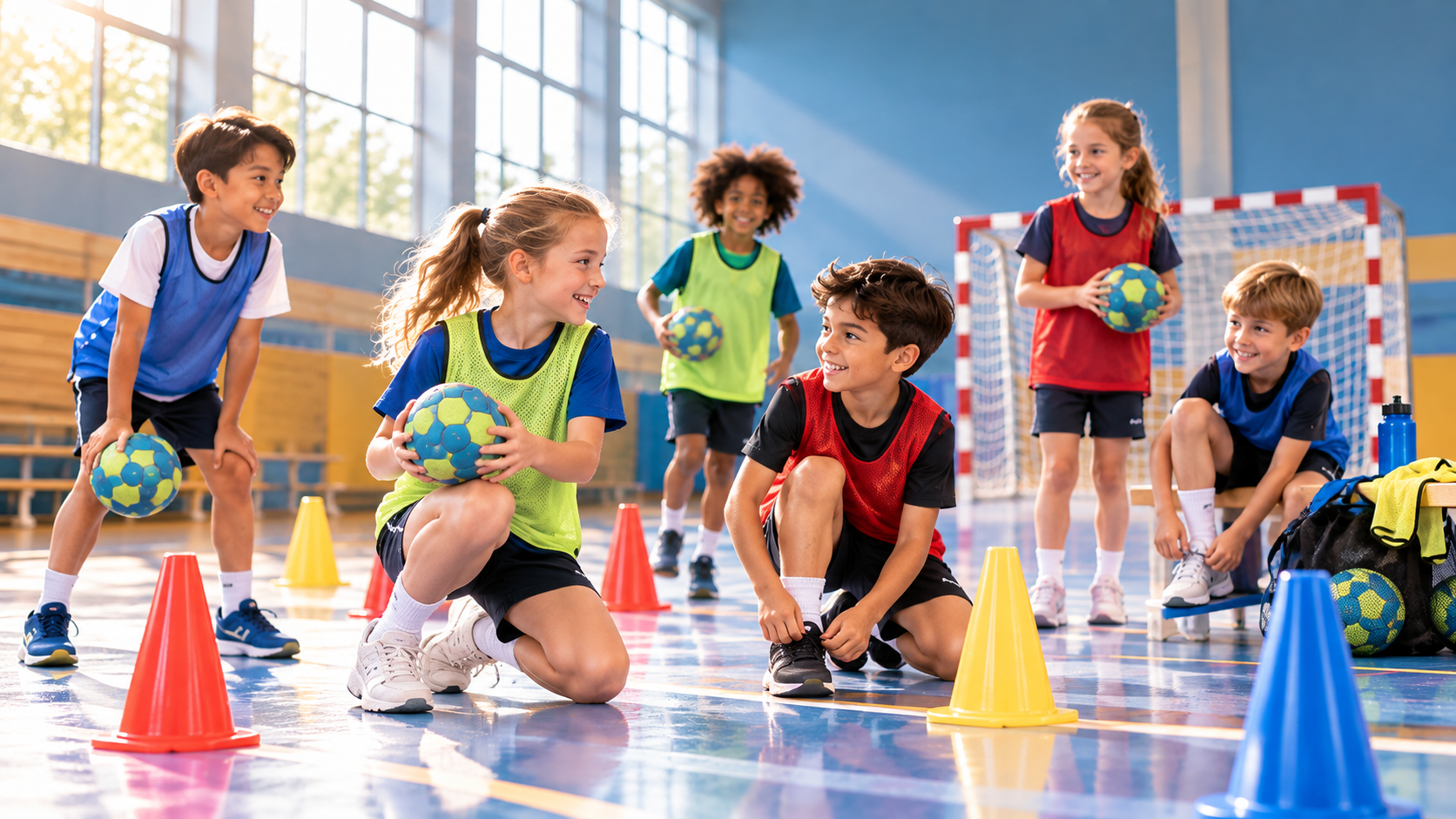
Mini handball is one of the best ways to introduce children to team sports, movement skills, and a lifelong love of physical activity. With the right age-appropriate fitness games, kids can improve their coordination, balance, agility, and confidence-while simply thinking they are playing and having fun.
In this guide, you’ll find practical, age-specific mini handball games that boost coordination, plus coaching tips, safety advice, and suggestions for integrating these drills into training sessions, PE classes, and after-school programs.
What Is Mini Handball and Why Focus on Coordination?
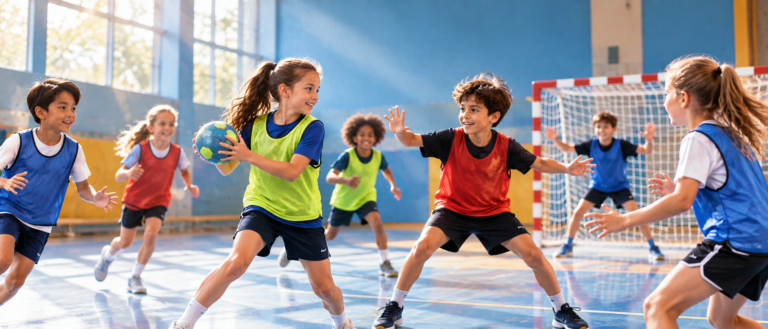
Mini handball is a simplified, small-sided version of traditional handball designed for children, typically between 5 and 12 years old. The game often uses:
- Smaller courts
- Softer, lighter balls
- Lower goals
- Modified rules that emphasize fun over competition
Focusing on coordination in mini handball is crucial because these ages represent the “golden years” of motor development. Well-designed coordination games help kids:
- Develop hand-eye and foot-eye coordination
- Improve balance and body awareness
- Learn to react quickly and safely
- Build confidence in movement and game situations
- Prepare for more advanced technical skills later on
When coaches, parents, and PE teachers choose age-appropriate fitness activities, they help children stay motivated, avoid frustration, and reduce injury risk.
Key Principles of Age-Appropriate Fitness for Mini Handball
Before diving into specific coordination games, it’s helpful to understand a few guiding principles that make fitness for mini handball both safe and effective.
1. Fun First, Fitness Second
For children, fun is the primary driver of participation. If the drills feel like “work,” motivation drops quickly. Design games that feel like play, even if they are secretly targeting agility, coordination, or endurance.
2. Short, Varied Activities
- Use short bouts of activity (30-90 seconds) with frequent changes.
- Rotate between games that emphasize different components: coordination, speed, balance, and reaction.
- Avoid long lectures-explain rules in under 30 seconds whenever possible.
3. Adapt to Development, Not Just Age
Children mature at different rates. Treat age categories as guidelines, and adjust based on each child’s coordination, focus, and confidence level.
4. Emphasize Technique and Movement Quality
Proper movement patterns at an early age build a strong foundation. Prioritize:
- Soft landings on jumps
- Controlled changes of direction
- Correct throwing technique (using the whole body, not just the arm)
- Good posture during running and catching
5. Create a Safe and Supportive Environment
- Use soft mini handballs or foam balls for younger kids.
- Ensure enough space between groups to avoid collisions.
- Celebrate effort and progress, not just “winning.”
Age Groups and Coordination Goals in Mini Handball
The table below provides a quick overview of age-appropriate coordination goals and typical game focuses in mini handball training.
| Age Group | Main Focus | Game Style | Ball Use |
|---|---|---|---|
| 5-7 years | Basic movement & body awareness | Tag games, simple relays | Large, soft balls; rolling & simple throws |
| 8-9 years | Hand-eye coordination & reaction | Small-sided games, obstacle routes | Mini handballs; catching & passing under low pressure |
| 10-12 years | Game-specific coordination & agility | Modified matches, tactical games | Regular mini handballs; dynamic passing and shooting |
Age-Appropriate Mini Handball Games That Boost Coordination
Below you’ll find practical mini handball games sorted by age group. Each game is designed to improve coordination, balance, and agility while fitting the developmental stage of the children.
Games for Ages 5-7: Building Basic Movement Skills
Young children benefit from simple, imaginative games that introduce the ball gradually. At this age, the goals are to move, explore, and enjoy.
1. Color Island Tag
Focus: Direction changes, spatial awareness, and basic reaction.
- Setup: Place colored cones or hoops around the court (“islands”). One or two kids are “taggers.”
- How to play:
- Children run freely between islands.
- On the coach’s call (“Red!”), everyone must run to a red island.
- Taggers try to softly tag players who are not on the called color.
- Handball twist: Older kids in this group carry a soft ball while running and must keep control of it.
2. Rolling River Race
Focus: Coordination between eyes, hands, and body; basic ball control.
- Setup: Kids line up on one side of the court with a ball each.
- How to play:
- Children roll their ball forward and chase it.
- They stop the ball with their foot or hand, pick it up, and roll again.
- Turn it into a relay with short distances.
- Variations: Roll with two hands, one hand, or backward between the legs.
3. Balloon Catch
Focus: Early catching skills, timing, and anticipation.
- Setup: Each pair of kids has a balloon (or very light ball).
- How to play:
- Partners tap the balloon to each other without letting it touch the ground.
- Encourage using both hands to catch.
- Count consecutive successful passes.
- Handball link: This builds the confidence needed for real ball catching later.
Games for Ages 8-9: Developing Hand-Eye Coordination and Reaction
Children in this age group can handle more structure and challenge. Mini handball drills for coordination should now include more passing, catching, and directional changes.
4. Mirror Moves
Focus: Coordination, balance, and body control.
- Setup: Players form pairs facing each other, each with a ball.
- How to play:
- One partner is the “leader,” the other the “mirror.”
- The leader performs simple movements: side steps, jumps, turns, ball circles around the waist.
- The mirror copies every move in real time.
- Progression: Swap roles; increase speed; add feints and fake throws.
5. Reaction Circle Pass
Focus: Quick reactions, coordination, team awareness.
- Setup:
- Players form a circle.
- One player stands in the middle with a ball.
- How to play:
- The middle player calls out a name and passes quickly.
- The receiver catches and returns the ball, then swaps into the middle after a set time.
- Variations: Add a second ball; ask receivers to clap before catching; allow bounce passes.
6. Obstacle Dribble Run
Focus: Ball handling, footwork, and dynamic balance.
- Setup: Create a simple obstacle course with cones, ladders, or hoops.
- How to play:
- Players move through the course while bouncing or carrying the ball.
- Include side steps, backward running, and small jumps.
- Coaching tip: Encourage controlled, rhythmical movement rather than pure speed.
| Game | Main Skill | Intensity | Group Size |
|---|---|---|---|
| Mirror Moves | Balance & body control | Low-Medium | Pairs |
| Reaction Circle Pass | Hand-eye & reaction | Medium | 6-12 players |
| Obstacle Dribble Run | Footwork & ball control | Medium | Any |
Games for Ages 10-12: Game-Specific Coordination and Agility
Older mini handball players are ready for more complex coordination games that resemble real match situations. The focus shifts to combining technical skills with fast decisions.
7. 3-Zone Passing Challenge
Focus: Spatial awareness, coordinated movement, and timing.
- Setup: Divide the court into three horizontal zones with cones.
- How to play:
- Assign 2-3 players to each zone.
- The ball must travel from zone 1 to zone 3 using only passes.
- Players can move within their zone but not leave it.
- Variations:
- Limit the number of passes per zone.
- Add passive defenders to increase pressure.
8. Shadow Defender
Focus: Coordination in defense, lateral movement, and anticipation.
- Setup: Players pair up; one attacker with a ball, one defender.
- How to play:
- Within a small marked area, the attacker moves in all directions, feinting with the ball.
- The defender “shadows,” staying in front, keeping arms and feet coordinated.
- After 30-45 seconds, swap roles.
- Coaching cues: Low stance, small quick steps, and controlled arm movement.
9. Quick-Decision Mini Matches
Focus: Combining coordination, decision making, and game understanding.
- Setup: Play 3v3 or 4v4 on a reduced court with small goals.
- Special rules to boost coordination:
- Maximum 3 seconds with the ball before a pass or shot.
- Every player must touch the ball before scoring.
- Extra points for goals scored after a feint or quick change of direction.
- Benefits: Enhances coordination under real game pressure and encourages teamwork.
Benefits of Coordination Training in Mini Handball
Building coordination through mini handball games brings a wide range of benefits that extend beyond the court.
Physical Benefits
- Improved hand-eye and foot-eye coordination
- Better balance and stability during movement
- Enhanced joint control, reducing injury risk
- Greater agility and quickness in changes of direction
Mental and Social Benefits
- Increased concentration and reaction speed
- Improved confidence in physical abilities
- Development of communication and teamwork skills
- Positive experiences with sport, which support lifelong activity
Practical Tips for Coaches and Parents
To get the most out of age-appropriate mini handball training, consider the following guidelines.
1. Plan Sessions Around Energy Levels
- Begin with simple, dynamic warm-up games (tag, follow-the-leader).
- Place the most technically challenging coordination drills in the middle of the session.
- End with a fun game or mini match where kids can apply their skills.
2. Use Clear, Simple Instructions
- Demonstrate rather than over-explain.
- Ask kids to repeat the main rules back to you to ensure understanding.
- Use visual markers (cones, hoops, colored bibs) to clarify positions and zones.
3. Gradually Increase Difficulty
Creating a progression of coordination keeps kids engaged:
- Start without the ball → add the ball → add movement → add defenders.
- Introduce time limits or scoring systems once the basic pattern is mastered.
4. Encourage Positive Feedback and Self-Assessment
- Highlight small improvements (better catch, faster reaction, safer landing).
- Ask questions: “What helped you catch better that time?”
- Create a supportive climate where mistakes are part of learning.
Sample 45-Minute Mini Handball Session (Ages 8-10)
Here’s a simple example of how you might structure an age-appropriate mini handball training focused on coordination.
| Time | Activity | Focus |
|---|---|---|
| 0-8 min | Color Island Tag | Warm-up, direction changes |
| 8-18 min | Mirror Moves | Balance & body control |
| 18-28 min | Reaction Circle Pass | Hand-eye, reaction time |
| 28-40 min | 3v3 Quick-Decision Mini Match | Game-specific coordination |
| 40-45 min | Cool-down & feedback circle | Reflection, stretching |
Safety and Load Management in Children’s Handball Training
Even though mini handball fitness games are playful, children still need careful load management.
- Monitor fatigue: Short breaks and water pauses every 8-10 minutes.
- Avoid repetitive high-impact jumps with very young children.
- Check shoes and playing surface to minimize slips and falls.
- Keep contact controlled: No hard body checks or aggressive defense in younger age groups.
Conclusion: Building Lifelong Skills Through Age-Appropriate Mini Handball
Age-appropriate fitness for mini handball is not about pushing children into hard workouts-it’s about offering fun, engaging games that naturally build coordination, agility, and confidence. By aligning drills with developmental stages, coaches and parents can:
- Support healthy motor development
- Improve key skills like hand-eye coordination and balance
- Encourage teamwork and social interaction
- Create positive experiences that make kids want to keep playing
Using the coordination games and training ideas in this article, you can design mini handball sessions that children love, and that quietly lay the foundation for strong athletic skills in the years to come. Start simple, keep it playful, and watch their coordination-and their enjoyment of handball-grow week after week.