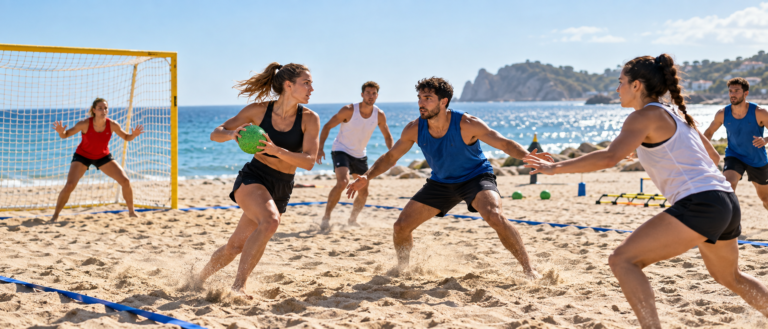
Preparing for a new beach handball season is about much more than just throwing a ball on the sand. A structured pre‑season beach handball program can dramatically improve your fitness, reduce injury risk, and ensure your team hits the sand ready to compete from the very first whistle.
In this guide, you’ll find a complete overview of how to move from basic fitness to full game readiness for beach handball. We’ll break down conditioning, strength, agility, technical drills, and weekly planning so you can build a smart, progressive program.
Why a Pre‑Season Beach Handball Program Matters
Beach handball is explosive, fast, and highly demanding on the body. The unstable surface, continuous jumping and landing, plus high‑intensity sprints put a lot of stress on joints and muscles.
A solid pre‑season program helps you:
- Build a fitness base to handle repeated sprints and fast transitions.
- Adapt to sand movement to prevent ankle and knee injuries.
- Develop core and shoulder strength for powerful and accurate throws.
- Practice sport‑specific skills like spin shots, fast breaks, and defensive slides.
- Increase confidence and team cohesion before the competitive season begins.
Key Components of a Beach Handball Pre‑Season Plan
To go from basic fitness to game readiness, your pre‑season beach handball program should include five main components:
- General fitness and conditioning
- Strength and power training
- Agility, speed, and footwork
- Technical and tactical drills
- Recovery, mobility, and injury prevention
Let’s look at each component in more detail.
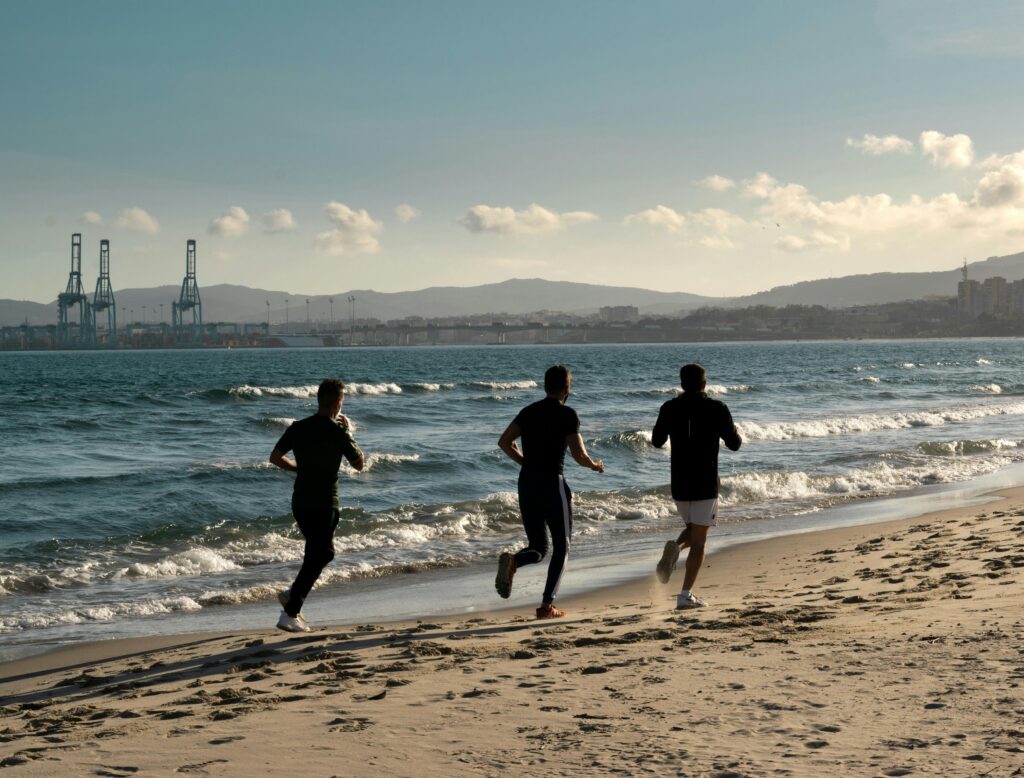
1. Building Your Beach Handball Fitness Base
During the first weeks of pre‑season, the focus is on aerobic capacity and basic conditioning. This allows the body to handle longer sessions later on without burning out.
Suggested Conditioning Sessions
- Steady‑state cardio (2x/week): 25-40 minutes of light running, cycling, or swimming. Keep intensity moderate; you should be able to talk while moving.
- Sand runs (1-2x/week): 6-10 runs of 40-60 meters on sand, walking back for recovery. Focus on relaxed technique and breathing.
- Bodyweight circuits (2x/week): 3-4 rounds of:
- Squats – 12 reps
- Push‑ups – 10-15 reps
- Lunges – 10 each leg
- Plank – 30-40 seconds
- Mountain climbers – 20 reps
These sessions build a strong engine before you move to more explosive and game‑like work.
2. Strength and Power for Beach Handball
Strength and power are essential for sprinting, jumping, and throwing on sand. You don’t need a full gym to develop them, but some structured training is crucial.
Strength Training Focus Areas
- Lower body: Squats, lunges, hip thrusts, calf raises.
- Upper body: Push‑ups, rows, overhead presses, dips.
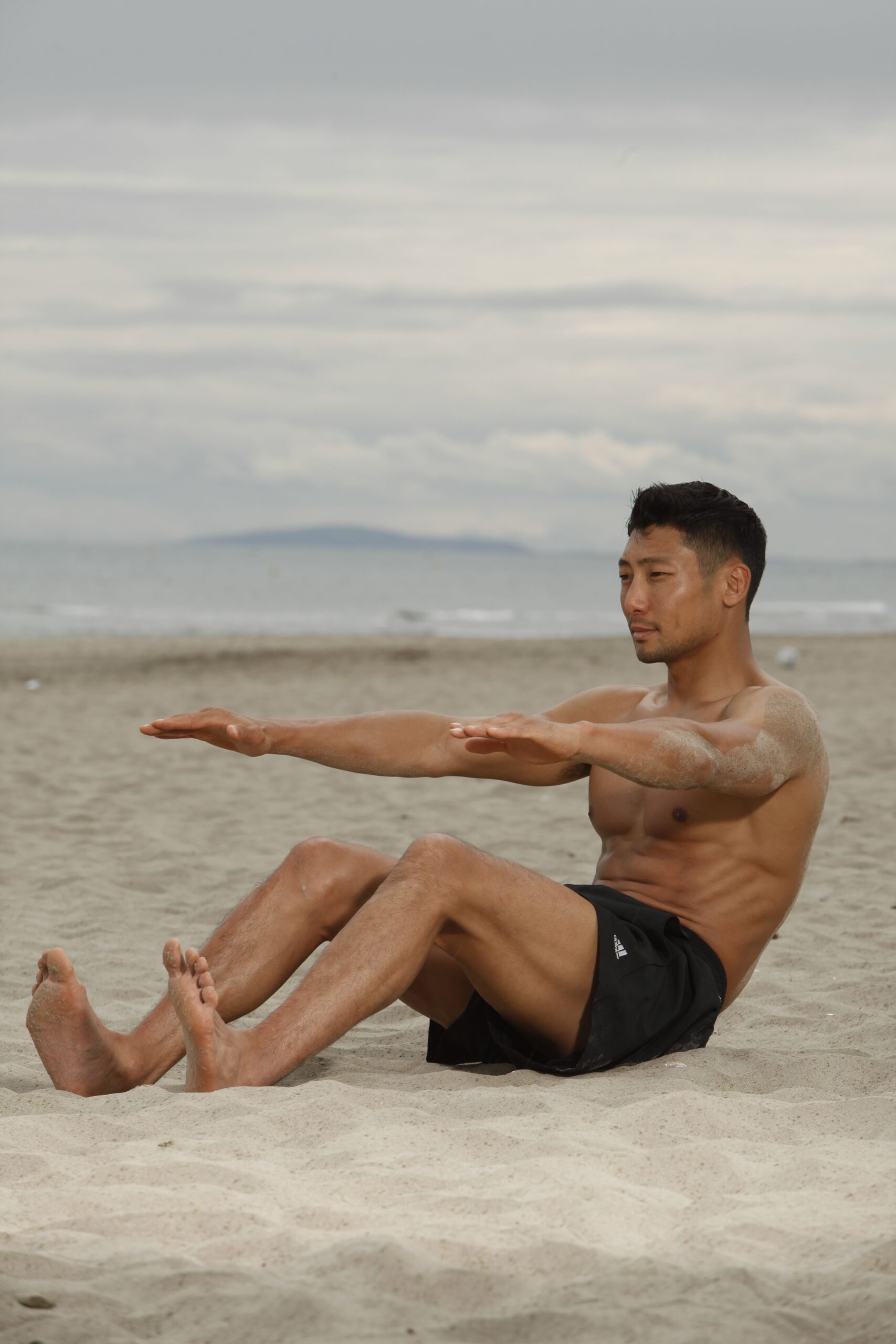
- Core: Planks, Russian twists, dead bugs, side planks.
- Shoulder and rotator cuff: External rotations, band pull‑aparts, Y‑T‑W raises.
Sample Strength Workout (2-3x per week)
- Goblet squat – 3 sets x 8-10 reps
- Reverse lunge – 3 x 8 each leg
- Push‑up or incline push‑up – 3 x 10-15
- One‑arm row (band or dumbbell) – 3 x 10 each arm
- Glute bridge – 3 x 12-15
- Plank – 3 x 30-45 seconds
Adding Power and Explosiveness
After 2-3 weeks of basic strength training, introduce plyometrics and power work:
- Jump squats – 3 x 6-8 reps
- Lateral bounds (side‑to‑side jumps) – 3 x 8 each side
- Medicine ball chest pass – 3 x 8-10
- Overhead throws – 3 x 6-8
Always prioritize good landing mechanics: soft knees, stable core, and proper alignment.
3. Agility, Speed, and Footwork on Sand
Speed on sand is different from speed on hard ground. Your pre‑season program must include agility drills, acceleration work, and specific beach handball footwork.
Core Agility Drills
- Ladder drills on sand (or draw a ladder in the sand):
- High knees in
- Two‑in / two‑out
- Lateral quick steps
- Shuttle runs: 5-10-15 m or 6‑point shuttle around cones.
- Defensive slides: Lateral shuffles staying low in a defensive stance.
- Close‑out drill: Sprint from goal area to 6-8 m line, then slow down and adopt defensive position.
Speed Development
- Short sprints (2x per week):
- 6-10 sprints of 10-20 meters
- Full walk‑back recovery between sprints
- Technique focus: quick first steps, strong arm drive
These drills help translate your fitness and strength into effective, game‑ready movement patterns.
4. Technical and Tactical Beach Handball Drills
Once your basic fitness is in place, your pre‑season program should shift focus towards skills, decision‑making, and tactics. This phase moves you from being “fit” to being truly game ready.
Key Technical Skills to Prioritize
- Ball control on sand: catching, passing, and ball security in unstable conditions.
- Shooting variations: regular shots, spin shots, in‑flight shots, 360° shots.
- Goalkeeper work: reaction saves, positioning, one‑on‑one situations.
- Fast breaks: quick transitions from defense to attack.
Example Technical Drill Block (45-60 minutes)
- Warm‑up with ball (10-15 minutes)
- Jogging with ball, dynamic stretches, simple passes in pairs.
- Passing circuits (10-15 minutes)
- 3-4 players per group, quick passes, 1-2 touches only, include jump passes.
- Shooting practice (15-20 minutes)
- Regular jump shots from different angles.
- Spin shot progression (without defender, then with light defense).
- Small‑sided games (15-20 minutes)
- 2v2 or 3v3 on a reduced court, focus on quick decisions and ball speed.
Tactical Elements to Incorporate
- Offensive systems: basic formations, spacing, and timing.
- Defensive systems: zone defense, man‑to‑man, fast pressure on shooters.
- Special situations: penalty throws, power play, end‑of‑set scenarios.
- Communication cues: simple verbal and non‑verbal signals for switches and plays.
5. Recovery, Mobility, and Injury Prevention
A complete pre‑season beach handball program isn’t only about training hard; it’s also about smart recovery. Good recovery builds consistency and reduces the risk of overuse injuries.
Essential Recovery Habits
- Dynamic warm‑up before every session (10-15 minutes).
- Cool‑down with light jogging or walking plus static stretching (5-10 minutes).
- Sleep: Aim for 7-9 hours per night.
- Hydration and nutrition: Replace fluids and electrolytes, and eat balanced meals with sufficient protein and carbohydrates.
Injury Prevention Focus Areas
- Ankle stability (balance work on sand, single‑leg drills).
- Knee control (glute and hip strengthening, proper landing mechanics).
- Shoulder health (rotator cuff and scapular stabilization exercises).
- Lower back care (core endurance, hip mobility).
Include 10-15 minutes of prehab (injury prevention exercises) 2-3 times per week.
Sample 6‑Week Pre‑Season Beach Handball Program
The following table shows a simple progression from basic fitness to game readiness over six weeks. You can adapt the volume and intensity according to your level and competition schedule.
| Week | Main Focus | On‑Sand Sessions | Strength Sessions | Key Goal |
|---|---|---|---|---|
| 1 | Base Fitness & Adaptation | 2 | 2 | Get used to sand, low‑intensity work |
| 2 | Endurance & Basic Skills | 3 | 2 | Improve cardio, simple passes & shots |
| 3 | Strength & Agility | 3 | 3 | Add jumps, short sprints, sharper movement |
| 4 | Power & Game‑Like Drills | 3-4 | 2-3 | Introduce small‑sided games, more intensity |
| 5 | Tactics & Match Play | 4 | 2 | Scrimmages, refine systems and roles |
| 6 | Taper & Game Readiness | 3 | 1-2 | Reduce volume, stay sharp, avoid fatigue |
Example Weekly Schedule for Pre‑Season
Here is a practical example of how a single pre‑season week might look for a team training 4-5 times per week. This assumes you are in weeks 3-4 of the program.
| Day | Session Type | Main Content |
|---|---|---|
| Monday | Strength + Core | Full‑body gym / bodyweight, shoulder prehab, core |
| Tuesday | On‑Sand Conditioning & Skills | Sand runs, agility ladder, basic passing & shooting |
| Wednesday | Recovery / Light Mobility | Stretching, foam rolling, optional easy swim or walk |
| Thursday | On‑Sand Power & Tactics | Plyometrics, short sprints, small‑sided games |
| Friday | Strength + Core | Lower‑body focus, core endurance, rotator cuff work |
| Saturday | Game Simulation | Warm‑up, tactical drills, controlled scrimmage |
| Sunday | Rest | Full rest or very light activity only |
Practical Tips for Coaches and Players
For Coaches Designing a Pre‑Season Program
- Start slowly: Especially with players new to sand, limit high‑impact jumps in the first 1-2 weeks.
- Monitor load: Track total jumps, sprints, and set duration to avoid sudden spikes.
- Mix fun and structure: Combine conditioning with games and challenges so players stay engaged.
- Use small‑sided formats: 2v2 and 3v3 increase touches, decisions, and fitness in a game‑like way.
- Communicate clearly: Explain why each training block matters for game performance.
For Players Following a Pre‑Season Plan
- Be consistent: 4-6 weeks of steady work beats two weeks of “all‑out” training.
- Listen to your body: Some soreness is normal; sharp pain is not.
- Take care of feet and ankles: Train barefoot on sand, but use supportive footwear on hard surfaces.
- Fuel appropriately: Beach sessions are often in heat-hydrate and eat before and after training.
- Practice skills when fresh: Do technical drills early in the session for best quality.
Common Mistakes in Beach Handball Pre‑Season (and How to Avoid Them)
- Skipping the base phase
Going straight into intense scrimmages without building fitness first. Solution: Dedicate at least 2 weeks to conditioning and basic strength. - Too many jumps too soon
Overloading knees and ankles in the first sessions. Solution: Progress from low‑impact to high‑impact plyometrics gradually. - No clear structure
Random drills with no progression. Solution: Plan weekly goals for fitness, skills, and tactics. - Neglecting recovery
Training hard every day without rest leads to fatigue and injuries. Solution: Include at least one full rest day per week. - Focusing only on fitness
Being fit but tactically unprepared. Solution: Add small‑sided games and tactical drills from week 3 onwards.
Short Case Example: From Casual to Competition‑Ready
Imagine a mixed amateur team that normally only plays during summer weekends. They decide to follow a 6‑week pre‑season beach handball program before a local tournament.
- Weeks 1-2: 2-3 on‑sand sessions per week, focusing on running on sand, easy passing drills, and bodyweight strength. Players feel tired but notice quick progress in their basic fitness.
- Weeks 3-4: They add structured strength workouts and agility drills. Short sprints and small‑sided games are introduced. Coordination and teamwork start improving.
- Weeks 5-6: Training becomes more tactical, with game simulations and set plays. Volume is slightly reduced, but intensity is high. Players arrive at the tournament confident, with improved endurance and sharper decision‑making.
Without changing their lifestyle dramatically, the team transitions from “just playing for fun” to being competitively ready, all thanks to a planned pre‑season program.
Conclusion: Turn Pre‑Season into Your Competitive Advantage
A well‑designed pre‑season beach handball program is the difference between simply surviving early matches and truly dominating them. By progressing step by step-from basic fitness and strength to sand‑specific agility, technical skills, and tactical awareness-you build a foundation that lasts all season.
Start with manageable goals, stay consistent, and listen to your body. Whether you’re a coach planning sessions or a player preparing for competition, using a structured approach will help you reach genuine game readiness when it matters most.
Grab a calendar, map out your next 4-6 weeks, and bring this guide to the sand. Your future self-stronger, fitter, and more confident on the beach handball court-will thank you.