
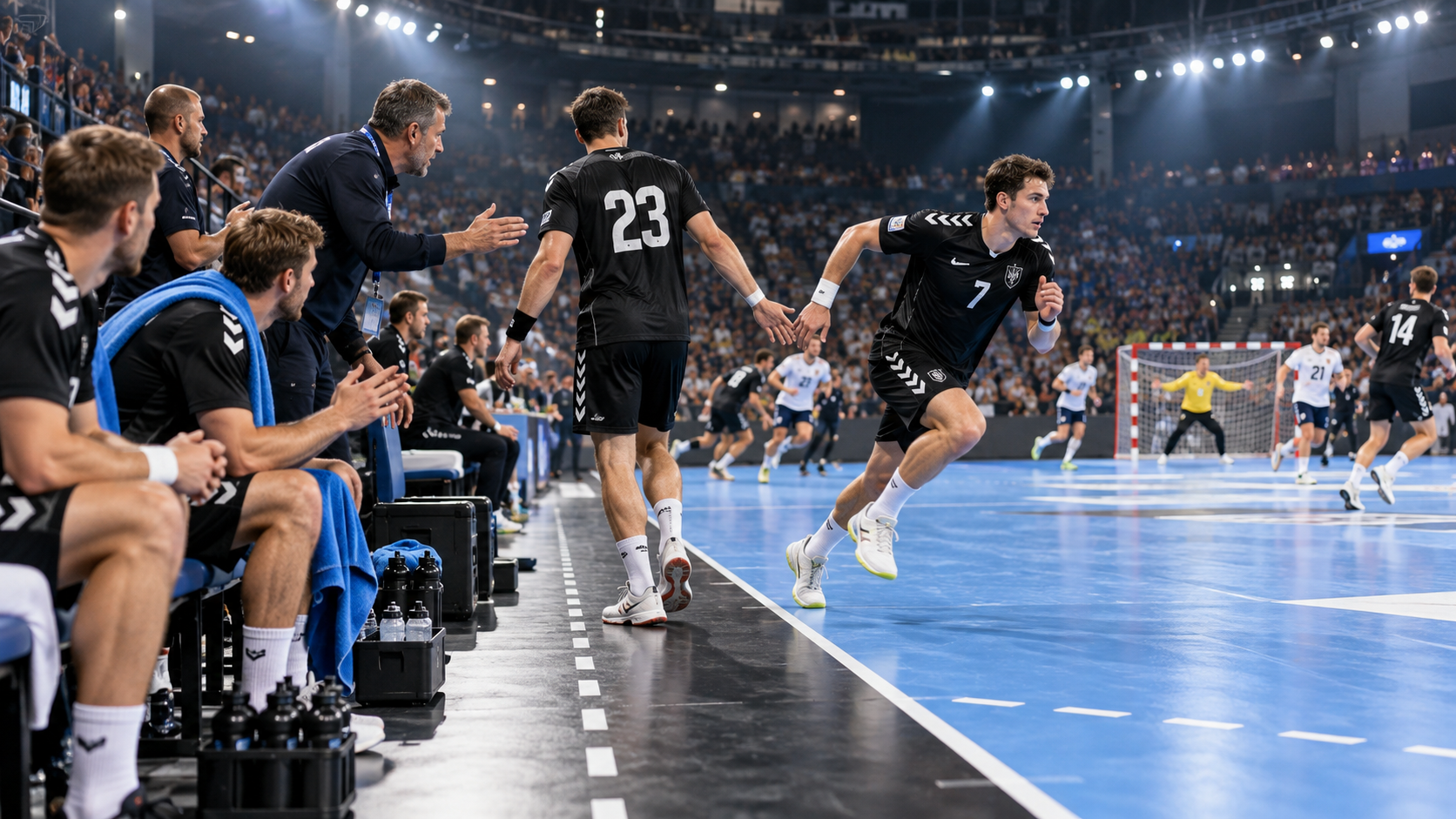
In modern handball, matches come fast and hard: league games, cup ties, international competitions, and long away trips. When the calendar gets crowded, managing player rotation and bench strategy becomes one of the most important tasks for any coach or performance staff. Done well, it keeps players fresh, reduces injuries, and maintains a high level of performance across the entire season.
This guide explains how to plan rotations, use your bench intelligently, and make better in-game decisions in tight handball schedules. Whether you coach at professional, semi-professional, or youth level, you’ll find practical tips and handball-specific insights you can apply right away.

Why Player Rotation Matters in Handball
Handball is a high-intensity, stop-and-go sport with frequent contacts, sprints, and jumps. In congested periods, fatigue accumulates quickly and can destroy performance if not managed.
Key reasons to prioritize rotation
- Maintain high tempo: Fresh players can keep up the fast-break game and quick transitions that often decide matches.
- Reduce injury risk: Overused players have a higher chance of muscle strains, joint injuries, and overuse problems.
- Improve decision making: Fatigued brains make slow and poor decisions; rotation maintains tactical discipline.
- Develop squad depth: Giving minutes to bench players builds confidence and tactical understanding, crucial when stars are unavailable.
- Spread responsibility: A rotation culture makes the whole group feel important and increases team cohesion.
Foundations of an Effective Handball Rotation Strategy
A strong bench strategy starts long before the first whistle. It’s a mix of planning, communication, and data-informed decisions.
1. Define roles clearly
Every player should know:
- Their primary position and backup role (e.g., “starting left back, can also cover center back”).
- Typical entry times (e.g., “start second half”, “enter after 10 minutes for defensive specialist role”).
- The phases of the game where they’re most needed (fast break, 7v6, penalty defense, etc.).
2. Plan rotation around game rhythm
Handball matches have recognizable rhythms: intense bursts, time-outs, 2-minute suspensions, and set plays. Instead of rotating randomly, connect changes to these moments:
- After time-outs – Perfect moment to introduce tactical changes and fresh players.
- Following suspensions – Rotate to bring in defensive specialists or fast-break threats.
- End of halves – Use finishers who handle pressure well, or protect key players who are close to fatigue or another suspension.
3. Use data and simple tracking
You don’t need elite technology to track fatigue. Combine simple methods:
- Minutes played per game and per week.
- Intensity perception (short post-game questionnaire: “How hard was this game, 1-10?”).
- Basic wellness: sleep hours, muscle soreness, mood.
Use this information to adjust your rotation in the next training session or match.

Designing a Rotation Plan for Tight Handball Schedules
When you face 2-3 matches per week, it’s essential to plan at the microcycle level (one week) and the block level (2-4 weeks).
Step 1: Map the schedule
List all upcoming games and their context:
- Home or away?
- League position of opponent?
- Travel time?
- Key rival or must-win situation?
This helps you identify where to prioritize your strongest lineup and where to rotate more aggressively.
| Match | Importance | Planned Rotation Level |
|---|---|---|
| League Match vs Top Team | Very High | Minimal rotation, strongest 7 |
| Cup Match vs Lower Team | Medium | Heavy rotation, bench starts |
| Away Match (Long Travel) | High | Moderate rotation, protect veterans |
Step 2: Build positional rotation groups
Create clear position clusters to help with consistent rotation:
- Goalkeepers: 2-3 keepers, one main starter, one regular back-up, plan full halves or full games for each when possible.
- Backcourt: Left back, center back, right back – define primary and secondary options.
- Wings: Left and right wings – rotate regularly, especially in fast-break-heavy teams.
- Pivots: At least two, with different profiles (offensive pivot, defensive pivot, mobile pivot).
Think in patterns like: “Backcourt Line A plays first 15-20 minutes, Backcourt Line B takes over next 10-15 minutes”, then adjust based on game flow.
Step 3: Decide baseline minutes
Establish a baseline target of minutes for each player during congested weeks:
| Player Type | Per Game Target | Per Week (2 Games) |
|---|---|---|
| Key Starter | 35-45 min | 70-90 min |
| Rotational Player | 15-30 min | 30-60 min |
| Young Prospect | 5-15 min | 20-30 min (in right games) |
These numbers are guidelines, not strict rules, but they keep you from overusing certain players when the calendar gets crowded.
In-Game Bench Strategy: How to Rotate Smartly
Having a plan is one thing; executing it in a live match with pressure, emotions, and surprises is another. Here are practical tactics for smart in-game bench management.
1. Use “rotation windows”
Pre-define typical times for defensive and offensive rotations. For example:
- First 10 minutes: Start with your strongest defensive unit to set the tone.
- Minutes 11-20: Bring in fresh players, especially wings and a pivot, to maintain tempo.
- Last 10 minutes of each half: Return to your best decision makers and finishers.
This reduces emotional, last-second choices and helps players mentally prepare for when they’ll likely be called.
2. Separate defensive and offensive specialists
Modern handball often uses specialist roles to keep intensity high:
- Defensive specialist (strong 6-0 or 5-1 defender) who is subbed in for defense only.
- Offensive playmaker or shooter who leads attacks but is protected on defense to save energy.
Train these substitutions so they are automatic and fast, especially during transition phases.
3. Protect key players in specific moments
When the schedule is tight, you can’t afford to lose your central back or best pivot to fatigue or injury. Consider:
- Short 2-3 minute breaks every 10-12 minutes for high-load players.
- Sitting players who show signs of mental fatigue: late defensive reactions, forced passes, unnecessary shots.
- Rotating early if you have a comfortable lead – not waiting until the last 5 minutes.
4. Manage 2-minute suspensions strategically
Suspensions are decisive moments for bench strategy:
- Immediately bring in your most disciplined defenders and best communicators.
- Use time-outs to reorganize and, if possible, give 30-60 seconds of mental rest to tired leaders.
- As the suspension ends, have your next offensive and defensive substitutions ready on the sideline.
Balancing Performance and Player Welfare
In a tight handball schedule, you must constantly weigh single-game success against long-term performance and health.
1. Recognize visible fatigue signs
- Slower return to defense after losing the ball.
- Drop in shot power or jump height.
- More fouls from bad positioning rather than tactical intent.
- Silent or reduced communication in defense.
When you see 2-3 of these together, consider rotating the player, even if they are a star.
2. Consider age and injury history
Not every player tolerates heavy loads equally:
- Veteran players: Usually need more rest between games; be careful with back-to-back matches.
- Recently injured players: Follow medical guidelines and increase minutes gradually.
- Young players: Often have energy to spare, but still need structured recovery and not just endless running.
3. Recovery as part of bench strategy
Smart rotation is supported by good recovery habits:
- Cool-down and stretching routines after each game.
- Hydration and post-match nutrition standards for the whole team.
- Sleep tracking and minimum rest policies during congested weeks.
Make recovery a shared responsibility, not just the medical team’s job.
Communicating the Rotation Plan to Your Team
Even the best player rotation strategy fails if players don’t understand or accept it. Clear communication is crucial.
1. Set expectations at the start of the season
Explain your philosophy:
- “We want everyone to contribute.”
- “We will rotate more in weeks with 2-3 games.”
- “Performance, training attitude, and tactical fit will guide minutes.”
This reduces frustration when players are rotated out in certain games.
2. Talk individually with key players
Leaders and stars might fear that rotation means you don’t trust them. Clarify:
- You’re protecting them for the biggest games.
- You value quality minutes over maximum minutes.
- You expect them to support rotation and help younger teammates adapt.
3. Debrief after congested periods
After a tough series of games, hold a short meeting:
- Review what worked and what didn’t in the rotation.
- Ask players how they felt physically and mentally.
- Adjust your plan for the next block based on feedback.
Practical Tips for Coaches: Turning Theory into Practice
On the training court
- Simulate rotation patterns in practice so players get used to entering the game “cold”.
- Use short, intense drills to mirror congested match conditions and teach players to perform under fatigue.
- Practice fast substitutions on transition plays to minimize confusion and technical errors.
On the bench during matches
- Assign an assistant coach or staff member to track minutes and substitutions in real time.
- Use simple visual signals or cards for pre-planned rotations to speed up decision-making.
- Keep a rotation cheat sheet listing your preferred combinations (e.g., “Leading by 3+ goals: Line-up B”).
With staff and analytics
- Coordinate with physios and fitness coaches about player availability and load management.
- Analyze video to see how performance changes when certain players are fresh vs. tired.
- Use simple GPS or heart-rate data if available to identify who consistently carries the highest load.
Mini Case Study: Rotation in a 3-Games-in-7-Days Week
Imagine your team plays:
- Saturday: Home league match vs mid-table team.
- Wednesday: Cup quarter-final vs strong opponent.
- Saturday: Away league match vs title rival.
Strategic approach
- First Saturday (mid-table opponent): Start with a mixed lineup. Use more rotation in the second half if you lead comfortably. Key starters play 25-35 minutes instead of 45-60.
- Wednesday (cup quarter-final): Deploy your strongest possible starting 7, but still respect the rotations defined by your data and staff. Aim for quality, not overuse.
- Second Saturday (title rival): Aim to have your leaders as fresh as possible. Use a clear defensive and offensive bench pattern so they’re not playing every second, especially early in the game.
Over the week, every player participates, key leaders are protected from extreme loads, and performance is better balanced across all three matches.
SEO-Focused FAQ on Handball Rotation and Bench Strategy
How do you manage player rotation in handball tournaments?
In tournaments with multiple games in a few days, pre-plan which matches will feature your full-strength lineup and which will allow wider rotation. Use short, frequent substitutions and ensure each player knows their specific role in attack and defense.
What is the best way to use the bench in tight handball schedules?
The best bench strategy is proactive: set rotation windows, balance offensive and defensive specialists, protect key players during low-risk phases, and always consider the next match, not just the current one.
How many minutes should a handball starter play in a congested calendar?
It depends on age, fitness, and position, but 35-45 minutes per game during heavy weeks is a common target, with short breaks throughout the match rather than one long rest.
Conclusion: Make Rotation a Strength, Not a Weakness
Managing player rotation and bench strategy in tight handball schedules is not about “resting your best players” and hoping for the best. It’s a structured, intentional process that:
- Protects your most important athletes from burnout and injury.
- Gives meaningful minutes and experience to your entire squad.
- Keeps your team fast, aggressive, and tactically sharp deep into the season.
By planning ahead, using clear roles, tracking load, and communicating openly with your players, you turn your bench from a passive backup into an active weapon. In modern handball, where tight schedules are the norm, smart rotation isn’t optional-it’s a competitive advantage.