Are you new to handball and wondering how to play correctly without breaking the rules? This beginner-friendly guide explains the basic handball rules in clear, simple language so you can step on the court with confidence. Whether you want to play team handball at school, join a local club, or just understand what’s happening on TV, this article will give you a solid foundation.
We’ll cover the handball court layout, player roles, how scoring works, common fouls, and essential rules for attacks, defense, and goalkeepers. You’ll also find practical tips to avoid beginner mistakes and start playing smarter from day one.
What Is Team Handball?
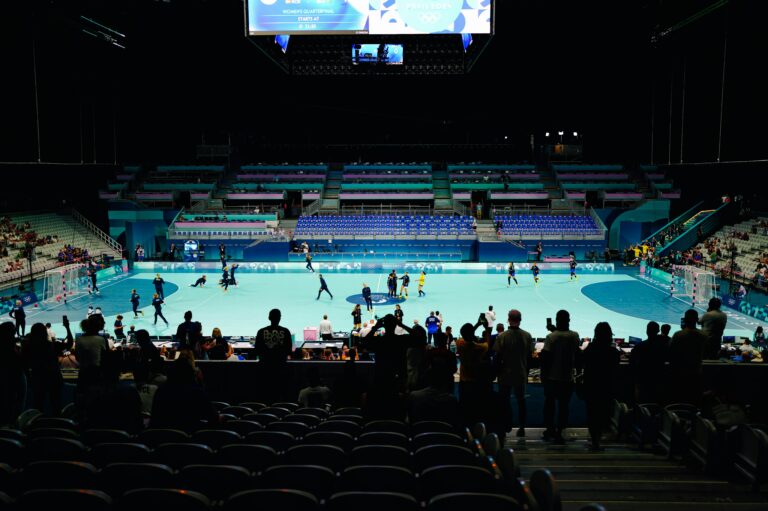
Team handball (often just called handball) is a fast-paced indoor sport played between two teams of seven players each (six court players and one goalkeeper). The basic idea is simple: pass the ball with your hands, move it quickly, and score by throwing it into the opponent’s goal.
Handball is popular in Europe and is an official Olympic sport. It combines elements of basketball, soccer, and netball: quick passes, jumps, shots on goal, and dynamic defense.
Key Features of Handball
- Two teams of seven players
- Played on an indoor court with two goals
- High scoring, fast transitions from defense to attack
- Limited dribbling; emphasis on passing and teamwork
Handball Court Dimensions and Lines
Understanding the court is one of the first steps to mastering handball rules for beginners. Each line on the floor has a specific purpose, and many rules are based on these markings.
| Area / Line | Distance / Size | Basic Purpose |
|---|---|---|
| Court size | 40 m x 20 m | Standard playing area |
| Goal area line | 6 m from goal | Only goalkeeper allowed inside |
| Free throw line | 9 m from goal | Used for free throws |
| 7 m line | 7 m from goal | Penalty throws |
| Halfway line | Center of court | Starts and restarts the game |
Goal Area (6 m Line)
The 6-meter line creates the goalkeeper’s area. Only the goalkeeper is allowed to stand inside it. Field players cannot step into or land inside this area while playing the ball. They can, however, jump into the area if they release the ball before landing.
Free Throw Line (9 m Line)
The 9-meter line is a dashed arc outside the 6 m area. Most minor fouls committed by defenders result in a free throw for the attacking team from this line.
7 m Line (Penalty Line)
The 7-meter line is where penalty throws (similar to penalty kicks in soccer) are taken after serious fouls that stop a clear scoring chance.
Basic Handball Rules: Objective and Scoring
The main objective in handball is to score more goals than the opponent by throwing the ball completely over the goal line and into the net.
Scoring Rules
- A goal counts when the whole ball crosses the goal line inside the posts and under the crossbar.
- Goals can be scored from open play, fast breaks, or set plays (free throws or 7 m throws).
- Goals count the same (no 2- or 3-point shots like in basketball).
Game Duration
- Standard match: 2 x 30-minute halves with a 10-15 minute halftime break.
- Younger age groups usually play shorter halves (e.g., 2 x 25 or 2 x 20 minutes).
- Clock stops for timeouts, injuries, and certain referee decisions, depending on competition rules.
Number of Players and Positions
Each handball team has:
- 7 players on court:
- 6 field players
- 1 goalkeeper
- Up to 7 or more substitutes (depending on competition rules)
| Position | Role |
|---|---|
| Goalkeeper | Defend the goal, organize defense |
| Wingers (left/right) | Attack from the sides, fast breaks |
| Backs (left/right) | Long-range shots, strong passes |
| Center back (playmaker) | Directs attacks, sets up plays |
| Pivot (line player) | Plays near the 6 m line, creates space |
Substitutions
- Unlimited substitutions are allowed throughout the game.
- Players must enter and leave through the official substitution area, near the halfway line.
- Substitutions can happen “on the fly” (while the game is in progress), similar to ice hockey.
Basic Ball Handling Rules in Handball
Good ball control is essential. To avoid turnovers, you must understand how long you can hold the ball, when you can dribble, and how you’re allowed to move.
The 3-Second Rule
A player in possession of the ball may hold it for a maximum of three seconds without passing, shooting, or dribbling.
The 3-Step Rule
Without dribbling, a player can take up to three steps while holding the ball. After three steps, they must either:
- Pass the ball
- Shoot at goal
- Start dribbling
Dribbling Rules
- You may dribble the ball similar to basketball (bouncing it with one hand).
- After you stop dribbling and hold the ball with one or both hands, you cannot dribble again (this would be a “double dribble”).
- While dribbling, you can take as many steps as you like, but you still must follow other rules (like not entering the 6 m area).
Passing and Shooting
There are no limits on how many passes a team can make before shooting, but referees may signal passive play if the attack takes too long without trying to score. When that happens, the attacking team must shoot within a few passes or lose the ball.
Goal Area Rules (6 m Line)
The goal area is one of the most important concepts in handball. Many beginner fouls happen here, so it’s worth mastering these rules early.
Who Can Enter the Goal Area?
- Only the goalkeeper may stand or move freely inside the 6 m area.
- Field players:
- May jump into the area when shooting if they release the ball before landing.
- Must not land with the ball in their hands inside the goal area.
What Happens If an Attacker Steps In?
- If an attacking player steps into the goal area with the ball (or gains an advantage by entering), the referee awards a free throw to the defending team.
- Goals scored illegally from inside the area are disallowed.
What Happens If a Defender Steps In?
- If a defender steps into the area to gain unfair advantage or block the attacker, it usually leads to a free throw or, if it stops a clear chance, a 7 m penalty.
Free Throws, Penalties, and Throw-Ins
Restarting play correctly is another essential part of handball basic rules. Here are the main types of throws you’ll encounter.
Throw-Off (Start and Restart)
- Used to start the game and restart after each goal.
- Taken from the center of the court on the halfway line.
- All players must be in their own half when the throw-off is taken, except the player throwing.
Free Throw
- A free throw is awarded for minor fouls or rule violations.
- Usually taken from the spot of the foul, or from the 9 m line if close to the goal area.
- Defenders must stay at least 3 meters away from the thrower.
7 m Penalty Throw
- A penalty throw is awarded when a clear chance to score is illegally stopped by the defense.
- Taken from the 7 m line, with only the thrower and goalkeeper involved.
- The thrower must keep one foot on or just behind the line until the ball leaves the hand.
Throw-In (Sideline Throw)
- Used when the ball crosses the sideline.
- A taken from the spot where the ball went out, by the opponents of the team that last touched it.
Goalkeeper Throw
- A goalkeeper throw restarts play when the attacking team shoots the ball over the end line without scoring or commits certain violations in the goal area.
- The goalkeeper throws the ball from inside the goal area to a teammate.
Basic Defensive Rules and Fouls
Physical contact is allowed in handball, but only within limits. Understanding what is legal and what is a foul will help you defend effectively without constant penalties.
What Is Allowed in Defense?
Defenders may:
- Use their body to block the path of an attacker.
- Use bent arms to hold their ground or obstruct movement.
- Try to intercept passes or block shots.
Common Fouls in Handball
The following actions are usually considered fouls:
- Pulling or grabbing the opponent’s body or uniform
- Hitting, pushing, or tripping an opponent
- Dangerous contact, especially from behind or around the neck
- Blocking or hitting the ball directly from the opponent’s hands
Most fouls result in a free throw for the other team. However, more serious or repeated fouls can lead to progressive punishments.
Progressive Punishment: Warnings and Suspensions
| Sanction | When It’s Used |
|---|---|
| Yellow card | Initial warning for unsporting behavior or rough play |
| 2-minute suspension | For repeated or serious fouls; team plays with one player less |
| Red card | Disqualification for very serious fouls or three suspensions |
- Yellow card: A warning; the player stays in the game.
- 2-minute suspension: The player must leave the court for 2 minutes; their team plays with one fewer player.
- Red card: The player is disqualified from the rest of the match. After 2 minutes, the team may replace them with another player.
Goalkeeper Rules Every Beginner Should Know
The goalkeeper has special privileges but also specific restrictions.
What the Goalkeeper Can Do
- Touch the ball with any part of the body inside the goal area.
- Move freely within the 6 m area.
- Leave the goal area and play as a regular field player outside of it.
What the Goalkeeper Cannot Do
- Carry the ball back into the goal area after fully controlling it outside.
- Cross the goal area line with the ball under control (similar to field players entering illegally).
- Endanger an opponent during 7 m throws or one-on-one situations.
Essential Handball Tips for Beginners
Knowing the rules is important, but applying them smartly is what makes you a better player. Here are some practical handball beginner tips to help you improve faster.
1. Master the 3-Step and 3-Second Rules
- Count your steps mentally: “one, two, three – pass or shoot.”
- Don’t hold the ball too long; move it quickly to avoid turnovers.
2. Focus on Safe, Simple Passes
- Use short, direct passes rather than risky long throws.
- Always look before passing; turnovers often lead to fast breaks against you.
3. Respect the Goal Area
- Practice jumping shots so you can shoot from outside but land inside legally.
- Be aware of your feet; beginners often lose goals because they step into the 6 m area.
4. Play Fair but Firm Defense
- Stand with knees slightly bent and arms up to block shots and passes.
- Use your body, not your hands, to stop attackers.
- Avoid reaching around opponents’ necks or shoulders.
5. Learn from Referee Decisions
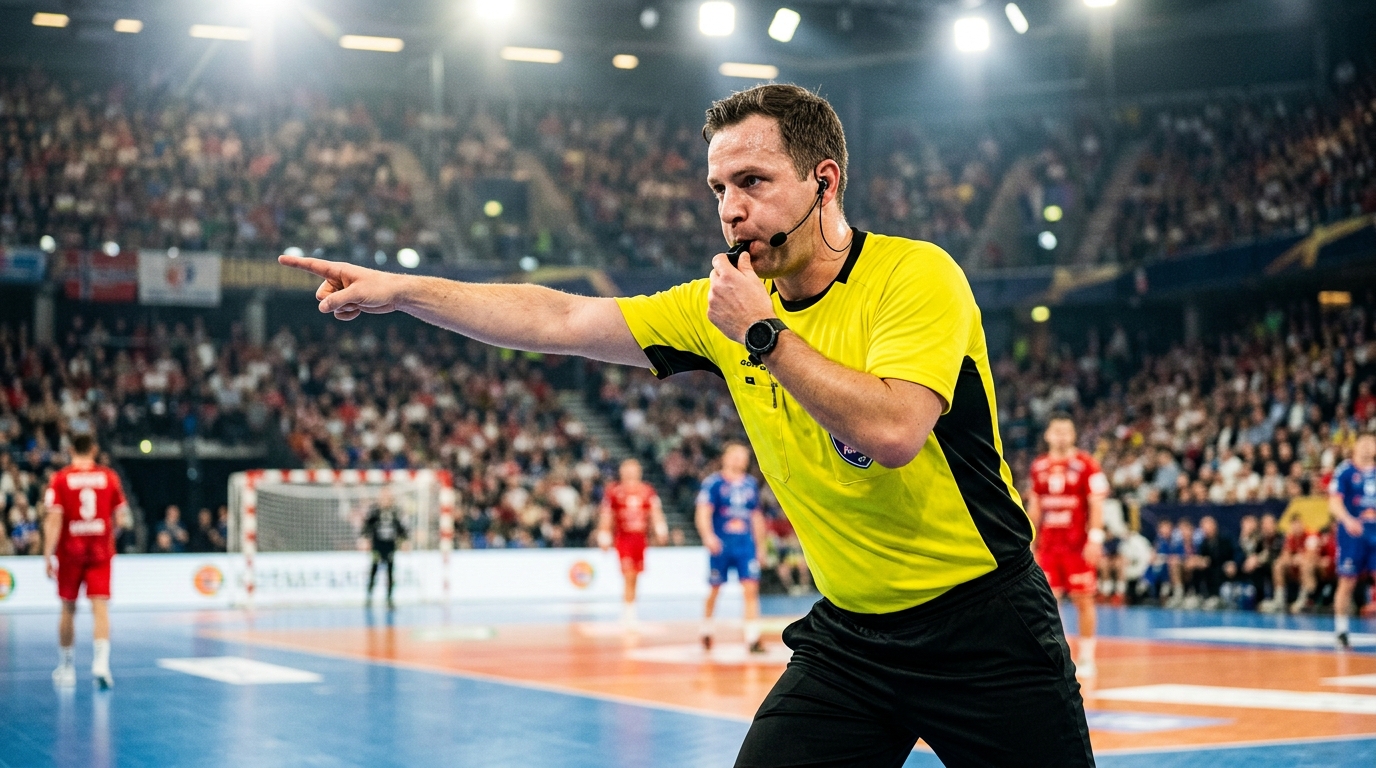
- Pay attention to why a foul was called, not just that it happened.
- Ask your coach to explain unclear situations after the game or in training.
Benefits of Learning Handball for Beginners
Beyond understanding the rules, playing handball offers a range of physical and mental benefits.
- Cardiovascular fitness: Constant running, jumping, and quick changes of direction.
- Coordination and agility: Handling the ball, timing jumps, and quick footwork.
- Teamwork and communication: Attacking and defending as a unit.
- Decision-making under pressure: Choosing when to pass, shoot, or hold the ball.
Common Beginner Mistakes (and How to Avoid Them)
Even with a good understanding of basic handball rules, new players tend to make similar mistakes. Here’s how to spot and correct them quickly.
Mistake 1: Walking Too Many Steps
Fix: Practice catching, taking exactly three steps, and passing. Repeat this in drills so it becomes automatic.
Mistake 2: Standing Still with the Ball
Fix: Move into space before receiving the ball and make quick decisions once you have it.
Mistake 3: Entering the Goal Area
Fix: During practice, mark the 6 m line mentally and stay just outside it when preparing to shoot.
Mistake 4: Overly Aggressive Defense
Fix: Focus on body positioning. Stay between the attacker and the goal instead of grabbing arms or shirts.
Quick Handball Rules Checklist for New Players
| Rule | Key Point |
|---|---|
| Holding the ball | Max 3 seconds |
| Steps with ball | Max 3 steps without dribble |
| Dribbling | No double dribble |
| Goal area | Only goalkeeper can stand inside |
| Contact | Use body, no grabbing or hitting |
| Substitutions | Unlimited, through substitution area |
Conclusion: Start Playing Handball with Confidence
Now that you know the basic handball rules every beginner should know, you’re ready to step onto the court with much more confidence. You understand how the handball court works, what you can and can’t do with the ball, how scoring and fouls are handled, and what’s expected of attackers, defenders, and goalkeepers.
The best way to really learn handball is to play regularly:
join a local club, school team, or casual group, and don’t be afraid to ask more experienced players or coaches for feedback. Combine this practical experience with the rules explained in this guide, and you’ll quickly move from beginner to a valuable team member.
Keep these key ideas in mind-3 steps, 3 seconds, respect the 6 m line, and play fair-and you’ll enjoy one of the most exciting and dynamic team sports in the world.