Handball is a dynamic and fast-paced team sport where every position on the court has a specific role. Understanding handball positions is essential if you want to improve your game sense, build better tactics, or simply enjoy watching professional matches with deeper insight.
In this guide, we’ll break down all handball positions, explain their roles and responsibilities, and show how they work together as a unit. Whether you’re a beginner, a coach, or a curious fan, this article will help you see the game in a completely new way.
Overview of Handball Positions
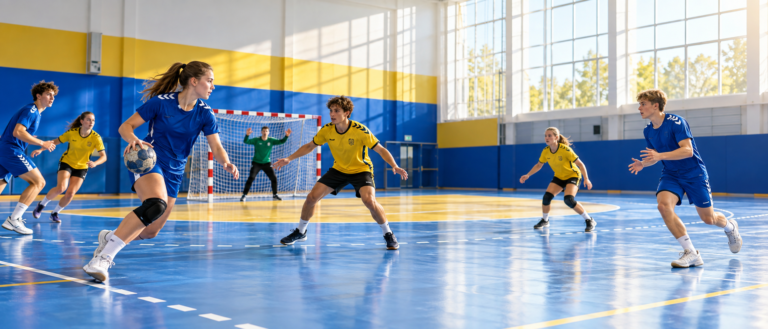
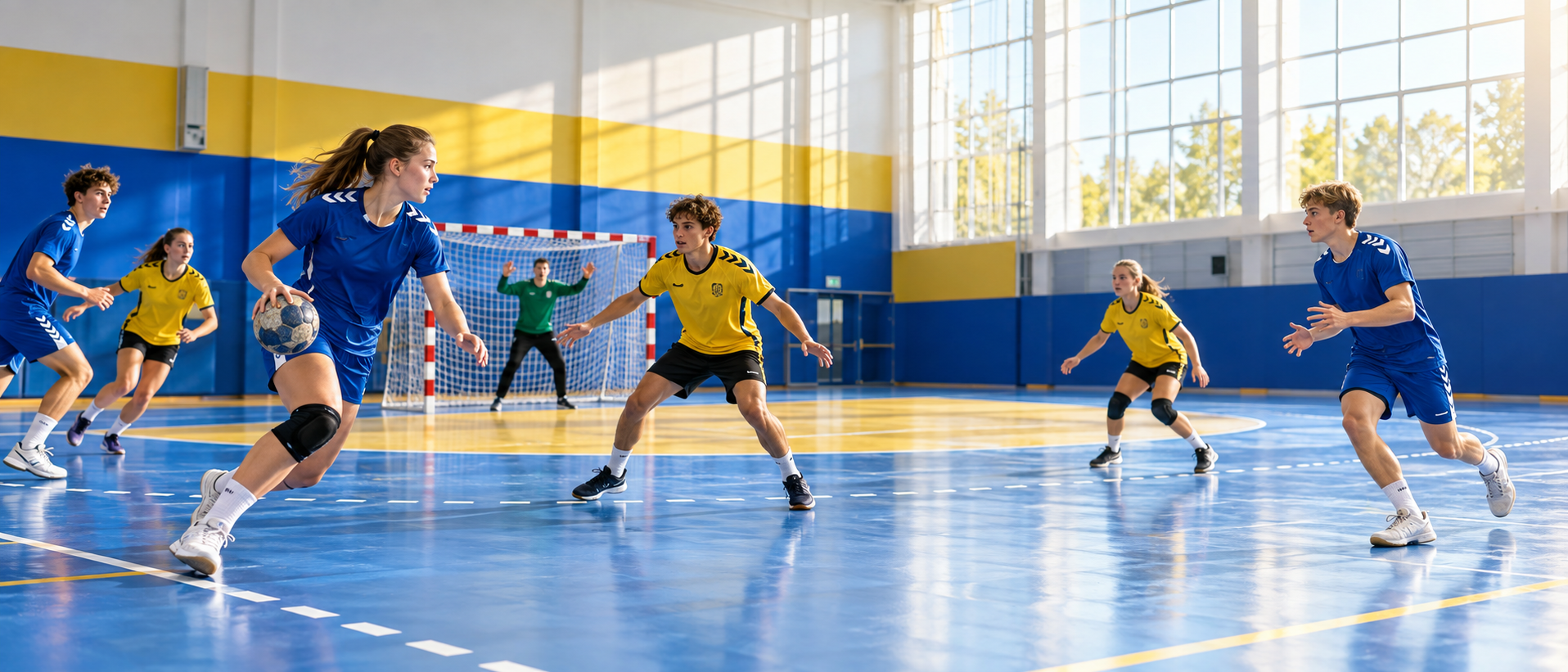
A standard team in team handball consists of:
- 1 Goalkeeper
- 6 Field players:
- 2 Wingers (Left Wing, Right Wing)
- 1 Pivot (also called Line Player)
- 3 Backs (Left Back, Center Back, Right Back)
Each handball position has unique technical and tactical tasks. Coaches often build their entire strategy based on how well these positions complement each other.
| Position | Main Area | Primary Role |
|---|---|---|
| Goalkeeper | Goal area | Shot-stopping, directing defense |
| Left Wing / Right Wing | Flanks near sideline | Fast breaks, scoring from angles |
| Pivot (Line Player) | Near opponent’s 6m line | Creating space, blocking, close-range shots |
| Left Back / Right Back | Half-spaces outside 9m | Long-range shooting, breaking defense |
| Center Back | Central backcourt | Playmaking and organizing attack |
The Goalkeeper: Last Line of Defense, First Point of Attack
The handball goalkeeper is much more than a shot-stopper. They are the only player allowed to stay inside the goal area and can use any part of their body to stop the ball, as long as it’s inside that zone.
Main Responsibilities of the Goalkeeper
- Stopping shots: Reacting quickly to throws from all positions and distances.
- Reading shooters: Anticipating where the winger, back, or pivot is likely to aim.
- Communicating with defense: Giving instructions about marking, switches, and blocks.
- Starting fast breaks: Delivering accurate outlet passes to wingers after a save.
- Organizing set defense: Positioning defenders to block key shooting lanes.
Key Skills for a Handball Goalkeeper
- Explosive reflexes and flexibility
- Good positioning and body control
- Strong mental resilience (after goals, penalties, or mistakes)
- Accurate long passing for counterattacks
Backcourt Players: The Team’s Long-Range Weapons
Backcourt players (Left Back, Center Back, Right Back) are typically the main shooters from distance and often the physically strongest players on the court. They attack from behind the 9-meter line and are key to breaking through tough 6-0 or 5-1 defenses.
Left Back and Right Back
The Left Back and Right Back usually play in the half-spaces on their respective sides.
Main Responsibilities
- Powerful outside shots from the 8-10 meter range.
- Penetrating the defense with one-on-one moves or breakthroughs.
- Creating overloads by drawing defenders and passing to wings or pivot.
- Defensive stability in the central block, especially against opponent backs.
Ideal Profile for Backcourt Players
- Tall and strong with a powerful jump shot
- Good timing for jumping and shooting over defenders
- Solid ball-handling and passing skills
- Confident in fast decision-making under pressure
The Center Back (Playmaker)
The Center Back is often described as the “brain” of the team. This position resembles a point guard in basketball or a central midfielder in football. The center back controls tempo, calls plays, and links all other attacking positions.
Main Responsibilities
- Organizing the offense: Calling tactical moves and set plays.
- Distributing the ball: Choosing when to pass to wings, backs, or pivot.
- Reading the defense: Identifying weak spots or mismatches.
- Creating chances: Using feints, quick passes, and changes of pace.
- Switching sides: Moving the ball quickly from left to right to stretch the defense.
Key Skills of a Center Back
- High game intelligence and tactical understanding
- Excellent passing range and precision
- Strong communication and leadership
- Agility and quick footwork to change direction
Wingers: Speed, Precision, and Fast Breaks
Wingers (Left Wing and Right Wing) are the fastest players on the team and play close to the sideline. They are crucial for counterattacks and finishing from tight angles near the 6-meter line.
Main Responsibilities of Wingers
- Counterattacks: Sprinting forward after steals or saves to score easy goals.
- Finishing from the wing: Scoring from difficult angles with jumps and spins.
- Keeping width in attack: Stretching the opponent’s defense laterally.
- Defensive coverage on the flanks: Marking the opposing wingers and pushing them wide.
Skills and Attributes of a Good Winger
- Exceptional speed and acceleration
- Ability to jump and score from the baseline
- Good timing when cutting inside or staying wide
- Calm finishing in one-on-one situations with the goalkeeper
Pivot (Line Player): The Anchor in the Offensive Line
The pivot, also known as the line player, operates close to the opponent’s 6-meter line. This is one of the most physically demanding handball positions, as the pivot constantly battles defenders to create space and scoring chances.
Main Responsibilities of the Pivot
- Creating space: Blocking defenders and opening gaps for shooters.
- Receiving passes under pressure: Catching quick or blind passes in traffic.
- Scoring from close range: Turning and shooting quickly near the goal area.
- Drawing fouls and penalties: Forcing defenders to commit 7-meter fouls.
- Constant movement: Shifting between defenders to disrupt defensive structure.
Characteristics of a Successful Pivot
- Strong physical build and excellent balance
- Soft hands and strong grip to secure tough passes
- Good understanding of timing and positioning
- High pain tolerance and mental toughness
Defensive Roles and Formations
While handball positions in attack are clear, defensive roles often change depending on the formation. Common defensive systems include 6-0, 5-1, and 3-2-1. Each system dictates how specific positions defend.
| Defense System | Description | Best For |
|---|---|---|
| 6-0 | Six players on the 6m line | Strong, physical teams |
| 5-1 | Five on 6m, one advanced defender | Disturbing playmakers |
| 3-2-1 | Three in front, two in middle, one deep | Aggressive, mobile squads |
Typical Defensive Assignments by Position
- Backcourt players: Often defend in the central block, stopping outside shots and breakthroughs.
- Wingers: Protect the flanks and intercept passes to opposing wingers.
- Pivot (own team): Frequently plays central defense due to physical strength.
- Center Back: Helps coordinate the defensive structure and communicates with the goalkeeper.
Special Situations: 7 vs 6, Power Play, and Substitutions
Modern handball allows for flexible use of players, especially in attack.
7 vs 6 Attack (Extra Attacker)
Teams can substitute the goalkeeper for an extra field player, resulting in a 7 vs 6 attack. In this situation:
- One backcourt player or second pivot often takes the extra role.
- Positions shift slightly to fill the entire width of the court.
- Quick substitutions are critical when possession changes.
Power Plays and Shorthanded Defense
When a player receives a 2-minute suspension, teams must adapt roles:
- In attack: Remaining players spread wider and move more to compensate.
- In defense: Some players may cover two zones and switch more aggressively.
Understanding these adjustments helps players read the game better and respond intelligently during these critical moments.
How to Choose the Right Handball Position
If you’re new to the sport or coaching young players, selecting the right position can accelerate development and enjoyment. Matching natural attributes and personality with position responsibilities is essential.
| Attribute | Best-Suited Positions |
|---|---|
| Height & Power | Backcourt, Pivot |
| Speed & Agility | Wings, Center Back |
| Leadership & Vision | Center Back, Goalkeeper |
| Reflexes & Resilience | Goalkeeper |
Practical Tips for Players
- Try multiple positions in training, especially as a beginner, to understand the whole game.
- Ask your coach which position fits your current strengths and where you can grow most.
- Study professional players who share similar physical characteristics and style.
- Be flexible – many top players can cover at least two positions effectively.
Benefits of Understanding Handball Positions
Knowing the different handball positions and their responsibilities doesn’t just help players; it benefits coaches, parents, and fans too.
For Players
- Better game intelligence and decision-making.
- Improved teamwork and communication on the court.
- Clearer training focus on position-specific skills.
For Coaches
- More efficient tactical planning and rotations.
- Ability to adapt systems to players’ strengths.
- Easier player development pathways from youth to senior level.
For Fans and Parents
- A deeper understanding of why players move and position themselves as they do.
- More enjoyable viewing experience during live games and broadcasts.
- Better ability to support and encourage young players appropriately.
Simple Training Ideas by Position
Here are a few practical drills you can use to strengthen skills for each position.
Goalkeeper Drills
- Reaction saves with tennis balls or smaller balls.
- Footwork ladders to improve lateral movement.
- Long-pass accuracy practice to wingers sprinting downcourt.
Backcourt Drills
- Jump-shot reps from 9 meters with and without a blocking dummy.
- 2 vs 2 and 3 vs 3 small-sided games to practice breakthroughs.
- Passing combinations with center back and pivot.
Winger Drills
- Fast-break runs with timed sprints and finishing under fatigue.
- Angle shooting from near the sideline with both feet.
- Catching and finishing high, low, and bounce passes.
Pivot Drills
- Receiving passes under physical pressure from a defender.
- Quick turns and shots from the 6m line.
- Screening and blocking drills to create space for backs.
Common Mistakes in Handball Positioning
Even experienced teams can lose games through poor positioning or misuse of roles. Avoid these frequent problems:
- Wingers drifting too central, leaving the flanks empty and easy to defend.
- Backs shooting without pressure on defense or proper preparation, leading to easy saves.
- Pivots staying static instead of constantly searching for new lines and gaps.
- Center backs overdribbling instead of moving the ball quickly.
- Goalkeepers staying too deep in the goal during 6m shots, reducing their angle coverage.
Conclusion: Master the Game by Mastering the Positions
Every successful handball team is built on a clear understanding of handball positions and how each role contributes to both attack and defense. From the goalkeeper’s leadership and shot-stopping to the pivot’s constant battles on the 6-meter line, each player has a vital job to do.
By learning the roles and responsibilities of wingers, backs, pivot, center back, and goalkeeper, you can:
- Improve your performance on the court
- Develop smarter training sessions
- Enjoy watching handball at a deeper tactical level
Whether you’re choosing your first position or refining your current role, keep exploring, stay flexible, and remember: the best handball players understand not just their own position, but how all seven players work together as a single, powerful unit.