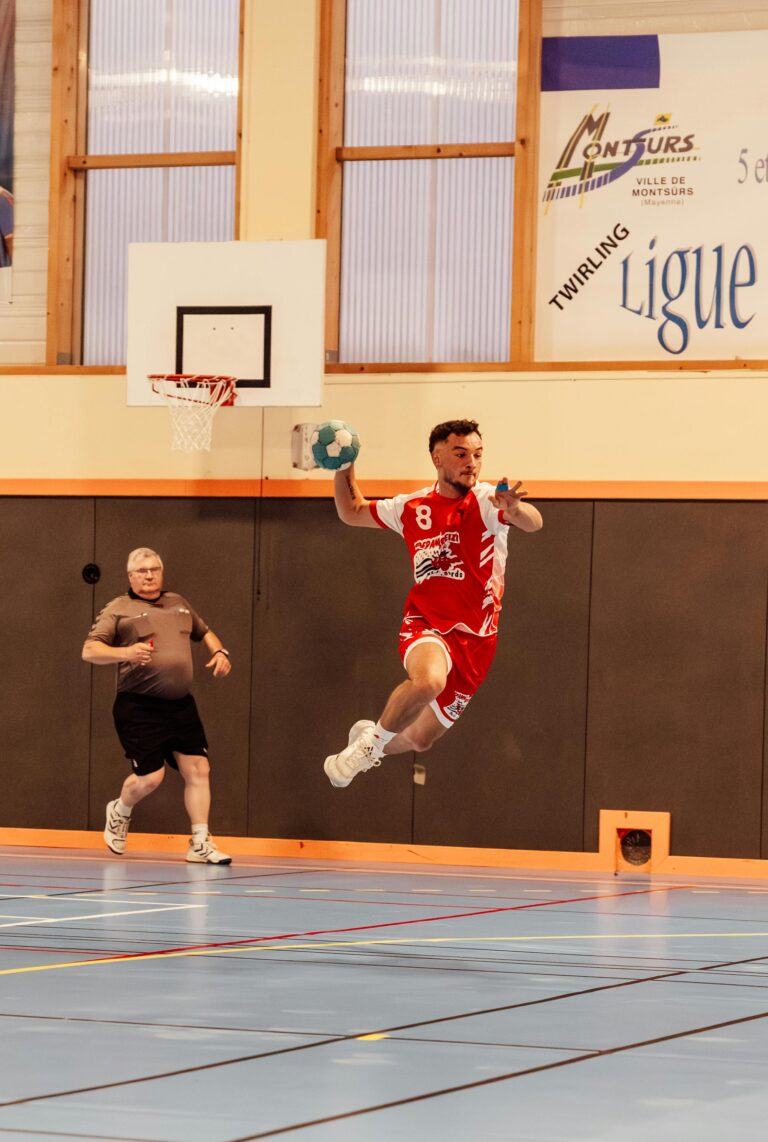
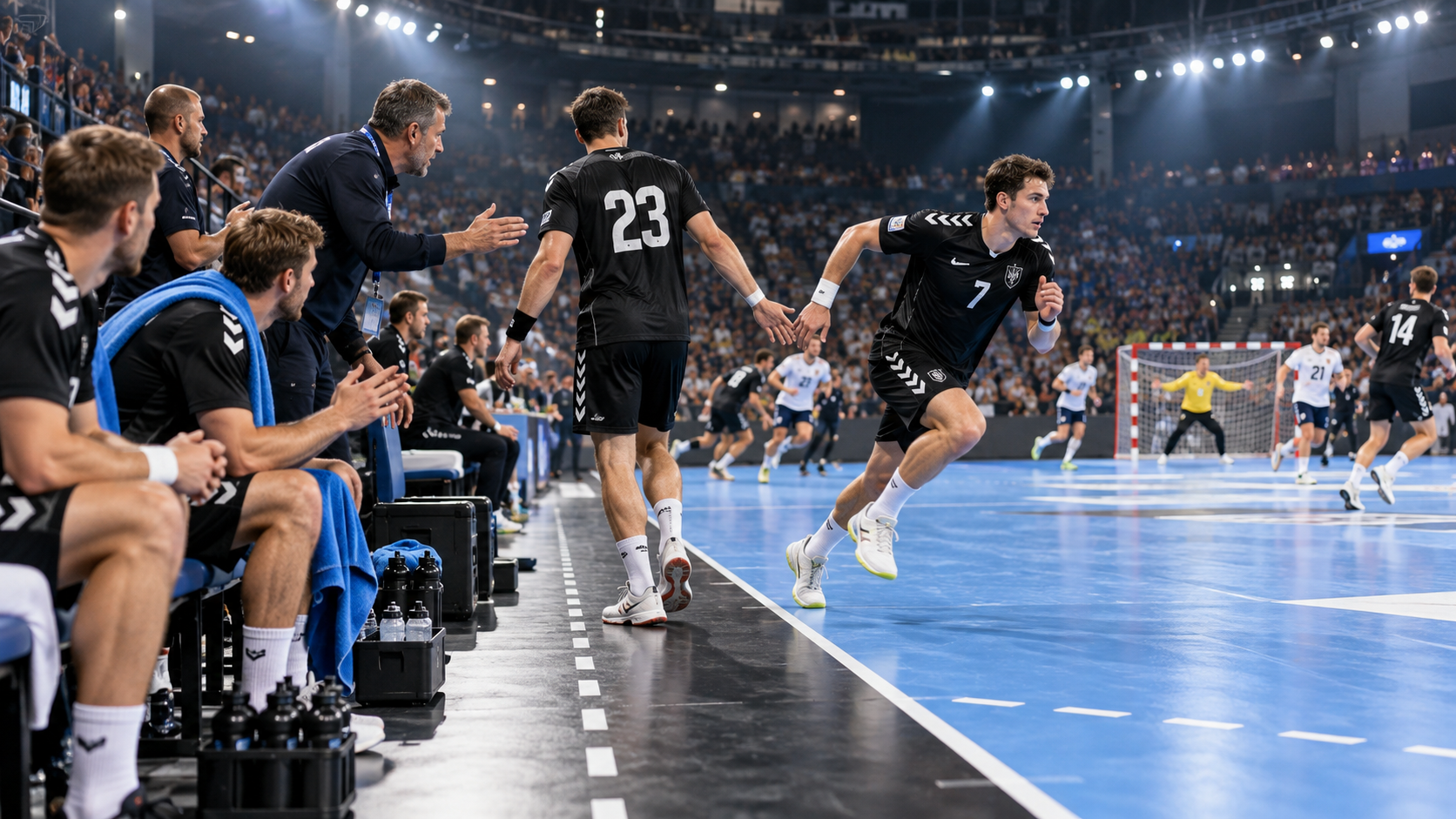
Smart substitutions in handball can win you games. While shooting and defending get most of the attention, it’s often the rotation rules and bench strategy that separate disciplined, high-level teams from the rest. In modern handball, coaches use their bench like a chessboard: constantly moving pieces, maintaining intensity, and exploiting small tactical advantages.
In this guide, you’ll learn how substitution rules in handball really work, how to build an effective substitution strategy, and how to use your bench as a powerful weapon over 60 demanding minutes.
What Are Substitutions in Handball?
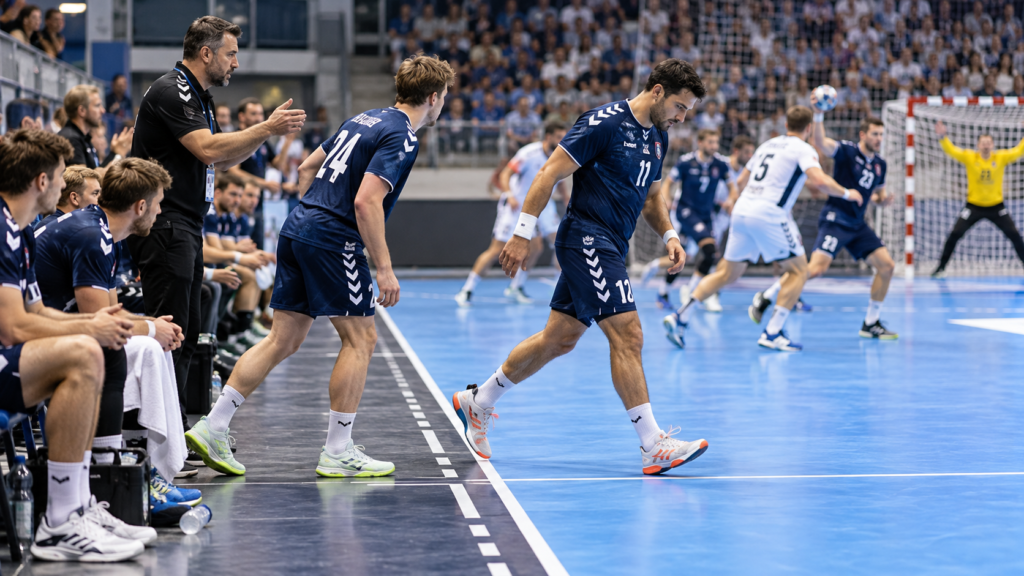
In handball, substitutions are unlimited and “on the fly”. Unlike some sports where changes only happen during stoppages, handball allows players to go in and out throughout the match, as long as they respect the substitution area and rotation rules.
- Unlimited changes – you can substitute a player as often as you want.
- No need to ask the referee – changes are “flying substitutions,” controlled by the team.
- Same player can re-enter – there is no “once out, you stay out” rule.
- Applies to all positions – including the goalkeeper.
This flexibility makes bench management and rotation planning crucial in competitive handball.
Official Handball Substitution Rules (Overview)
While substitutions are fairly free, there are strict rules about how and where they must happen. Breaking these rules leads to suspensions and can turn the match against you.
Basic substitution principles
- Use the substitution area: Players must leave and enter the court through the team’s official substitution zone along the sideline.
- One out, one in: A substitute can only enter after the player being replaced has completely left the court.
- Respect the court boundaries: Entering the court from anywhere else (e.g., from behind the goal) is illegal.
- Bench control: Only registered players and team officials may be in the substitution area.
Illegal substitution and its consequences
If a player enters the court too early or from the wrong area, it is considered an illegal substitution. Typically, the sanction includes:
- 2-minute suspension for the offending player (or team official, depending on the situation).
- Free throw to the opposing team from the place of the ball when play is stopped (or 7m throw if a clear chance was prevented).
That’s why a disciplined rotation system and clear communication on the bench are essential.
Types of Substitutions in Handball
Not all substitutions have the same purpose. Understanding the different types will help you design a bench strategy that fits your team’s style and fitness level.
1. Tactical substitutions
These changes are driven by game strategy:
- Switching defenders and attackers for specific phases.
- Bringing in a specialist 7m thrower.
- Adding an extra shooter when chasing a result.
2. Defensive-offensive rotations
Many high-level teams use defence-attack specialists. A player might defend in the center block but be substituted out when the team attacks, replaced by a more creative backcourt player.
- Defensive specialist: Strong, tall, physical; often central defenders (2-3 position).
- Offensive specialist: Skilled in shooting or playmaking; may not be as strong defensively.
3. Goalkeeper substitutions
Goalkeeper rotation is a key part of modern handball:
- Changing goalkeeper to break an opponent’s rhythm.
- Using a specialized penalty goalkeeper for 7m throws.
- Substituting goalkeeper for an extra court player (7 vs 6 attack).
4. Load management & fatigue substitutions
Handball is physically intense. Coaches use substitutions to manage fatigue and prevent injuries:
- Giving fast wingers short rests after long counterattacks.
- Rotating backcourt players to maintain shooting power.
- Protecting key players when the score is safe.
Key Rotation Rules Every Team Should Know
While the rulebook is clear, the real art lies in how you organize your rotation. These are the essential rotation principles for an effective handball team.
1. Clear substitution patterns
Before the game, every player should know:
- Whom they replace.
- Where they enter and exit.
- In which situations they go in (defence, attack, power play, etc.).
Many coaches write substitution pairings on a whiteboard in the locker room to avoid confusion.
2. Timing around transitions
The most dangerous moment for illegal substitutions is the transition phase from attack to defence or vice versa. To stay safe:
- Substitute just after your team scores.
- Avoid risky changes when the opponent is counterattacking.
- Use clear verbal cues from the bench (e.g., “change”, “hold”, “only defence”).
3. Special rules for goalkeeper-player changes
When playing without a goalkeeper to attack with 7 court players:
- The extra field player must wear a different jersey (often same color as the goalkeeper).
- The goalkeeper must fully leave the court before the extra player enters.
- Everyone must be trained to sprint back if the ball is lost.
Bench Strategy: Turning Substitutions Into an Advantage
Substitutions in handball are more than just “resting players.” A thoughtful bench strategy can give your team tactical flexibility, higher intensity, and better game control.
Core elements of a strong bench strategy
- Defined roles – each player understands their primary and secondary roles.
- Pre-planned rotation – especially for the first 10-15 minutes of each half.
- In-game adjustments – changing rotation based on scoreline, momentum, and opponent.
- Active communication – coach, assistant coach, and players all talk constantly.
Bench communication checklist
- Call out who goes in and who comes out, loudly and clearly.
- Use hand signals for defence/offence specialists.
- Keep a coach or captain focused only on rotation and time management.
Common Handball Bench Roles and Rotations
Different teams use different patterns, but some rotation structures appear again and again at all levels.
| Role | Typical Rotation Pattern | Main Objective |
|---|---|---|
| Centre Back | Plays long stretches; short rests with backup playmaker | Keep game control & tempo |
| Left/Right Back | Rotated based on shooting efficiency and defence matchups | Maintain shooting threat |
| Wingers | Frequent short rests after counterattacks | Sustain speed in fast breaks |
| Pivot | Alternates with defensive specialist or second pivot | Win space & fouls on attack |
| Goalkeeper | Switched after momentum swings or for 7m throws | Boost save percentage |
Strategic Substitution Scenarios in Handball
1. Protecting a lead
When you’re ahead, especially in the final 10 minutes:
- Bring in defensive specialists with strong blocks and 1v1 defence.
- Use longer attacking sequences to control tempo and allow orderly substitutions.
- Rotate key players enough to avoid late-game fatigue and technical errors.
2. Chasing the game
If you’re behind and time is running out:
- Bring on fast wingers and aggressive defenders who can create steals.
- Consider 7 vs 6 attack with a goalkeeper substitution.
- Shorten intervals on the bench so your most dangerous shooters stay fresh.
3. Managing suspensions (2-minute penalties)
When a player is suspended, rotation becomes even more delicate:
- Quickly reorganize positions (e.g., 5-0 defence instead of 6-0).
- Use substitutions to cover unusual positions (e.g., wing covering half-back).
- Prepare your bench in advance: “If X goes out, Y steps into this role.”
Benefits of Smart Substitutions and Planned Rotations
Investing time into your handball substitution strategy creates several long-term benefits.
- Higher physical intensity: Frequent, well-planned rotations keep energy high in defence and transition.
- Reduced injury risk: Fatigue is a major injury factor; structured resting helps protect players.
- Better use of squad depth: More players get meaningful minutes, raising team morale and development.
- Tactical versatility: You can switch from 6-0 to 5-1 defence, or from position play to fast breaks, by adjusting rotations.
- Stronger finishes: Teams with disciplined rotations often dominate the last 5-10 minutes.
Practical Tips for Coaches: Building Your Rotation Plan
1. Map your rotation on paper
Before games, draw a simple timeline of each half:
- Mark when you plan to rotate backs, wingers, and goalkeeper.
- Identify fixed situations (e.g., “After 10 minutes, change left back & pivot”).
- Leave room for flexibility depending on score and player form.
2. Use short, clear commands
During matches, complexity kills clarity. Use short, consistent commands, for example:
- “Defence only!” – player stays for defence and comes off for attack.
- “Double change!” – two pre-agreed players change together.
- “7-on-6!” – goalkeeper off, extra attacker in.
3. Train substitutions in practice
Rotation rules shouldn’t be learned only on match day. Integrate them into training:
- Run attack-defence drills with live substitutions.
- Simulate game-like scenarios: last 5 minutes, chasing 3 goals, playing short-handed.
- Practice entering and exiting the substitution area at full speed without mistakes.
4. Analyze data and video
Use statistics and video analysis to refine your bench strategy:
- Track performance by rotation: which line-ups defend best? Which score most?
- Note when fatigue-related errors (missed shots, turnovers) increase.
- Adjust substitution timing based on real patterns, not just intuition.
Example Rotation Model for a 60-Minute Handball Match
Every team is different, but the sample below shows how a coach might structure substitutions for a balanced squad.
| Match Phase | Rotation Focus | Typical Moves |
|---|---|---|
| 0-10 min | Start with strongest lineup | Establish rhythm; minimal changes |
| 10-20 min | First wave of substitutions | Rotate wing pair, one back, possibly pivot |
| 20-30 min | Situational changes | Defence-offence specialists, GK change if needed |
| 30-40 min | Restart second half strongly | Return to primary lineup; adjust based on score |
| 40-50 min | Manage fatigue | More frequent short rests for key players |
| 50-60 min | Close the game | Best seven for the situation (defend or chase) |
Common Mistakes in Handball Substitutions (and How to Avoid Them)
- Unclear responsibilities: Players don’t know exactly when to come off.
Solution: Pre-assign pairs and situations (“You always replace him on defence.”). - Too few substitutions: Starters play almost the entire game and fade late.
Solution: Trust the bench; plan rotations regardless of the score. - Chaotic 7 vs 6 substitutions: Late goalkeeper changes lead to open nets.
Solution: Practice the exact running path and timing for GK-player switches. - Panic changes after mistakes: One error and the player is out.
Solution: Use data and trends, not emotions, to guide substitutions.
First-Hand Style Insight: What Players Feel During Rotations
From a player’s perspective, predictability and trust are everything. When rotation rules are clear, players can focus on performance instead of wondering, “Am I coming off now?” Strong teams share these characteristics:
- Players see substitutions as tactical moves, not punishment.
- The bench stays engaged, following every phase, ready to enter at full speed.
- Leaders talk constantly: “I’ll take next defence,” “You stay in for this attack,” etc.
That internal communication is just as important as the coach’s tactical plan.
SEO Recap: Key Concepts About Substitutions and Bench Strategy
For quick reference, here are the core terms and ideas around substitutions in handball and rotation rules:
- Flying substitutions – unlimited changes while the ball is in play.
- Substitution area – the official zone where players enter and exit.
- Defence-offence rotation – specialists used for specific phases.
- Bench strategy – long-term plan for using all squad members smartly.
- Goalkeeper rotations – for momentum, penalties, or 7 vs 6 play.
- Illegal substitution – early or incorrect entry, punished with suspension.
Conclusion: Make Your Bench a Winning Weapon
In handball, understanding substitution rules is only the first step. The real advantage comes when you turn those rules into a structured, flexible bench strategy that keeps your team fresh, dangerous, and tactically unpredictable for a full 60 minutes.
By setting clear rotation patterns, training your players to substitute confidently and correctly, and adjusting your bench strategy based on the flow of the game, you transform every substitution into a strategic decision rather than a desperate reaction.
Whether you coach a youth team or compete at an elite level, mastering substitutions in handball will help you avoid costly mistakes, get the most out of your roster, and win more games when it matters most.