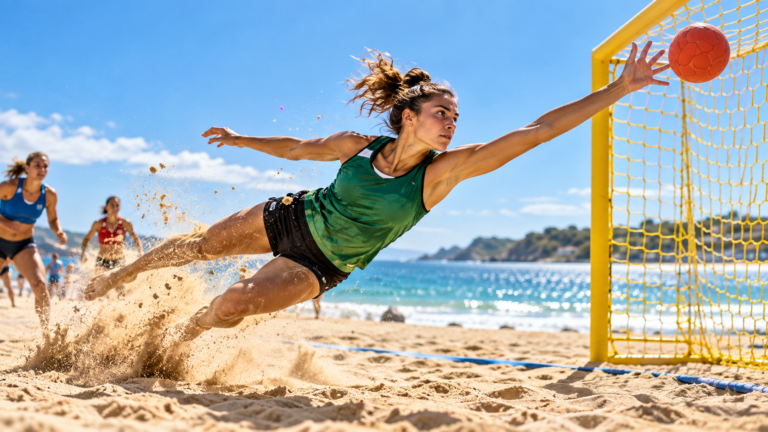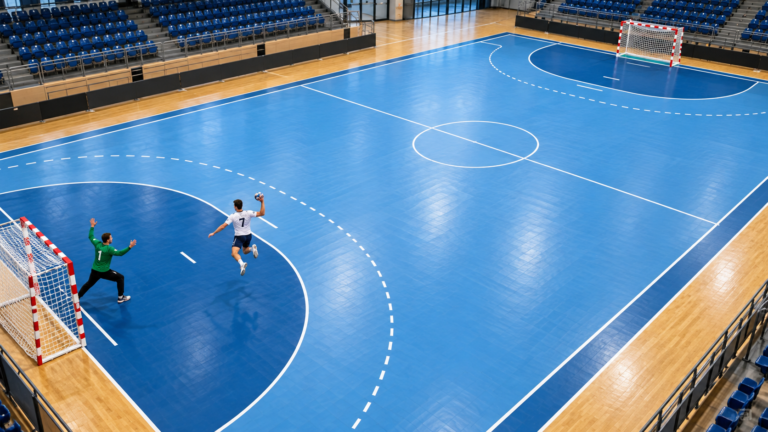
In handball, a great goalkeeper can change the entire game. While shooters often get the spotlight, it’s usually the goalkeeper’s saves, fast reactions, and smart positioning that decide tight matches. Effective goalkeeper training in handball focuses on three key areas: reflex, positioning, and footwork.
This guide will walk you through practical drills, coaching tips, and training ideas that can be used by players, coaches, and clubs who want to build elite-level handball goalkeepers.
Why Specialized Goalkeeper Training in Handball Matters
Goalkeepers are not just “another player” on the court. Their role is unique, and so should be their training. A tailored handball goalkeeper training program leads to:
- More saves per game thanks to faster reactions and better angles.
- Fewer goals conceded from clear chances such as wings and 6-meter shots.
- Improved confidence in 1v1 situations and penalty throws.
- Better communication with defenders on blocks and wall setups.
- Reduced injury risk through proper footwork and movement patterns.
To develop all of this, we focus on three pillars: reflex training, positioning drills, and goalkeeper footwork drills.
Key Skills for Handball Goalkeepers
Before jumping into drills, it helps to understand which skills matter most for a handball goalkeeper:
- Explosive reflexes for close-range shots and deflections.
- Correct body positioning relative to ball, shooter, and goal.
- Agile footwork to move quickly along the goal line and step out.
- Reading the shooter and anticipating shot direction.
- Mental toughness after conceding goals or making a mistake.
All of these can be trained systematically using simple, repeatable drills that fit into regular handball practice sessions.
Reflex Training for Handball Goalkeepers
Reflex drills for handball goalkeepers aim to shorten reaction time and improve decision-making under pressure. These exercises should be high intensity but short in duration, with plenty of rest to maintain quality.
1. Wall Reaction Drill
Objective: Improve hand speed and reaction time.
How to do it:
- Stand 2-3 meters from a wall.
- Have a coach or teammate stand behind you with a handball.
- On a signal, they throw the ball against the wall.
- Turn quickly and react to catch or deflect the ball.
Coaching tips:
- Keep your knees slightly bent and hands up in the “ready” position.
- Focus on exploding into the movement, not just reaching with your arms.
2. Colored Cone Call-Out Drill
Objective: Train brain processing speed and reflexes under visual stress.
Setup: Place 4-6 colored cones in a semicircle around the goalkeeper.
How to do it:
- The goalkeeper stands in the center in a ready stance.
- The coach calls out a color and throws a ball quickly to either side.
- The goalkeeper must touch the called cone with a hand or foot and then react to the shot.
Variations:
- Use numbers or letters instead of colors.
- Add fake calls to force the goalkeeper to stay mentally alert.
3. Double-Ball Reflex Drill
Objective: Improve multi-tasking and split-second reactions.
How to do it:
- Two coaches stand at 6-7 meters distance, each with a ball.
- Coach A throws first; Coach B follows with a quick second shot.
- The goalkeeper must react to both shots in quick succession.
This drill simulates fast rebounds and follow-up shots close to goal.
Sample Reflex Training Plan
| Drill | Reps | Rest |
|---|---|---|
| Wall Reaction Drill | 3 × 10 throws | 45 sec |
| Cone Call-Out Drill | 4 × 8-10 calls | 60 sec |
| Double-Ball Reflex | 3 × 6 combos | 60-90 sec |
Positioning Drills for Handball Goalkeepers
Even the quickest goalkeeper will struggle if their positioning is poor. Effective goalkeeper positioning in handball means being on the correct line between ball and goal, at the right distance, and with the right stance.
Core Principles of Goalkeeper Positioning
- Stay on the ball line: Always position yourself on the direct line between the ball and the center of the goal.
- Adjust with shooter distance: Step out when shooters are far, retreat slightly when they are very close.
- Square shoulders: Face the shooter fully; avoid turning sideways.
- Active stance: Knees bent, weight on the front of the feet, hands in front of the body.
1. Shadow Positioning Drill
Objective: Teach correct alignment with the ball without a shot.
How to do it:
- A field player moves freely around the 9-meter line with the ball.
- The goalkeeper “shadows” them, staying on the ball line at all times.
- The coach corrects distance and angle when needed.
Focus points:
- Small adjustment steps instead of big jumps.
- Constant eye contact with the ball carrier.
2. Angle Control Drill (Wings and 6 m)
Objective: Train angle awareness from different shooting positions.
Setup: Place cones at typical shooting spots: left wing, right wing, center 9 m, and 6 m line.
How to do it:
- A shooter stands at one cone; the goalkeeper sets their position.
- The coach adjusts the goalkeeper until the angles are correct.
- Repeat for each position, then add light shots.
Progression:
- Have the shooter move quickly from cone to cone.
- Add fakes before shooting to test the goalkeeper’s balance.
3. 1v1 Positioning and Closing Down
Objective: Improve decision-making and timing when facing 1v1 situations.
How to do it:
- A player starts at 9 meters with the ball.
- They run towards 6 meters to finish a 1v1 against the goalkeeper.
- The goalkeeper must judge when to hold ground and when to step forward and close the angle.
Key tips:
- Do not rush out too early; wait until the attacker commits.
- Keep arms and legs wide to cover as much space as possible.
Positioning Mistakes to Avoid
| Common Mistake | Better Alternative |
|---|---|
| Standing on the goal line for all shots | Step out to reduce shooting angle |
| Watching shooter’s eyes only | Track ball, torso, and arm motion |
| Flat feet, no bounce | Light, active stance on forefoot |
Footwork Drills for Handball Goalkeepers
Footwork is the foundation of every save. Proper goalkeeper footwork drills help you move explosively while staying balanced and in control.
Fundamentals of Handball Goalkeeper Footwork
- Short, quick steps instead of big jumps that break balance.
- Lateral movement along the goal line with hips facing forward.
- Split-step or mini-jump just before the shot to prepare muscles for reaction.
- Weight centered so you can move both left and right equally fast.
1. Lateral Shuffle Drill
Objective: Improve side-to-side speed and stability.
How to do it:
- Place two cones about 3-4 meters apart on the goal line.
- The goalkeeper shuffles sideways from one cone to the other.
- At each cone, they make an imaginary save motion (high, middle, low).
Coaching cues:
- Keep hips facing the court, not turning sideways.
- Stay low with quick, controlled steps.
2. “T-Step” Footwork Pattern
Objective: Practice stepping out and back in while staying in line with the ball.
How to do it:
- Start in the center of the goal.
- Take a step forward (toward 9 meters), then back to the goal line.
- Repeat to the left and right side, forming a “T” pattern.
- Add light throws from a coach as soon as the pattern feels comfortable.
This helps goalkeepers learn when and how to step out of the goal to narrow angles without losing balance.
3. Ladder Footwork Drill
Objective: Build coordination, rhythm, and quick feet.
How to do it:
- Lay an agility ladder in front of the goal.
- Perform different patterns: two feet in each square, in-and-out, lateral steps.
- Finish each run with a simulated save or actual shot.
Bonus: Ladder drills are also excellent for warm-ups in handball goalkeeper conditioning sessions.
Sample Footwork Session (20 Minutes)
| Exercise | Duration | Intensity |
|---|---|---|
| Ladder Patterns | 3 × 60 sec | Medium |
| Lateral Shuffle + Saves | 4 × 30 sec | High |
| “T-Step” with Shots | 4 × 6 reps | High |
Integrating Reflex, Positioning, and Footwork in Game-Like Drills
The best handball goalkeeper drills combine all three elements into realistic match situations. Here are two examples you can easily integrate into team training.
1. Shooting Circuits from Multiple Positions
Objective: Work on angles, reactions, and movement in one drill.
Setup:
- Place shooters at left wing, right wing, center 9 m, and 6 m.
- Each shooter takes one quick shot in sequence.
- The goalkeeper must reposition and react for each new angle.
Benefits:
- Constant changes in ball line and distance.
- Improves visual scanning and quick repositioning.
2. Fast-Break and Second-Chance Drill
Objective: Train realistic counterattack and rebound situations.
How to do it:
- A player starts a fast break and shoots 1v1 against the goalkeeper.
- Immediately, a second shooter at 9 meters takes a shot (simulating a rebound or quick restart).
- The goalkeeper must transition from close-range save to long-range shot quickly.
This drill combines mental focus, footwork, and quick positioning changes under fatigue.
Practical Tips for Coaches and Goalkeepers
Coaching Tips for Handball Goalkeepers
- Use video analysis: Record games and training to review positioning and reaction choices.
- Give clear cues: Use simple words like “line,” “step,” and “hold” during drills.
- Progress gradually: Start with no ball, then add slow throws, then powerful shots.
- Rotate goalkeepers: If you have two or more, alternate every few minutes to keep intensity high.
Self-Coaching Tips for Goalkeepers
- Develop a pre-game routine: Include short reflex drills and light footwork to activate your body.
- Work on flexibility: Mobile hips, hamstrings, and shoulders reduce injury risk and improve reach.
- Stay positive: Even top goalkeepers concede many goals. Focus on the next save, not the last one.
Sample Weekly Handball Goalkeeper Training Plan
Below is a simple example of how to structure one week for a developing goalkeeper who trains three times plus a match.
| Day | Focus | Main Content |
|---|---|---|
| Day 1 | Reflex & Footwork | Wall drills, ladder, double-ball reflex |
| Day 2 | Positioning | Shadow drill, angle control, 1v1 |
| Day 3 | Integrated Game-Like | Shooting circuits, fast-break + second chance |
| Match Day | Performance | Short warm-up with reflex & angle drills |
Benefits of Consistent Goalkeeper Training in Handball
When reflex, positioning, and footwork are trained regularly, goalkeepers and teams see clear benefits:
- Higher save percentage from 6 meters, wings, and long-range shots.
- More effective defense because the goalkeeper and defenders work in sync.
- Confidence in key moments, such as penalties and last-minute throws.
- Better development pathway for young goalkeepers moving to higher levels.
For coaches and clubs, investing time into a structured handball goalkeeper training program pays off not just in fewer goals conceded, but in overall team stability and success.
Conclusion: Building a Complete Handball Goalkeeper
A complete handball goalkeeper is not born; they are built through intelligent, focused training. By combining:
- Reflex drills that sharpen reactions,
- Positioning exercises that optimize angles, and
- Footwork training that keeps movement fast and balanced,
you create a solid foundation for long-term performance.
Whether you are a coach designing a new training program or a goalkeeper looking to improve your game, apply these goalkeeper training in handball ideas consistently. Track your progress, adjust drills to your level, and remember: every save starts before the shot-with your stance, your feet, and your position.
Start adding these drills to your next practice and turn your goal into the safest place on the court.