The 7‑meter throw in handball is one of the most decisive moments in a match. It can turn a game around in a matter of seconds and often separates winning teams from losing ones. Whether you are a player, coach, or passionate fan, understanding the rules, techniques, and common mistakes of the 7‑meter throw is essential.
In this in‑depth guide, we’ll break down everything you need to know about the 7‑meter throw in handball, from official rules and shooting techniques to mental preparation, goalkeeper strategies, and practical tips for training.
What Is a 7‑Meter Throw in Handball?
A 7‑meter throw (often called a “7m shot” or “penalty throw”) is a direct free throw awarded to the attacking team when a clear scoring chance is illegally prevented by a defender or goalkeeper. It’s the handball equivalent of a penalty kick in football (soccer).
The shot is taken from the 7‑meter line, directly facing the goalkeeper, with all other players positioned outside the 9‑meter line. Because it’s such a high‑probability scoring opportunity, teams invest a lot of training into perfecting it.
When Is a 7‑Meter Throw Awarded?
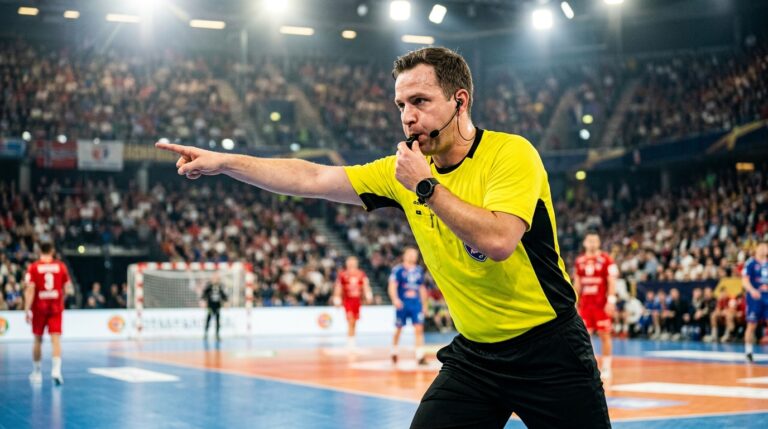
According to IHF (International Handball Federation) rules, referees award a 7‑meter throw when:
- A defender illegally blocks a clear scoring chance (e.g., pulling, pushing, or holding a shooter from behind).
- The goalkeeper illegally leaves the goal area and interferes with a clear scoring opportunity.
- A defender steps inside the goal area to block a shot that would likely result in a goal.
- A clear scoring chance is stopped by an intentional rule violation (e.g., deliberate foot play or throwing an extra ball onto the court from the bench).
In all of these cases, the referees judge whether the foul prevented a clear scoring chance. If yes, the result is a 7‑meter throw.
Official Rules of the 7‑Meter Throw
To execute a 7‑meter throw legally, both the shooter and goalkeeper must respect specific handball rules. Understanding these details will help you avoid costly turnovers and penalties.
Basic 7‑Meter Throw Rules
- The throw is taken from directly behind the 7‑meter line; the shooter may not step over the line before the ball leaves their hand.
- The shooter must wait for the referee’s whistle before starting the motion.
- The thrower has 3 seconds to release the ball after the whistle.
- All other players (excluding the goalkeeper and thrower) must stay:
- At least 3 meters away from the thrower.
- Outside the 9‑meter free-throw line.
- The goalkeeper must remain on the goal line, but is allowed to move laterally along it before the ball is thrown.
- The goalkeeper cannot cross the 4‑meter goalkeeper restraining line before the ball leaves the thrower’s hand.
Common Rule Infractions to Avoid
Failing to respect these rules can result in losing the throwing opportunity or awarding the ball to the opponent:
- Stepping on or over the 7‑meter line before releasing the ball.
- Faking for too long and exceeding the 3‑second limit.
- Teammates entering the 9‑meter area or approaching too closely before the throw is taken.
- Goalkeeper moving beyond the 4‑meter line too early.
Key Techniques for an Effective 7‑Meter Throw
A successful 7‑meter throw in handball requires more than just power. It combines accuracy, deception, timing, and mental confidence. Below are the core techniques every shooter should master.
1. Shooting Stance and Body Position
Your stance is the foundation of your 7‑meter shot:
- Stand facing the goal, feet shoulder-width apart.
- Place your non-throwing foot slightly ahead for balance.
- Keep your knees slightly bent to generate power and stability.
- Hold the ball securely with your fingers spread, not in the palm.
- Maintain your upper body relaxed to allow a fluid throwing motion.
2. Arm Action and Ball Release
An effective throwing motion for a 7‑meter shot:
- Bring your throwing arm back behind your head with the elbow high.
- Use a whip-like motion, driving the elbow forward and then snapping the wrist.
- Release the ball at the highest point of your motion for better reach and angle.
- Follow through with your arm pointing toward the target zone in the goal.
3. Placement vs. Power
In top-level handball, most 7‑meter throws are scored not because of sheer power but because of precise placement and deception. Focus on:
- Aiming at the corners of the goal (high or low).
- Using spin or bounce shots to make reading the ball harder for the goalkeeper.
- Varying your shot height and direction to stay unpredictable.
4. Types of 7‑Meter Shots in Handball
| Shot Type | Main Feature | Best Use |
|---|---|---|
| Power Shot | Fast, straight, high speed | Against slower or reactive goalkeepers |
| Placement Shot | Accurate into corners | When the keeper leaves open space |
| Bounce Shot | Ball bounces before goal | On slippery floors or to confuse timing |
| Fake & Delay | Multiple feints, late release | Against keepers who move early |
5. Using Fakes and Feints
Faking is a crucial part of 7‑meter throw technique:
- Use shoulder and head fakes to mislead the keeper.
- Change your throwing rhythm: start fast, then delay slightly.
- Look in one direction while shooting to another (advanced skill).
- Practice double fakes, but stay within the 3‑second limit.
Mental Preparation: Staying Calm Under Pressure
The 7‑meter throw is as much a mental challenge as it is a technical one. Many players can score easily in training but struggle during a decisive match.
Key Mental Skills for 7‑Meter Specialists
- Pre-shot routine: Develop a consistent routine (two breaths, three ball bounces, visualizing the shot) to build stability.
- Visualization: Imagine successful shots into different corners before you step to the line.
- Focus on process, not outcome: Think about your technique and decision, not the scoreboard.
- Short memory: If you miss, reset quickly. The next shot is a new situation.
Common Mistakes in the 7‑Meter Throw (and How to Fix Them)
Even experienced players make avoidable errors at the 7‑meter line. Recognizing these mistakes is the first step to eliminating them.
1. Telegraphing the Shot
Problem: The shooter gives away the direction of the shot too early (eyes, shoulders, or arm position).
Solution:
- Keep your upper body neutral until the final moment.
- Practice looking centrally while shooting to the corners.
- Use late wrist adjustments to change direction.
2. Overusing Power
Problem: Many players try to throw as hard as possible, losing accuracy and control.
Solution:
- Prioritize accuracy and variation over maximum speed.
- Train slow-motion shots aiming precisely at small targets.
- Use controlled power-about 80-90% of your maximum.
3. Stepping Over the 7‑Meter Line
Problem: In the heat of the moment, the thrower steps on or beyond the line before releasing the ball, resulting in a turnover.
Solution:
- Practice with a visible marker behind the line for foot placement.
- Use a shorter final step to avoid momentum carrying you over.
- Develop your throw from a more upright position to reduce forward lean.
4. Predictable Shot Patterns
Problem: Always shooting to the same side or using the same technique makes it easy for goalkeepers to read you.
Solution:
- Track your own tendencies in video analysis.
- Develop at least 3-4 reliable shot options (e.g., high right, low left, bounce middle, delayed shot).
- Decide your primary option, but have a backup based on the goalkeeper’s movement.
5. Poor Timing of Fakes
Problem: Fakes are too early, too obvious, or too many, leading to violations or weak shots.
Solution:
- Limit yourself to one or two clear fakes.
- Time your fake just before the release to force the keeper’s reaction.
- Train with a goalkeeper and ask for feedback on what they read in your movement.
Goalkeeper Perspective: How Keepers Defend the 7‑Meter Throw
To become a better 7‑meter shooter, it helps to understand what’s going on in the goalkeeper’s mind.
Common 7‑Meter Goalkeeper Strategies
- Studying the shooter: Many goalkeepers know your favorite side and shot type.
- Delayed movement: Some keepers wait until the very last moment to react.
- Early guess: Others gamble and jump early to one corner.
- Body language reading: They watch your shoulders, hips, and eyes for clues.
How Shooters Can Counter Goalkeepers
- Vary your shots across matches and tournaments.
- Use at least one early shot in the game to set a pattern, then break it later.
- Practice late decision shots, releasing the ball based on the keeper’s initial move.
Training Drills for Improving Your 7‑Meter Throw
Consistent practice is the only way to turn your 7‑meter throw into a reliable weapon.
Solo Drills
- Target Corners: Place small cones or markers in each corner of the goal and aim exclusively at them for several sets.
- Repetition Sessions: Shoot 20-30 7‑meter throws focusing on one aspect only: stance, wrist snap, or follow-through.
- Visualization Exercise: Before each shot, close your eyes briefly and picture the ball hitting the net exactly where you want.
Partner and Team Drills
- Keeper Reaction Drill: The goalkeeper starts neutral and can only move after your arm begins forward. Focus on late changes of direction.
- Pressure Simulation: Teammates create noise and distractions while you shoot to simulate match pressure.
- Scoreline Scenarios: Coach calls scenarios like “last minute, draw” or “penalty after a red card” to train mental resilience.
| Drill Name | Focus | Repetitions |
|---|---|---|
| Corner Targets | Accuracy | 4 × 10 shots |
| Fake & Finish | Deception | 3 × 8 shots |
| Pressure Series | Mental strength | 2 × 5 “must-score” |
Benefits of Mastering the 7‑Meter Throw
Becoming reliable from the 7‑meter line offers huge advantages for both players and teams.
For Individual Players
- Increased playing time: Coaches trust players who can score in critical moments.
- Higher scoring stats: Penalty specialists often become the team’s top scorers.
- Leadership role: Taking 7‑meter throws signals responsibility and confidence.
For Teams
- Better conversion rate: Turning fouls into reliable goals changes match dynamics.
- Psychological edge: Opponents may hesitate to make contact in defense, giving you more space.
- Tactical flexibility: Coaches can design plays to draw 7‑meter decisions in key moments.
Practical Tips to Improve Your 7‑Meter Performance
- Specialize: If you’re good at 7‑meter throws, make it your trademark skill and ask your coach for more responsibility.
- Track your stats: Note your success rate in training and matches to see real progress.
- Study professionals: Watch top handball players and analyze their routines, shot choices, and body language.
- Train under fatigue: Take 7‑meter shots at the end of intense sessions to simulate match conditions.
- Work on flexibility and shoulder strength: A healthy, mobile shoulder improves power and control.
Conclusion: Turn the 7‑Meter Throw Into a Weapon
The 7‑meter throw in handball is far more than a simple penalty shot. It’s a carefully balanced combination of rules, technique, and psychology. By understanding how the 7‑meter throw works, how goalkeepers defend it, and which common mistakes to avoid, you can dramatically improve your scoring efficiency from the line.
Focus on:
- Respecting the official 7‑meter rules.
- Building a solid technical foundation with stance, arm action, and shot variation.
- Developing a strong mental routine to stay calm under pressure.
- Practicing regular, structured drills to engrain your skills.
With consistent training and smart tactical thinking, you can turn every 7‑meter throw into a real opportunity to change the outcome of the game-and become the go‑to penalty specialist your handball team relies on.