Handball is fast, physical and intensely tactical. To keep the game fair, safe and enjoyable, handball referees and officials play a crucial role on competition day. Whether you’re a player, coach, parent or new official, understanding what happens behind the whistle can transform the way you see the sport.
In this guide, we’ll walk through the responsibilities of handball referees and table officials, how they prepare for a match, how decisions are made in real time, and what makes a good referee at any level of the game.
Why Handball Referees and Officials Matter
On competition day, the referee team is responsible for much more than whistling fouls. They are guardians of the rules, managers of game flow, and protectors of player safety.
Main reasons handball referees and officials are essential:
- Fair play: They apply the rules consistently so both teams compete on equal terms.
- Safety: They control physical contact and sanction dangerous behavior.
- Game flow: They manage time, restarts and interruptions to keep the match dynamic.
- Conflict control: They calm emotions, manage protests and prevent escalation.
- Credibility: Good officiating increases trust in competition results and the sport itself.
Main Roles on a Handball Competition Day
On a typical match day, several officials share responsibility. At higher levels, the team is larger, but the core structure is similar.
| Role | Main Duty |
|---|---|
| Referee Pair | Apply rules on court, control the game |
| Timekeeper | Manage match clock and time-outs |
| Scorekeeper | Record goals, suspensions and results |
| Delegates / Supervisors | Oversee organization and rule compliance |
The Referee Pair
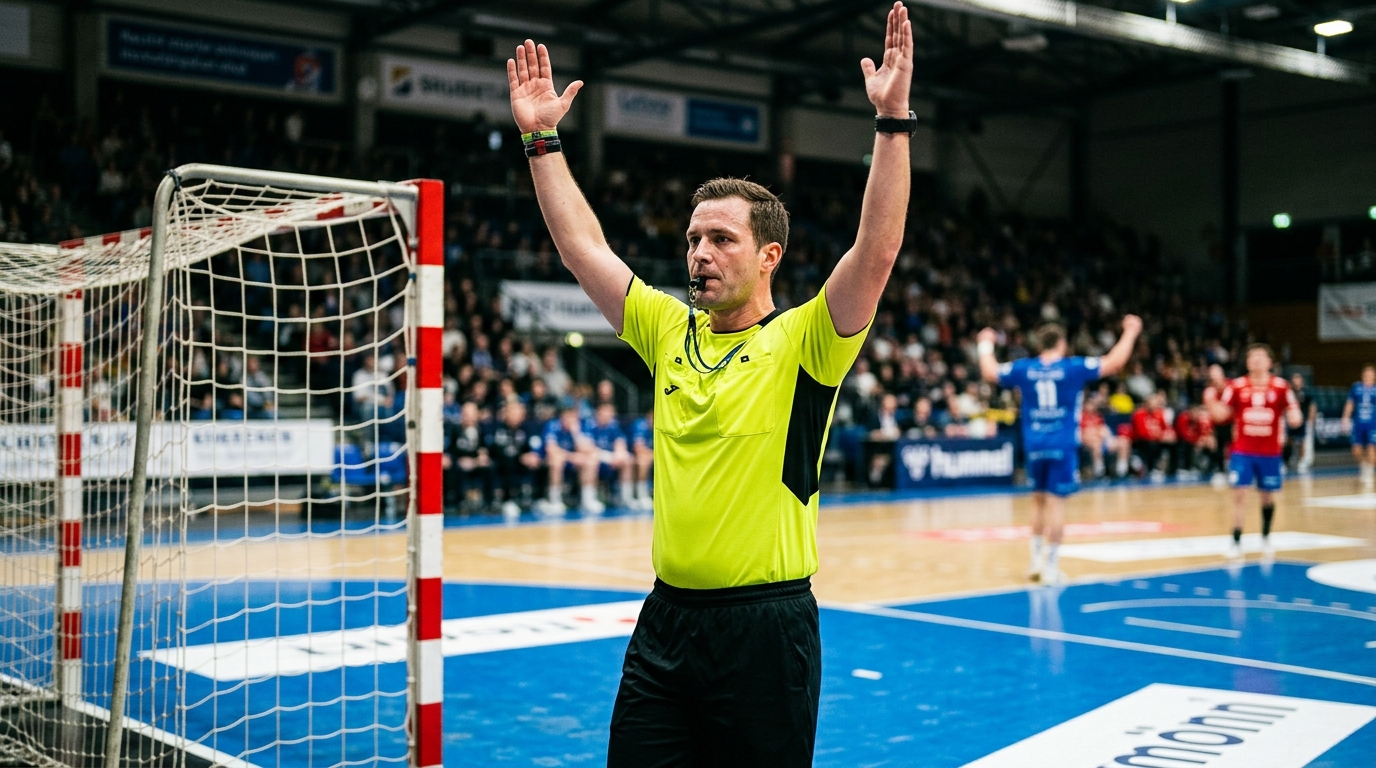
One unique feature of handball officiating is that matches are controlled by a pair of referees who work together on court. Typically, one acts as the court referee (closer to the play) and the other as the goal-line referee (near the goal area), switching roles during the game.
Key responsibilities of the referee pair:
- Apply the International Handball Federation (IHF) rules.
- Make decisions on fouls, violations, goals and sanctions.
- Protect players by penalizing dangerous or reckless actions.
- Manage throw-offs, free throws, 7-meter throws and throw-ins.
- Communicate with coaches, captains and table officials.
- Ensure the final result is correct and properly recorded.
Table Officials: Timekeeper and Scorekeeper
The table officials work from the scorer’s table, usually at the center line. At many levels, this team includes at least a timekeeper and a scorekeeper; sometimes one person performs both roles.
Timekeeper duties:
- Start and stop the match clock according to referee signals.
- Manage team time-outs and signal them clearly.
- Monitor suspension times (2-minute penalties) and inform teams when players may re-enter.
- Signal the end of each half and full-time.
Scorekeeper duties:
- Record goals, 7-meter throws and final score.
- Note suspensions, warnings and disqualifications.
- Check player numbers and eligibility.
- Support referees in resolving score disputes.
Delegates and Supervisors
In higher-level or international matches, a delegate or match supervisor is present. This person:
- Oversees the overall organization of the game.
- Ensures competition regulations are followed (equipment, uniforms, banners, benches, etc.).
- Supports the referee team, but does not replace their authority on rule decisions.
- Writes reports on serious incidents or disciplinary issues.
Pre-Match Responsibilities of Handball Officials
Competition day starts for referees and officials well before the first whistle. Preparation is key to a smooth game.
1. Pre-Game Meeting
The referee pair and table officials usually meet 45-60 minutes before kick-off to:
- Review competition rules (substitutions, time-outs, protest procedures).
- Agree on communication signals and eye contact patterns.
- Discuss division of tasks (who focuses on what situations).
- Clarify how to handle potential problem scenarios (e.g., fights, mass protests, serious injuries).
2. Equipment and Court Check
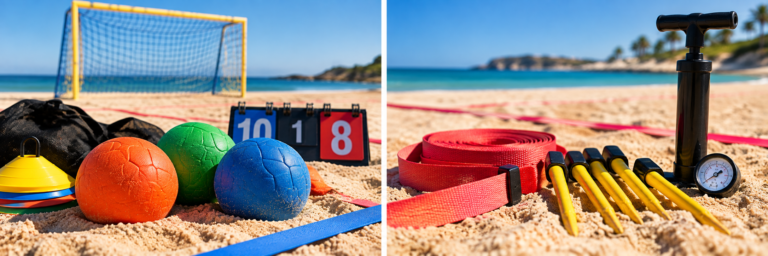
Before warm-up, handball referees check the court and equipment:
- Goal measurements, nets, goal line and 7-meter line.
- Ball size and pressure (appropriate for age and gender category).
- Scoreboard visibility and clock function.
- Substitution areas and team benches.
- Team uniforms (avoiding color clashes, correct numbers, goalkeeper shirts).
3. Player and Team Control
To ensure a fair start, officials also:
- Check team lists and player identification, if required.
- Verify that all players wear legal equipment (no dangerous jewelry, proper shoes, pads if needed).
- Confirm responsible team officials (coaches) and captains.
- Explain any specific competition rules (for example, youth rules or shortened halves).
On-Court Role During the Match
Once the match starts, handball referees must read the game, anticipate situations and react in fractions of a second. Their decisions directly influence game flow and safety.
Managing Game Flow
Good referees understand that a handball match must be allowed to flow. They:
- Use advantage when the fouled team keeps a promising attack.
- Avoid unnecessary interruptions for minor contact when play can continue.
- Restart the game quickly after free throws and throw-ins.
- Prevent time-wasting by players or teams in the lead.
Calling Fouls and Violations
Some of the most important in-game decisions involve fouls and violations:
- Minor fouls and free throws: Physical contact that is illegal but not dangerous.
- Progressive punishment: Warnings (yellow card), 2-minute suspensions and red cards (disqualifications) for repeated or serious fouls.
- 7-meter throw: Awarded when a clear scoring chance is illegally prevented.
- Violations: Steps, double dribble, line violations, incorrect substitution.
Referees must balance the letter of the rulebook with the spirit of fair competition, always considering the context of the play.
Communication and Body Language
In a fast sport like handball, non-verbal communication is crucial. Referees rely on:
- Clear hand signals for goals, free throws, passive play, suspensions and 7-meter throws.
- Strong body language to show confidence and control.
- Short, calm explanations to captains and coaches when appropriate.
Consistent body language helps players and spectators understand what is happening, even if they don’t hear the whistle perfectly.
Key Decisions Handball Referees Make on Competition Day
Some situations test the skills and composure of even experienced handball officials. These “big calls” often decide the outcome of a match.
| Situation | Typical Decision |
|---|---|
| Clear scoring chance stopped illegally | 7-meter throw, possible suspension |
| Reckless hit to head or neck | 2-minute suspension or direct red card |
| Last-second shot after buzzer | Goal or no-goal after consultation |
| Bench protests and dissent | Warning, suspension of officials if needed |
Handling Passive Play
Passive play (time-wasting or non-offensive play) is one of the most debated topics in handball refereeing. Referees must recognize when a team is not trying to create a scoring chance.
They signal passive play by raising their arm. The attacking team then has a limited number of passes (based on IHF guidelines) to shoot. If they fail to shoot on goal, the referees award a free throw for the defending team.
Dealing with Emotions and Conflicts
High-intensity matches often bring strong emotions. Referees and officials must:
- Stay neutral and composed, even when criticized.
- Use captains as main contact points for communication.
- Intervene quickly if conflicts escalate between players or benches.
- Apply sanctions consistently to maintain respect and control.
Post-Match Duties of Referees and Officials
The job of handball referees and officials doesn’t end with the final whistle. After the game, they still have important responsibilities.
Typical post-match tasks:
- Confirm the final score with the scorekeeper and sign the match sheet.
- Report disqualifications, serious injuries or unusual incidents to organizers.
- Debrief quickly as a referee team: what went well, what could improve.
- Return any documentation, equipment or match reports to the competition office.
This reflection process is a big part of improving as a handball referee and ensuring consistency across the season.
Skills and Qualities of a Good Handball Referee
Being an effective handball official requires more than knowing the rules. The best referees combine physical fitness, game sense and strong personal qualities.
- Excellent rules knowledge: Constant study and updates as rules evolve.
- Physical fitness: Ability to sprint, change direction and maintain focus for the entire match.
- Game reading: Anticipating actions, understanding tactics and seeing the whole picture.
- Communication skills: Clear, respectful interactions with players, coaches and officials.
- Mental toughness: Confidence to make big decisions and accept that mistakes will happen.
- Teamwork: Cooperation and trust within the referee pair and with table officials.
Benefits of Becoming a Handball Referee or Official
Many people start refereeing to “help out” their club or children’s team, but they quickly discover it offers many personal and professional benefits.
| Benefit | Impact |
|---|---|
| Stay active | Improve fitness while staying connected to sport |
| Earn income | Match fees and allowances at many levels |
| Develop leadership | Decision-making, conflict management, communication |
| Travel opportunities | Officiate tournaments and regional / national events |
| Give back | Support your club and the growth of handball |
Practical Tips for New Handball Referees
If you’re considering stepping onto the court as an official, these practical tips will help you on competition day.
1. Prepare Like a Player
- Arrive early to avoid stress and rushed decisions.
- Warm up properly; you need to be as ready as the athletes.
- Bring all necessary equipment: whistle, cards, notebook, pen, coin, watch.
2. Focus on Positioning
- Stay mobile and adjust your viewing angle constantly.
- Keep the ball, pivot and goalkeeper in your field of vision whenever possible.
- Trust your partner: divide responsibilities and avoid crowding the same area.
3. Communicate with Your Team
- Use eye contact with your partner and table officials regularly.
- Clarify signals before the match to avoid confusion.
- In difficult moments, take a few seconds to talk with your partner before deciding.
4. Be Consistent
- Set your line early for physical contact and stick to it.
- Apply the same standards to both teams from first minute to last.
- Remember: players adapt to a stable and predictable level of officiating.
How Coaches and Players Can Help Referees on Competition Day
Good handball refereeing is a partnership between officials, players and coaches. Everyone benefits when the environment is respectful and focused on the game.
Ways teams can support referees and officials:
- Arrive on time with correct team lists and uniforms.
- Follow substitution and bench rules to avoid unnecessary conflicts.
- Use captains as official spokespeople instead of multiple players confronting referees.
- Accept that some decisions will be unfavorable – and move on quickly.
- Provide constructive feedback through official channels, not during the heat of the match.
Case Example: A Typical Competition Day for a Referee Pair
To see how everything comes together, imagine a referee pair officiating a regional senior match:
- 90 minutes before kick-off: Arrival, meet organizer, check dressing room and schedule.
- 60 minutes before: Pre-match meeting with table officials; discuss responsibilities and signals.
- 45 minutes before: Court and equipment inspection; check goals, nets, balls and benches.
- 30 minutes before: Team list check, uniform control, last questions from coaches.
- 15 minutes before: Warm-up on court, mental focus, short partner chat.
- Match time: Full concentration on game flow, safety and fair application of rules.
- After final whistle: Confirm score, sign match sheet, brief debrief in locker room.
- Later: If needed, submit any incident reports to the competition authority.
This structured routine helps ensure that every handball match is run professionally, even at amateur levels.
Conclusion: Respect the Whistle, Respect the Game
On competition day, handball referees and officials are the invisible engine that keeps the match running smoothly. From pre-game checks and communication with teams to split-second decisions on fouls, suspensions and goals, their work allows players and coaches to focus on what they do best.
When we understand the role of referees and table officials, we appreciate how complex and demanding handball officiating really is. Supporting these key figures – by respecting their decisions, providing a positive environment and even considering becoming an official yourself – is one of the most effective ways to grow and protect the sport.
Next time you watch or play a match, take a moment to notice the referees and officials. Their calm presence, clear signals and dedication to fair play are what turn a simple game into a true handball competition.