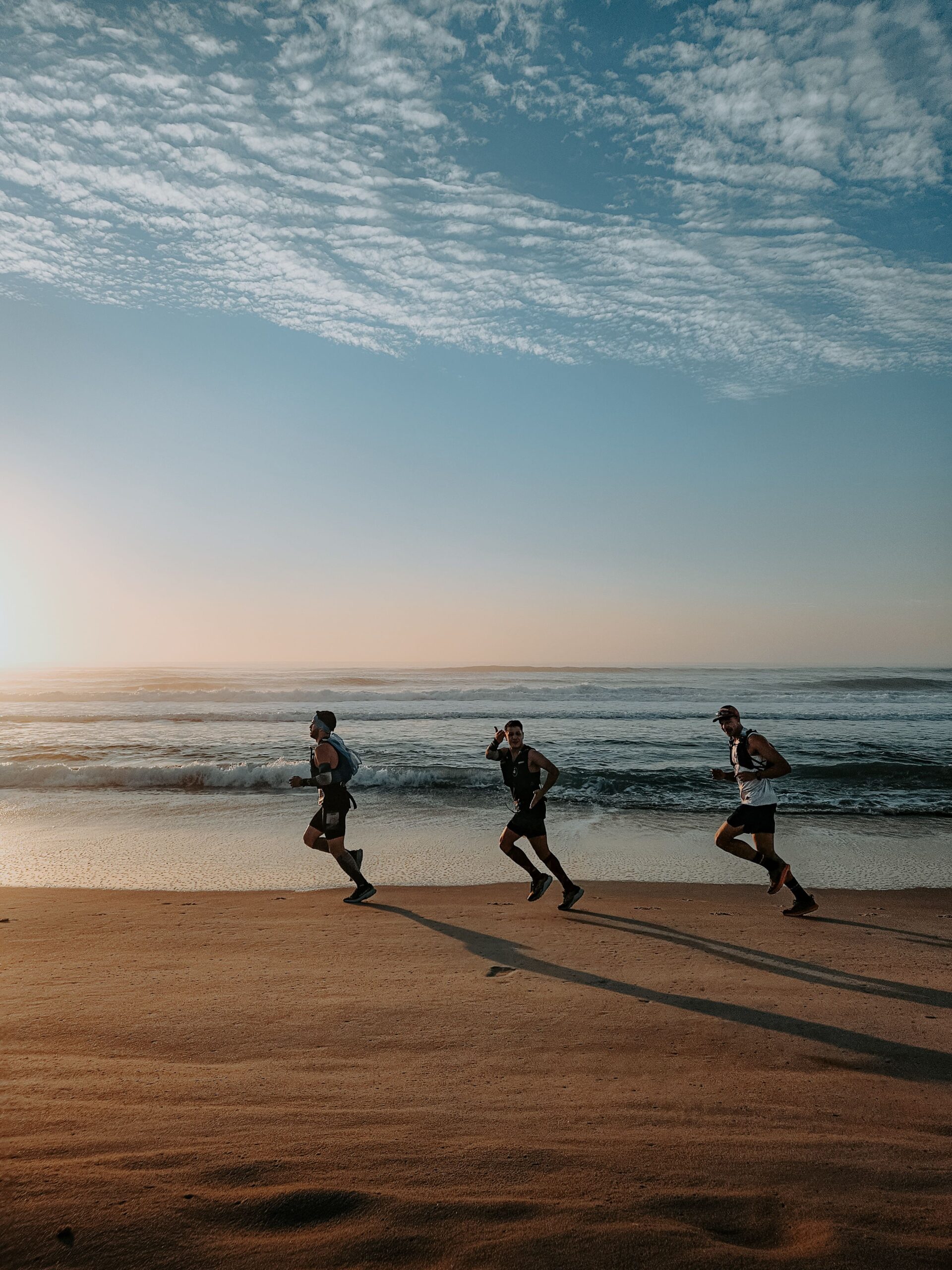
Beach handball is fast, explosive, and unforgiving. The shifting sand under your feet demands more strength, power, and stamina than indoor handball, making beach handball conditioning absolutely essential if you want to perform at your best-and stay injury-free. In this guide, you’ll learn how to build strength and endurance on sand with targeted workouts, smart recovery, and sport-specific drills tailored to beach handball.
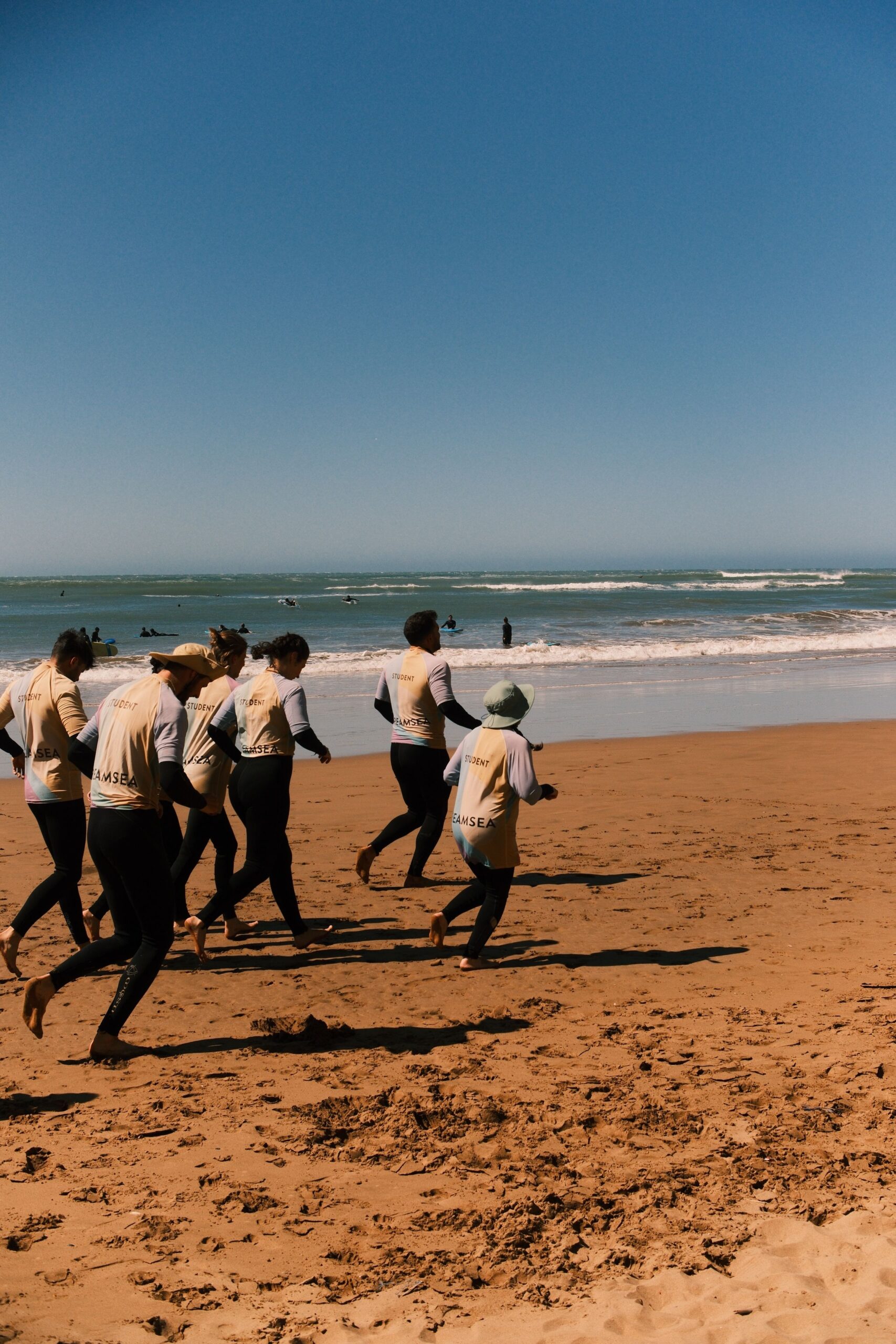
Why Conditioning on Sand Is Different
Training on sand is not just “harder running.” It changes the way your muscles and joints work and it drastically increases your energy expenditure. That’s great for conditioning, but it also means you need a smart plan.
Key Differences Between Sand and Hard Surfaces
- Unstable surface: Sand constantly shifts under your feet, engaging stabilizer muscles (ankles, calves, hips, and core) much more than grass or court.
- Higher muscular load: You sink slightly into the sand, which increases the effort required for sprints, jumps, and changes of direction.
- Reduced joint impact: Softer landings reduce stress on knees and hips compared with hard courts, which can be helpful for long-term joint health.
- Greater energy demand: Studies show that running on sand can require up to 1.6x more energy than running on a firm surface-perfect for building aerobic and anaerobic endurance.
Benefits of Beach Handball Conditioning
Effective conditioning for beach handball will do more than “get you tired.” When structured correctly, it builds the specific qualities you need: speed, power, agility, and game-long endurance.
| Benefit | What It Means in a Match |
|---|---|
| Explosive Leg Power | Higher spins, faster jumps, stronger throws |
| Core Stability | Better control when spinning, defending, and landing |
| Anaerobic Endurance | More high-intensity actions without gassing out |
| Change-of-Direction Speed | Quicker reactions in defense and counterattacks |
| Injury Resilience | Reduced risk of ankle rolls, knee pain, and overload |
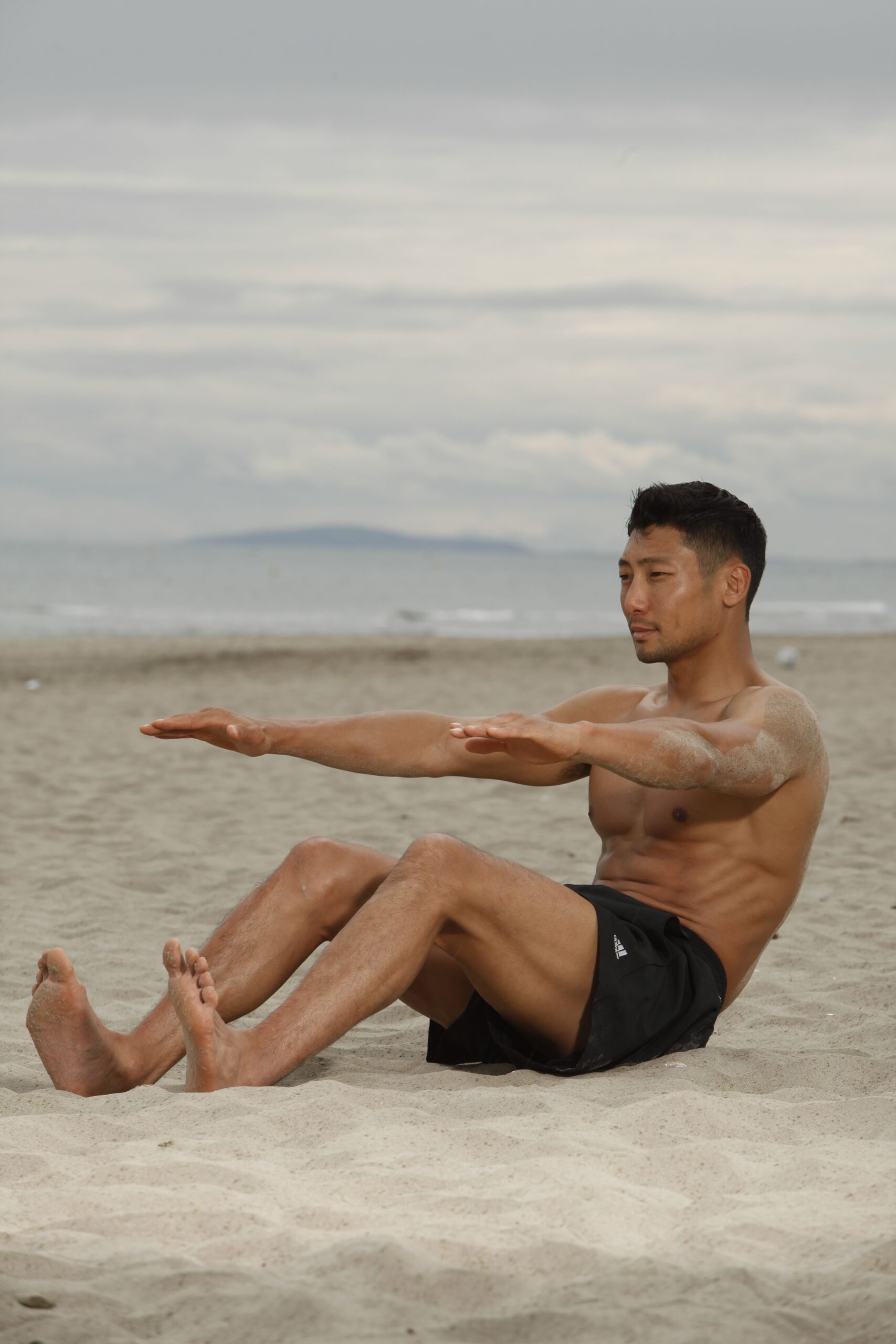
Principles of Beach Handball Strength & Endurance Training
To build elite-level conditioning on sand, keep these principles in mind:
- Specificity: Train the movements you use in beach handball: sprints, jumps, dives, pivots, and lateral shuffles.
- Progressive overload: Gradually increase intensity, volume, or complexity to continue improving without overtraining.
- Quality over quantity: Beach handball is explosive. Focus on crisp, high-quality reps rather than endless, sloppy conditioning.
- Balance: Combine sand sessions with off-sand strength training for complete development.
Strength Training for Beach Handball Players
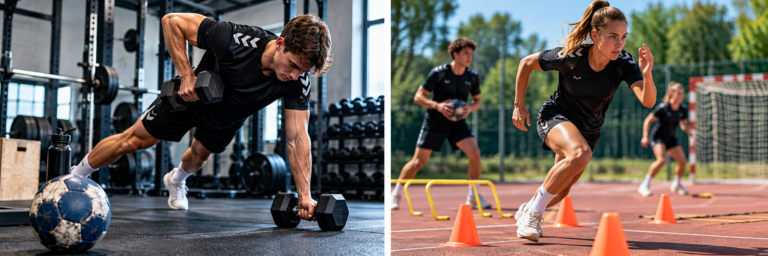
Strength is the foundation for power, speed, and injury prevention. Combine gym-based strength work with sand-based functional exercises to get the best of both worlds.
Gym-Based Strength Exercises
Two to three sessions per week in the gym can dramatically enhance your performance on sand.
- Lower Body:
- Back or Front Squats
- Deadlifts or Romanian Deadlifts
- Walking Lunges
- Hip Thrusts
- Upper Body:
- Bench Press or Push-Ups
- Pull-Ups or Lat Pulldowns
- Overhead Press
- Single-Arm Dumbbell Rows
- Core:
- Planks (front and side)
- Russian Twists
- Pallof Press
- Hanging Leg Raises
General guideline: 3-4 sets of 6-10 reps for main lifts, 2-3 sets of 10-15 reps for accessory work.
Sand-Based Strength & Power Drills
To transfer your gym strength to the game, add explosive movements on sand:
- Sand Squat Jumps: From a half squat, explode up, land softly, reset. 3 x 8 reps.
- Broad Jumps: Jump forward with two feet, land with control. 3 x 6 jumps.
- Lateral Bounds: Jump side-to-side off one leg, mimicking defensive shuffles. 3 x 6 each side.
- Sand Sled Pulls (if available): Attach a sled or resistance band and sprint 10-20 m. 4-6 sprints.
Perform these after a thorough warm-up and before conditioning sprints, while your legs are still fresh.
Endurance Training for Beach Handball
Beach handball requires repeated high-intensity efforts with short rest, not long, slow runs. Your conditioning should reflect that.
Types of Endurance You Need
- Aerobic Endurance: Your base engine that helps you recover between points and halves.
- Anaerobic Endurance: Your ability to repeat sprints, jumps, and explosive actions throughout the match.
Sand Conditioning Drills for Beach Handball
| Drill | Focus | Sample Format |
|---|---|---|
| 20 m Sand Sprints | Speed + Anaerobic | 10-12 reps, 20-30 s rest |
| Shuttle Runs (5-10-15 m) | Change of Direction | 6-10 reps, 45-60 s rest |
| Lateral Shuffle Intervals | Defense-Specific | 20 s work / 20 s rest x 8-10 |
| Sprint + Backpedal | Transition Play | 15 m sprint + 15 m backpedal, 8-12 reps |
| Small-Sided Games | Game-Like Endurance | 3-4 min games, 2-3 min rest x 5-8 |
Sample Beach Handball Conditioning Session (On Sand)
Duration: 45-60 minutes (excluding warm-up and cool-down)
- Dynamic Warm-Up (10-12 minutes)
- Light jog on sand (3-4 minutes)
- Leg swings, hip circles, ankle rolls
- High knees, butt kicks, lateral shuffles
- 2-3 short build-up sprints (60-80% effort)
- Power Block (10-15 minutes)
- Sand squat jumps – 3 x 8
- Lateral bounds – 3 x 6 each side
- Speed & Anaerobic Block (15-20 minutes)
- 20 m sand sprints – 8-10 reps, 30 s rest
- Shuttle runs 5-10-15 m – 6 reps, 45 s rest
- Game-Specific Conditioning (10-15 minutes)
- Small-sided game (3 vs 3 or 2 vs 2): 3 minutes work, 2 minutes rest x 4-5
- Cool-Down (5-10 minutes)
- Slow walk on sand (2-3 minutes)
- Static stretches: quads, hamstrings, calves, hips, shoulders
Agility and Footwork on Sand
Agility is crucial in beach handball-especially for defenders and goalkeepers. Sand makes quick movements harder, so focused footwork drills will give you a real performance edge.
Agility Drills for Beach Handball Players
- Cone Zigzag: Set up 6-8 cones in a zigzag pattern (3-4 m apart). Sprint and cut sharply at each cone. 3-4 sets.
- Lateral Squares: Mark a small square (3 x 3 m). Shuffle around the perimeter clockwise for 20 seconds, then counterclockwise. 4-6 rounds.
- Reaction Sprints: Partner calls “left,” “right,” “forward,” or “back” and you react with short bursts (3-5 m). 3-5 minutes total.
- Goalkeeper Lateral Explosions: From a central stance, explode laterally to touch a cone or mark, then return. 3 x 8-10 reps each side.
Weekly Beach Handball Conditioning Plan
Below is a simple example of how you can structure your week during pre-season. Adjust based on your level, schedule, and recovery.
| Day | Focus | Key Elements |
|---|---|---|
| Monday | Strength (Gym) | Lower body + core |
| Tuesday | Sand Conditioning | Sprints, agility, small-sided games |
| Wednesday | Active Recovery | Light swim, mobility, stretching |
| Thursday | Strength (Gym) | Upper body + core |
| Friday | Mixed Sand Session | Power, sprints, team tactics |
| Saturday | Match Play / Scrimmage | Game scenarios, full-intensity |
| Sunday | Rest | Complete rest or gentle walk |
Injury Prevention and Recovery on Sand
Because beach handball conditioning on sand is so demanding, smart recovery and injury prevention are non-negotiable.
Common Problem Areas
- Ankles: Frequent changes of direction on unstable sand can lead to sprains.
- Knees: Constant jumping and landing, plus rotation during spins, puts stress on ligaments.
- Lower Back: Powerful throws and explosive spins demand strong, stable core muscles.
Practical Injury-Prevention Strategies
- Warm up fully: Never skip dynamic warm-ups; prepare ankles, hips, and shoulders specifically.
- Strengthen stabilizers: Add single-leg exercises (e.g., single-leg deadlifts, step-ups) and balance drills.
- Monitor training volume: Increase training load by roughly 10-15% per week, not more.
- Hydration and electrolytes: Sand + sun = heavy sweating. Replace fluids and salts to avoid cramps.
- Post-session care: Stretching, foam rolling, and occasionally cold water immersion can speed recovery.
Real-World Example: How Sand Conditioning Transforms Performance
Consider a typical beach handball athlete who transitions from indoor handball. At first, they often:
- Feel exhausted after just a few high-intensity plays
- Struggle with jumping height on sand
- Experience sore calves and tight hip flexors
After 6-8 weeks of focused beach handball conditioning that includes:
- 2 gym strength sessions per week
- 2 sand-based conditioning and agility sessions
- 1-2 tactical or game sessions
Most players report:
- Noticeably higher jumps and more powerful spins
- Less fatigue in the second set or golden goal situations
- Better stability when defending and landing from aerial actions
- Reduced soreness as their body adapts to the sand surface
This kind of structured approach turns the sand from a challenge into an advantage.
Practical Tips for Beach Handball Conditioning on Sand
- Train barefoot when safe: It strengthens foot muscles and improves proprioception. Check the sand for sharp objects first.
- Mix intensities: Combine high-intensity sprints with moderate-paced drills to mimic game rhythm.
- Use balls in conditioning: Add passing, shooting, or catching to sprint and agility drills to keep things game-specific and fun.
- Track your progress: Time your sprints, count your jumps, or use simple RPE (Rate of Perceived Exertion) scales to monitor improvement.
- Respect the sun: Schedule sessions early morning or late afternoon, use sunscreen, and bring plenty of water.
Putting It All Together
Beach handball rewards players who embrace the unique demands of the sand. With targeted beach handball conditioning, you can develop the strength, power, speed, and endurance needed to dominate every phase of the game.
Focus on:
- Building a solid strength base in the gym
- Transferring that strength to the sand with explosive drills
- Improving anaerobic and aerobic endurance with smart interval training
- Developing sharp agility and stable footwork for defense and transitions
- Protecting your body with proper warm-ups, recovery, and progressive loading
Whether you’re preparing for your first beach handball tournament or aiming to compete at an elite level, a structured conditioning plan on sand will elevate your game. Start integrating these workouts into your weekly routine, listen to your body, and your performance-and confidence-on the beach will grow with every session.