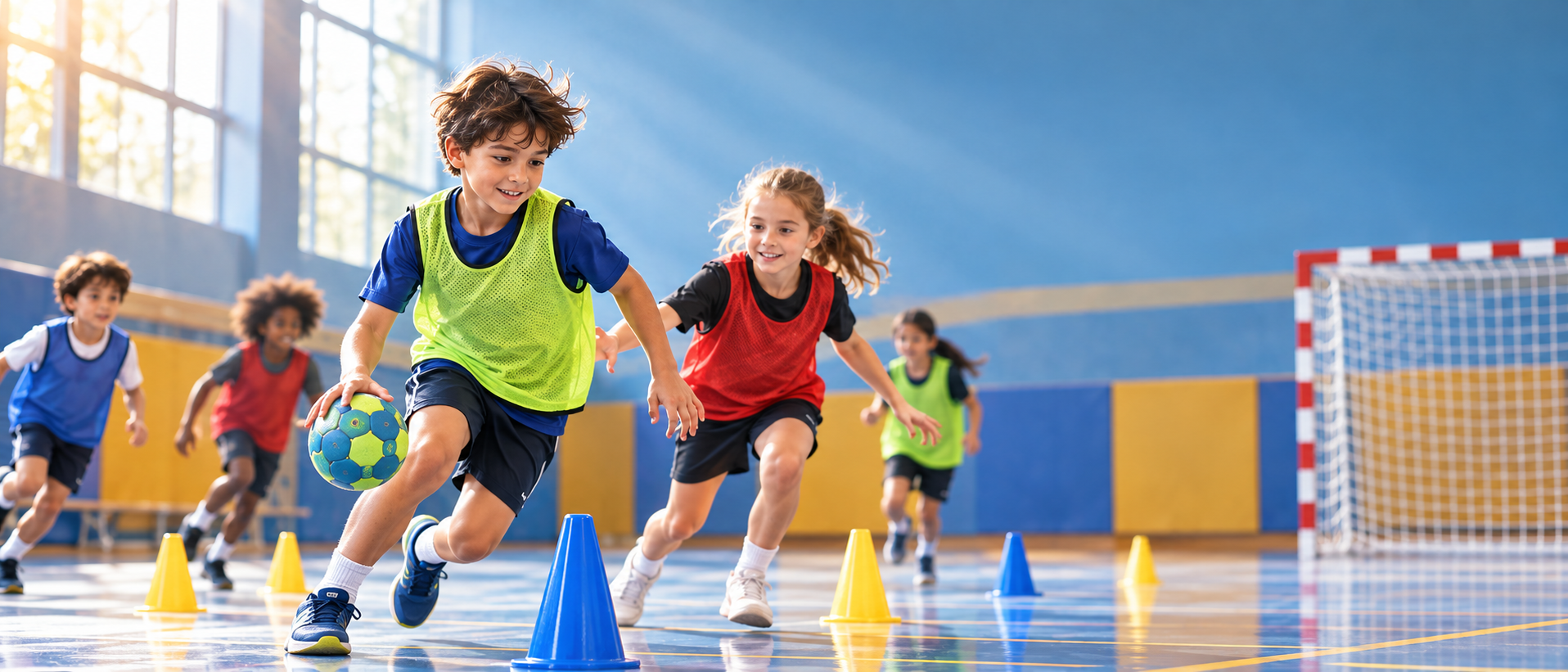
Mini handball is one of the most engaging and child-friendly ways to introduce kids to the fast-paced world of handball. By simplifying handball positions and focusing on basic handball passes, children can quickly learn the game while having a lot of fun. This guide will walk you through mini handball positions, passing techniques, drills, and playful methods to make learning enjoyable and effective.
What Is Mini Handball?
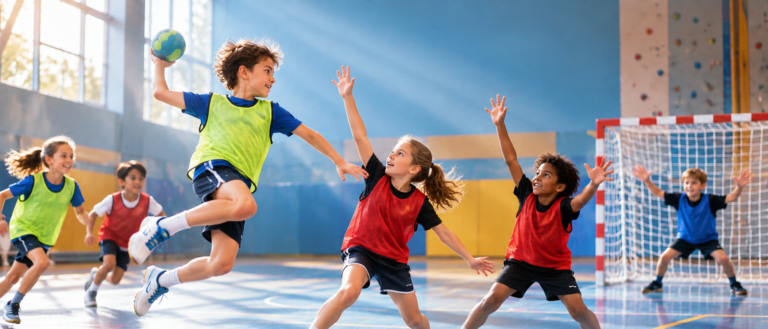
Mini handball is a simplified version of traditional handball designed for children, usually between 6 and 12 years old. The goals are smaller, the ball is lighter and softer, the court is shorter, and the rules are adapted to focus on fun, movement, and skill development instead of competition.
Mini handball helps children:
- Develop basic motor skills (running, jumping, throwing, catching)
- Understand team play, spacing, and positions
- Learn simple passes in handball in a safe environment
- Build confidence and social skills through teamwork
Mini Handball Positions: Simple Roles for Young Players
In standard handball, positions include wings, backs, pivot, and goalkeeper. For kids, it’s better to use simplified mini handball positions with clear, easy-to-remember roles.
| Mini Position | Simple Role | Main Zone |
|---|---|---|
| Goalkeeper | Protects the goal | Goal area |
| Defender | Blocks shots, marks players | Near own goal |
| Playmaker | Organizes attacks, passes | Middle of court |
| Wing | Runs wide, finishes attacks | Sides of court |
| Pivot | Creates space, receives passes | Near opponent’s goal area |
1. Goalkeeper (The Hero of the Goal)
The goalkeeper is often a favorite mini handball position for kids who like dramatic saves and lots of action.
- Main tasks: Stop shots, restart play with quick passes, talk to the defenders.
- What to encourage: Big body movements, bravery, and positive attitude (“Nice try!” even when they miss a save).
- Fun tip: Call the goalkeeper the “Superhero of the Goal” to make the role exciting.
2. Defender (The Wall)
Defenders in mini handball focus on learning basic defense positioning and how to move as a unit.
- Main tasks: Stay between the attacker and the goal, use arms to block shots, guide opponents away from the goal.
- What to encourage: Side steps, reading the attacker, and fair contact without pushing.
- Fun tip: Use the phrase “Be a moving wall, not a statue!” to remind kids to move their feet.
3. Playmaker (The Brain)
The playmaker is the mini handball version of a point guard in basketball. This position is perfect for kids who love passing and organizing the game.
- Main tasks: Call simple plays, decide who gets the ball, use different handball passes.
- What to encourage: Looking up, scanning for teammates, and using clear communication.
- Fun tip: Let the playmaker invent the names of simple plays like “Rocket Left” or “Wave Right”.
4. Wings (The Speedsters)
Wings are positioned on the sides of the court and are great for children who like to run and score quick goals.
- Main tasks: Stay wide, run fast on counterattacks, finish from the sides.
- What to encourage: Catching while running, shooting from a tight angle, staying active.
- Fun tip: Use a “Runway” line on the side to show where wings should move.
5. Pivot (The Space Maker)
The pivot plays close to the opponent’s goal area, trying to get open for passes and create space for teammates.
- Main tasks: Keep defenders busy, receive the ball under pressure, pass or shoot quickly.
- What to encourage: Constant movement, strong stance, safe, quick passes.
- Fun tip: Explain the pivot as the “magnet” that attracts defenders and frees teammates.
Basic Handball Passes for Kids
Understanding basic passes in handball is essential for smooth team play. In mini handball, focus on a few key passes that are simple but effective and fun to practice.
| Pass Type | Difficulty | Best For |
|---|---|---|
| Chest Pass | Very Easy | Beginners, short distances |
| Bounce Pass | Easy | Passing around defenders |
| Overhead Pass | Medium | Longer or high passes |
| One-Hand Pass | Medium | Quick attacks, wings |
| No-Look Pass | Fun/Advanced | Games, creativity |
Chest Pass
The chest pass is one of the simplest and most effective mini handball passes.
- How to do it: Hold the ball at chest level with both hands, step toward your partner, and push the ball straight forward.
- Coaching point: “Point your hands at your friend after the pass.”
Bounce Pass
The bounce pass helps children learn how to pass under a defender’s arms.
- How to do it: Throw the ball so it hits the ground about halfway between you and your teammate.
- Coaching point: “Aim for the floor, then your friend’s hands.”
Overhead Pass
This pass is useful for longer distances or throwing over defenders.
- How to do it: Lift the ball above the head with both hands and throw forward with a strong arm swing.
- Coaching point: Keep elbows slightly bent and follow through.
One-Hand Pass
As kids get stronger, they can start using more realistic handball one-hand passes.
- How to do it: Hold the ball in your dominant hand, bring it behind the head or to the side, and throw with a full arm motion.
- Coaching point: Focus on accuracy over power.
No-Look Pass (For Extra Fun)
Once children are confident, the no-look pass can be introduced as a playful challenge.
- How to do it: Look in one direction but pass to a teammate in another direction.
- Safety tip: Only use in fun games, not in crowded drills.
Fun Mini Handball Drills for Positions and Passes
To keep young players motivated, use games and playful drills that combine positions with passing skills.
1. Passing Circle Game
- Setup: Players stand in a circle; one child starts with the ball.
- How it works:
- Coach calls a pass type: “Chest pass!”, “Bounce pass!”, or “Overhead pass!”
- Players pass the ball around the circle using that technique.
- Change directions or speeds to make it more challenging.
- Skills developed: Basic passes, reaction time, focus.
2. Position Relay Race
- Setup: Mark spots on the court for goalkeeper, defender, playmaker, wing, and pivot.
- How it works:
- Divide kids into small teams.
- Each player runs to a position, performs a task (e.g., 2 chest passes as playmaker, 2 side steps as defender), then runs back.
- Tag the next player.
- Skills developed: Understanding mini handball positions, movement, and quick decision-making.
3. Mini Handball 3 vs 3
- Setup: Use a small court with small goals; play 3 vs 3 or 4 vs 4.
- How it works:
- Assign simple roles: one goalkeeper, one defender, one playmaker/attacker.
- Encourage players to change positions every few minutes.
- Set small challenges: “Score after at least 3 passes” or “Everyone must touch the ball.”
- Skills developed: Teamwork, passing under pressure, position rotation.
4. Target Passing Challenge
- Setup: Place cones, hoops, or colored markers on the ground or against a wall.
- How it works:
- Assign points for hitting each target with a pass.
- Use different pass types for each round.
- Play in pairs or small teams for added excitement.
- Skills developed: Passing accuracy, distance control, focus.
Benefits of Learning Positions and Passes Through Play
Using fun games to teach mini handball positions and passes has both physical and mental benefits.
Physical Benefits
- Improved coordination and balance
- Better reaction speed and agility
- Healthy cardiovascular exercise
- Development of throwing and catching skills
Mental and Social Benefits
- Understanding of teamwork and shared roles
- Better communication and listening skills
- Confidence from mastering new skills
- Learning to win and lose with respect
Practical Tips for Coaches and Parents
Whether you coach a mini handball team or just play with your kids, these tips will make learning handball positions and passes easier and more enjoyable.
1. Use Simple Language
- Replace complex terms with kid-friendly names like “Wall” (defender) or “Brain” (playmaker).
- Give one instruction at a time.
2. Rotate Positions Often
- Let every child try every mini handball position.
- This keeps them engaged and helps them understand the whole game.
3. Focus on Success, Not Mistakes
- Praise effort, good decisions, and team play.
- Use errors as learning moments without blaming or shaming.
4. Keep Sessions Short and Varied
- Alternate between drills and games.
- Use music, challenges, and storytelling to keep energy high.
5. Make Safety a Priority
- Use soft, age-appropriate balls.
- Teach kids not to push or grab clothing when defending.
- Warm up with simple running and stretching.
Mini Case Study: A 10-Week Mini Handball Program
To show how mini handball positions and passes can be learned step by step, here’s a simple 10-week program outline for beginners, training once per week.
| Week | Main Focus | Key Activity |
|---|---|---|
| 1-2 | Basic passes & catching | Passing circle games |
| 3-4 | Introducing positions | Position relay race |
| 5-6 | Simple attack vs defense | 2 vs 1 and 3 vs 2 games |
| 7-8 | Fast breaks & wings | Run-and-pass drills |
| 9-10 | Mini tournaments | 3 vs 3 matches with rules |
By the end of the 10 weeks, most children will be able to:
- Recognize basic mini handball positions
- Use several types of passes confidently
- Play simple matches with basic rules and tactics
First-Hand Style Insights: What Kids Enjoy Most
Children who play mini handball usually highlight a few things they love most about the game:
- Scoring goals: Kids love the clear reward of putting the ball in the net.
- Team celebrations: High-fives and group cheers build a strong sense of belonging.
- Learning tricks: Creative passes and fun moves make them feel like “real” handball players.
- Rotating roles: Trying goalkeeper, wing, and playmaker keeps practices fresh.
When coaches and parents support these positive experiences, children are more likely to stay in the sport and develop a lifelong love for physical activity.
Conclusion: Making Mini Handball Positions and Passes Fun and Easy
Mini handball is a powerful and enjoyable way to introduce children to the sport through simple positions and basic passes. By focusing on fun, variety, and positive feedback, coaches and parents can help kids:
- Understand the main mini handball positions: goalkeeper, defender, playmaker, wing, and pivot
- Master essential handball passes like chest, bounce, overhead, and one-hand passes
- Develop teamwork, confidence, and coordination through playful drills and games
Whether you are running a club session, a school sports class, or just having fun in the gym, mini handball offers countless opportunities to learn the game in a simple, engaging, and age-appropriate way. With the right mix of structure and creativity, children will not only learn mini handball positions and passes-they will also fall in love with the sport itself.