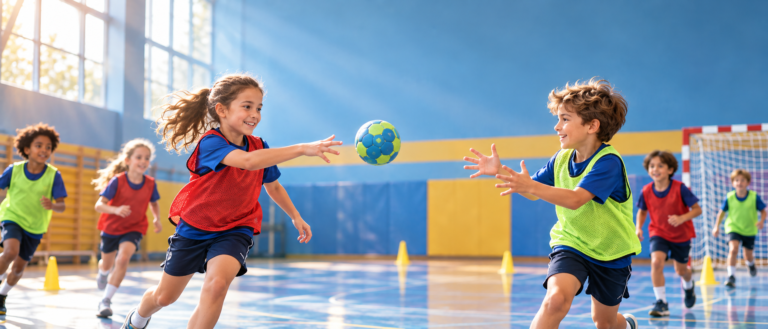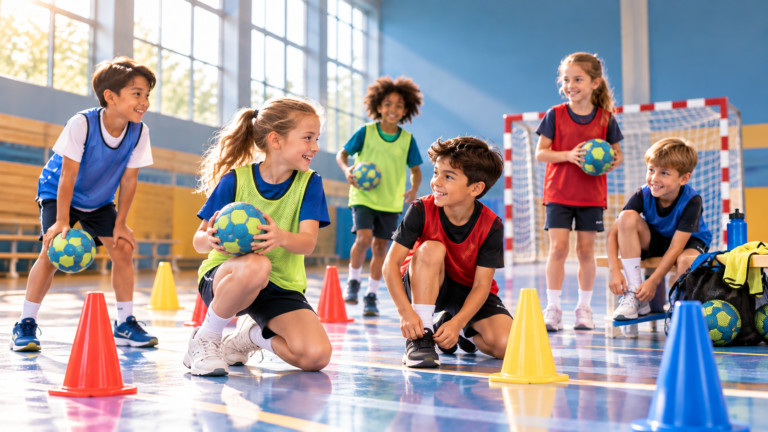
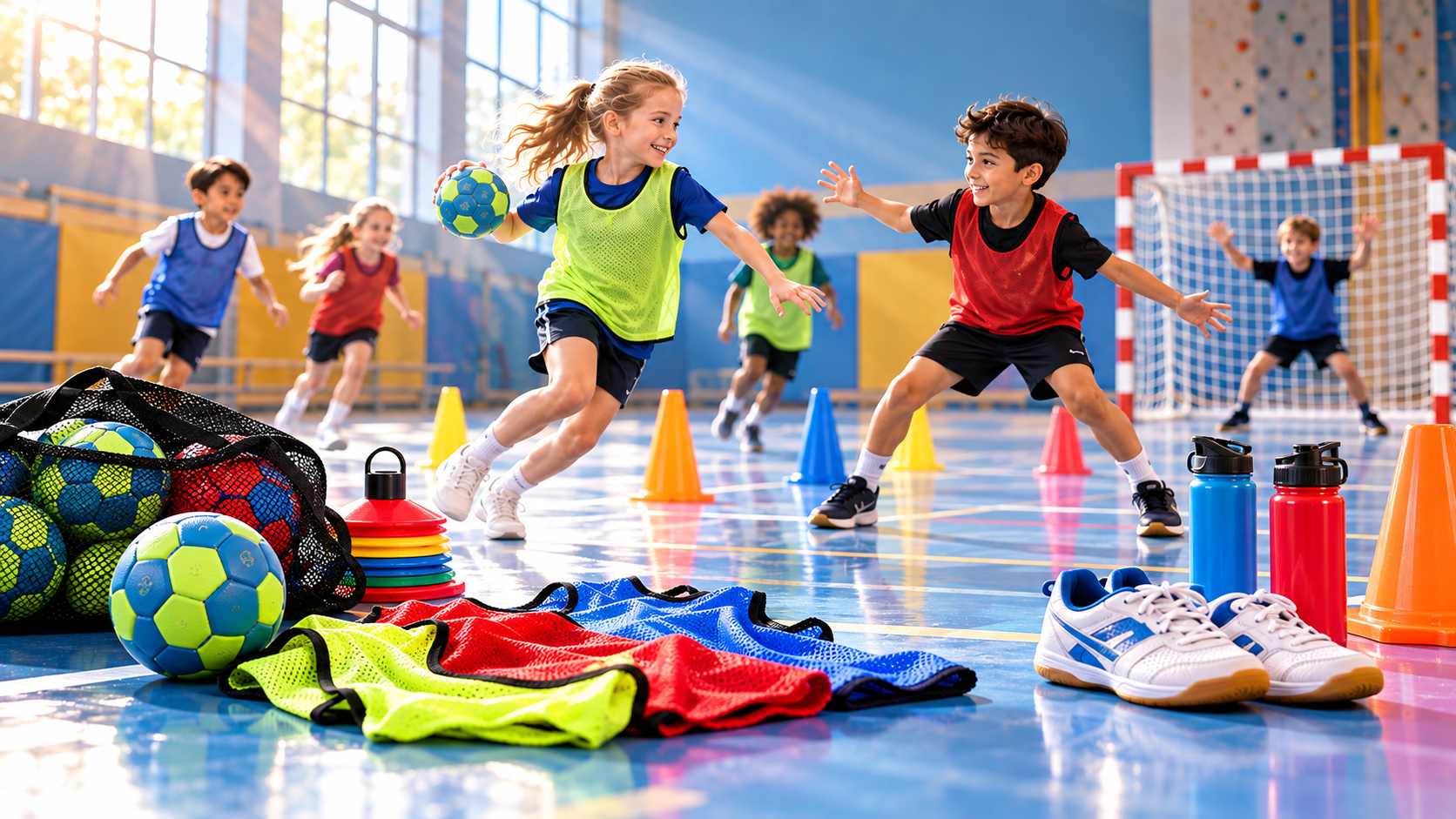
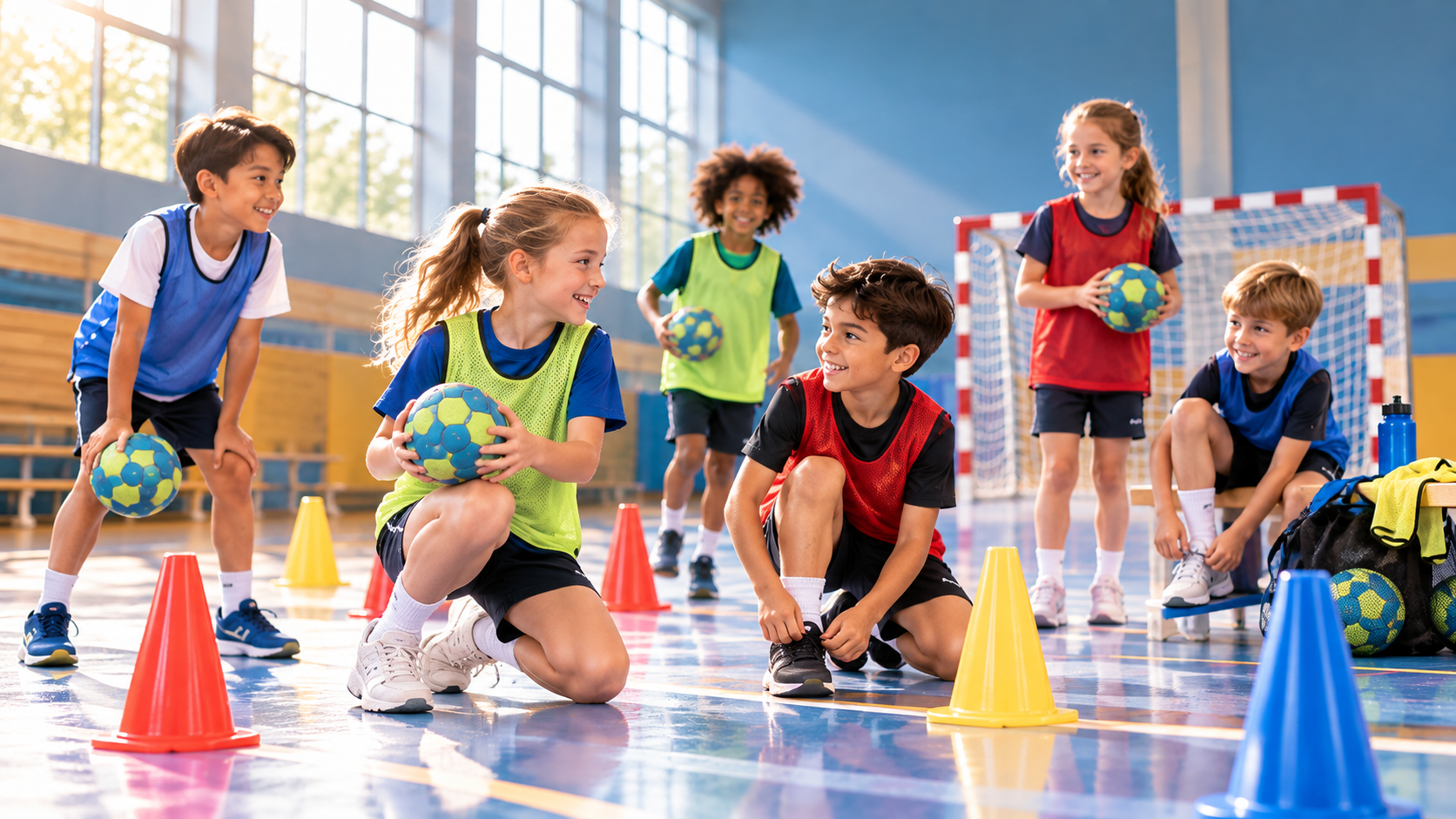
Are you looking for a fast, fun, and social sport for your child? Mini handball could be the perfect match. This kid-friendly version of traditional handball is designed to be safe, inclusive, and easy to learn, even for complete beginners.
In this guide, you’ll discover everything you need to know about mini handball: what it is, how it works, its benefits for children, and how to get started as a family. Whether you’re a parent, coach, or PE teacher, this article will help you introduce kids to a sport they’re likely to love.
What Is Mini Handball?
Mini handball is a simplified, small-sided version of the traditional team sport handball, especially created for children (typically ages 6-12). It focuses on fun, movement, and basic skills rather than strict rules and competition.
In mini handball, the goals are:
- To help kids enjoy physical activity
- To develop coordination and ball-handling skills
- To build teamwork and social skills in a playful way
- To introduce the basic rules of handball gradually
Because it’s tailored to children, mini handball uses a smaller court, softer ball, and simplified rules, making it less intimidating and more accessible than the full adult game.
Mini Handball vs. Traditional Handball
To better understand what mini handball is, it helps to compare it with the standard version of the sport. While rules can vary slightly by country or club, the main differences are quite similar worldwide.
| Feature | Mini Handball | Traditional Handball |
|---|---|---|
| Age Group | Children (approx. 6-12) | Teens & adults |
| Court Size | Shorter & narrower, often cross-court | Full-size 40m x 20m court |
| Ball Size | Smaller, softer, easier to grip | Larger, standard competition balls |
| Team Size | 3-6 players per side | 7 players per side (6+goalkeeper) |
| Contact | Minimal contact, safety first | More physical, body contact allowed |
| Focus | Fun, learning, inclusion | Performance, tactics, competition |
Because mini handball is less intense and more flexible than traditional handball, kids can join in quickly, even if they’ve never played a team sport before.
Basic Rules of Mini Handball (Kid-Friendly Version)
One of the main reasons mini handball is so popular in schools and clubs is that it’s easy to understand. Rules can be adjusted by coaches to match the age and skill level of the children, but most versions follow these simple principles:
Team Size & Positions
- Teams usually have 3 to 6 players on the court.
- Some formats use a goalkeeper, others don’t — instead, kids shoot at small goals without a keeper.
- Positions are often flexible so kids can try different roles: attack, defense, and goalkeeping.
Movement & Ball Handling
- Players can run, pass, and shoot the ball.
- Children are usually allowed only a few steps with the ball (for example, 3 steps) before passing or dribbling.
- Double-dribbling (dribble, stop, and dribble again) is often not allowed, but rules can be relaxed for younger kids.
Defense & Contact
- Fair play and safety are more important than strict defense rules.
- Soft blocking with the body is usually allowed, but pushing, grabbing, or hitting is forbidden.
- Coaches encourage active hands and quick feet instead of physical contact.
Scoring & Game Flow
- Kids score by throwing the ball into the goal.
- Games are typically short: two halves of 10-15 minutes each, or several mini-matches.
- Many tournaments avoid keeping strict scores with younger children, focusing instead on participation and enjoyment.
This flexible rule set makes mini handball a fantastic introductory sport for children who might be nervous about complex rules or competitive environments.
Why Mini Handball Is Great for Kids
From motor skills to mental resilience, mini handball has a long list of benefits for children. If you’re wondering whether it’s worth signing your child up, here are some of the key advantages.
1. Physical Benefits
- Improves coordination: Catching, throwing, jumping, and running in various directions help children develop full-body coordination.
- Builds strength and endurance: Continuous movement and short sprints enhance cardiovascular fitness and muscle strength.
- Enhances balance and agility: Quick changes of direction train balance and body control.
- Develops spatial awareness: Kids learn to move in relation to teammates, opponents, and the ball.
2. Social and Emotional Benefits
- Teamwork and communication: Children learn to support teammates, share the ball, and celebrate together.
- Confidence building: Scoring a goal or making a good pass gives kids a strong sense of achievement.
- Resilience and sportsmanship: They learn to handle both winning and losing in a healthy way.
- Friendships and belonging: Being part of a mini handball team can create long-lasting friendships and a feeling of community.
3. Cognitive Development
- Quick decision-making: Children must decide fast whether to pass, shoot, or move.
- Strategic thinking: Even in simplified forms, kids begin to understand basic tactics and positioning.
- Focus and concentration: Staying involved in the game trains attention and mental presence.
When combined, these benefits make mini handball a well-rounded sport that supports healthy child development in a playful environment.
Ideal Age and Skill Levels for Mini Handball
Mini handball is designed specifically for children, but many parents wonder: When is the best time to start?
- Ages 5-7: Focus is on basic movement, fun games, and simple ball-handling. Rules are very relaxed.
- Ages 8-10: Kids begin to understand team tactics, simple positions, and more structured rules.
- Ages 11-12: The game gradually transitions toward youth handball, with more advanced rules and competitive matches.
The beauty of mini handball is that no prior experience is needed. Children of different abilities can play together, as rules and intensity can be easily adapted.
How to Get Started with Mini Handball
If you think your child might enjoy mini handball, here are some practical ways to begin.
1. Find a Local Club or Program
- Search for “mini handball club near me” or “kids handball classes” online.
- Check with local sports centers, schools, and community clubs.
- Ask if they offer trial sessions so your child can test the sport without long-term commitment.
2. Equipment You Need
One reason mini handball is so popular is that it doesn’t require expensive gear. In most cases, the club provides everything you need, but it’s useful to know the basics.
| Item | Details | Tips for Parents |
|---|---|---|
| Handball | Small, soft ball (size 00-1 for kids) | Choose a ball your child can hold comfortably in one hand. |
| Shoes | Indoor court shoes with good grip | Look for non-marking soles and good ankle support. |
| Clothing | Sports T-shirt and shorts or leggings | Breathable, comfortable materials work best. |
| Water Bottle | Reusable bottle | Encourage regular hydration before, during, and after training. |
3. Play Mini Handball at Home or in the Park
You don’t need a full court to introduce your child to the basics of mini handball. Try these simple activities:
- Wall passes: Have your child throw the ball against a wall and catch it again, using both hands.
- Target throwing: Place cones, boxes, or a laundry basket and ask them to hit or score into the target.
- Passing games: Stand a few meters apart and practice fast, accurate passes while moving slowly.
- Mini matches: Use small goals or even chairs as goals and play 1 vs. 1 or 2 vs. 2 in the backyard.
The goal is to keep sessions short, playful, and positive, especially for younger kids.
Tips for Parents New to Mini Handball
If this is your first time getting involved with a team sport as a parent, these tips will help you support your child and keep the experience enjoyable.
Focus on Fun, Not Just Winning
- Praise effort, teamwork, and fair play, not only goals or victories.
- Ask questions like “Did you have fun?” or “What did you learn today?” instead of “Did you win?”
Support the Coach and the Team
- Arrive on time and follow club guidelines.
- Encourage positive behavior on the sidelines: no yelling at referees or other children.
- Offer help when needed — setting up equipment, organizing snacks, or carpooling.
Keep Expectations Realistic
- Every child develops at their own pace; some will pick up skills faster than others.
- Focus on long-term enjoyment, not immediate performance.
- Allow your child to try different positions and roles on the team.
Mini Handball in Schools and PE Classes
Many schools and PE teachers use mini handball because it’s easy to organize and highly engaging. For educators, the sport offers several teaching advantages:
- Scalable: Can be played in small groups on half a court or even in a gym hall.
- Inclusive: Simple rules allow children of mixed ability levels to participate.
- Cross-curricular links: Teachers can combine mini handball with lessons on cooperation, health, and fair play.
If your child’s school doesn’t yet offer mini handball, you can suggest it as a low-cost, high-engagement option for PE or after-school activities.
Common Questions About Mini Handball
Is Mini Handball Safe?
Mini handball is considered a safe sport for children when taught properly. The use of softer balls, smaller courts, and rules that limit contact greatly reduce the risk of injury. Coaches are trained to emphasize warm-ups, fair play, and correct techniques.
Does My Child Need to Be Athletic?
No. Mini handball is ideal for children of all fitness levels. The game offers many roles: passing, shooting, defending, and goalkeeping. Even shy or less active kids often enjoy being part of a friendly team environment.
Can Mini Handball Lead to Competitive Handball Later?
Yes. Many professional and high-level players started with mini handball in their early years. As children grow older and more confident, they can move into youth handball and, if they wish, more competitive leagues.
Simple Mini Handball Drill Ideas for Kids
If you’re a parent or beginner coach, here are a few easy mini handball drills suitable for training or just playing together:
- Relay Dribble Race: Kids dribble the ball to a cone and back, then pass it to the next teammate. Focus on control rather than speed.
- Pass and Move Circle: Children stand in a circle and pass the ball quickly while always moving a few steps after each pass.
- Shooting Lanes: Set up cones as “defenders” and let kids run through gaps to shoot at the goal.
- Keeper Challenge: One child in goal, others take gentle shots; rotate after a few attempts so everyone tries goalkeeping.
These drills help kids become comfortable with the ball, build confidence, and keep the energy high.
Conclusion: Why Mini Handball Is Worth a Try
Mini handball is more than just a scaled-down version of a sport. It’s a playful, inclusive, and dynamic way for children to discover the joy of movement, teamwork, and fair play.
By combining simple rules, exciting game situations, and a focus on fun, mini handball:
- Supports physical, social, and emotional development
- Helps kids build confidence and friendships
- Provides a safe introduction to team sports and handball basics
If you’re a parent searching for a fun sport for kids or a teacher wanting to enrich your PE program, mini handball is an excellent choice. Start with a local club, school program, or simple home games, and let your child discover how much fun this fast-paced, friendly sport can be.